Physical Address
381 Myrtle Avenue, Brooklyn, NY 11205
Physical Address
381 Myrtle Avenue, Brooklyn, NY 11205

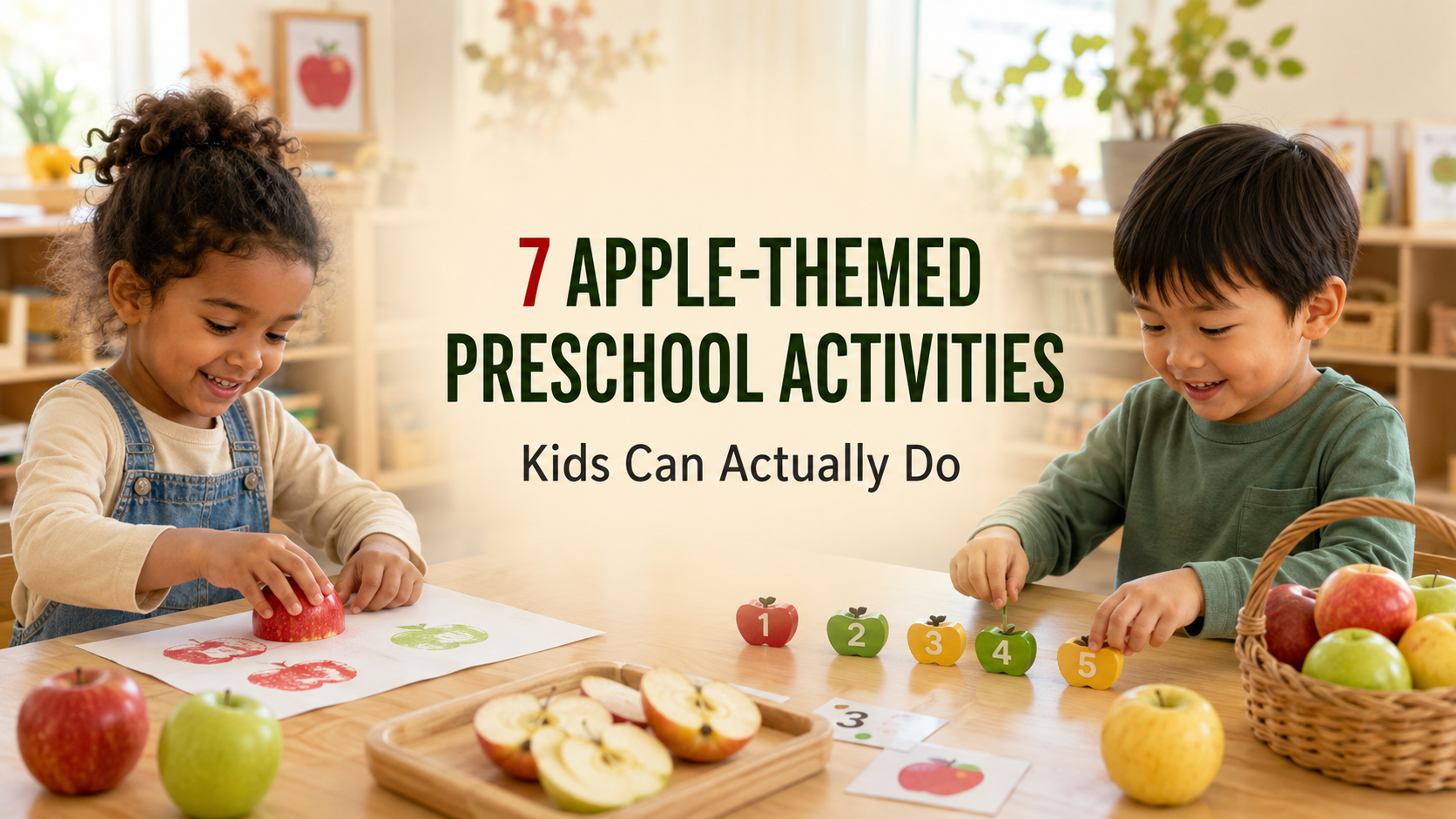
Late summer and early fall are perfect times to introduce apples into children’s learning. Apples are familiar, affordable, colorful, and easy for young children to explore with their senses.
The best apple-themed preschool activities do more than fill a seasonal lesson plan. They help children count, compare, create, build vocabulary, strengthen fine-motor skills, and investigate simple scientific ideas.
These seven activities require basic materials and work well at home or in a preschool classroom. Each one can also be adapted to match children’s ages, abilities, and interests.
This classic art activity allows children to explore color, shape, texture, and cause and effect.
Materials:
Suitable age range: 2½ to 5 years
Simple steps:
Developmental skills: Creative expression, hand-eye coordination, color recognition, and sensory exploration.
Practical tip: Push a fork or craft stick into the rounded side of each apple to create an easier handle for younger children.
Safety note: An adult should cut the apples. Remind children that paint-covered apples are not for eating.
Among the simplest apple crafts preschool children can complete, apple printing produces artwork that still feels open-ended and personal.
Turn apples into hands-on math tools with a simple counting game.
Materials:
Suitable age range: 3 to 5 years
Simple steps:
Developmental skills: Number recognition, one-to-one correspondence, counting, and visual attention.
Practical tip: Begin with numbers 1-3 for younger children. Increase the quantity only when they are counting confidently.
Safety note: Buttons and small pom-poms can pose a choking hazard. Use large paper circles or supervise closely when working with toddlers.
This activity can become part of a wider preschool apple theme by sorting the apples according to size or color before counting them.
This practical sensory activity encourages pretend play while introducing everyday care routines.
Materials:
Suitable age range: 2 to 5 years
Simple steps:
Developmental skills: Sensory processing, practical-life skills, coordination, sorting, and vocabulary.
Practical tip: Place the bin on a large towel or waterproof mat. Use only a little water so spills remain manageable.
Safety note: Supervise children around water at all times. Replace any apple that becomes bruised or damaged if it will later be eaten.
For families seeking simple apple activities for toddlers, this is an excellent choice because the task is easy to understand and repeat.
A taste test helps children compare flavors while collecting and discussing simple data.
Materials:
Suitable age range: 3 to 5 years
Simple steps:
Developmental skills: Descriptive language, comparison, early graphing, decision-making, and counting.
Practical tip: Give children the option to smell or touch an apple if they do not want to taste it. Food exploration should never be forced.
Safety note: Check for food allergies and dietary restrictions. Cut apples into thin, age-appropriate pieces and supervise children while they eat.
This activity combines science, math, and language, making it one of the most versatile fall preschool activities.
Preschoolers can investigate a visible chemical change with this simple apple experiment.
Materials:
Suitable age range: 4 to 5 years
Simple steps:
Explain simply that the inside of an apple reacts with air, causing it to turn brown. Lemon juice can slow that change.
Developmental skills: Prediction, observation, comparison, scientific thinking, and sequencing.
Practical tip: Take a photograph at each observation time so children can compare changes later.
Safety note: Adults should cut the apple. Do not eat experiment materials after they have been handled by multiple children.
This fine-motor challenge keeps children engaged while strengthening the small muscles needed for drawing, fastening clothing, and eventually writing.
Materials:
Suitable age range: 3 to 5 years
Simple steps:
Developmental skills: Fine-motor strength, pincer grasp, concentration, counting, and bilateral coordination.
Practical tip: If tweezers are frustrating, begin with larger kitchen tongs. The activity should feel challenging but achievable.
Learn more about why these hand-strengthening experiences matter in our guide to fine-motor development in preschoolers.
Safety note: Use large materials and supervise carefully. Small objects are not appropriate for children who still mouth toys.
Finish your apple unit with an activity that builds language, imagination, and early storytelling.
Materials:
Suitable age range: 3 to 5 years
Simple steps:
Developmental skills: Vocabulary, listening, sequencing, imagination, confidence, and oral communication.
Practical tip: Give children sentence starters such as “The apple is…,” “Next, they…,” or “I wonder…” if they need support.
This activity is especially useful during the first week of preschool, when structured group conversations can help children become comfortable speaking and listening together.
Children do not need to complete each activity in the same way. Some may count ten apples, while others practice matching two colors. One child may tell an elaborate story, while another contributes a single word.
Offer choices, model the activity, and allow enough time for exploration. If your child is still becoming comfortable with group routines, our preschool readiness guide offers additional ways to support the transition. Families with younger children can also explore these simple toddler activities.
The goal of apple activities preschool children participate in should not be a perfect craft or identical result. The real value comes from touching, experimenting, talking, creating, and learning through play.
Apple activities offer a simple way to turn the season into meaningful learning. With art, counting, sensory play, science, fine-motor practice, and storytelling, one familiar fruit can inspire an entire week of engaging preschool experiences.
If you are looking for a nurturing preschool program in New York where children learn through purposeful play, we invite you to explore our daycare’s preschool program or schedule a tour to see our classrooms in action.