Physical Address
381 Myrtle Avenue, Brooklyn, NY 11205
Physical Address
381 Myrtle Avenue, Brooklyn, NY 11205

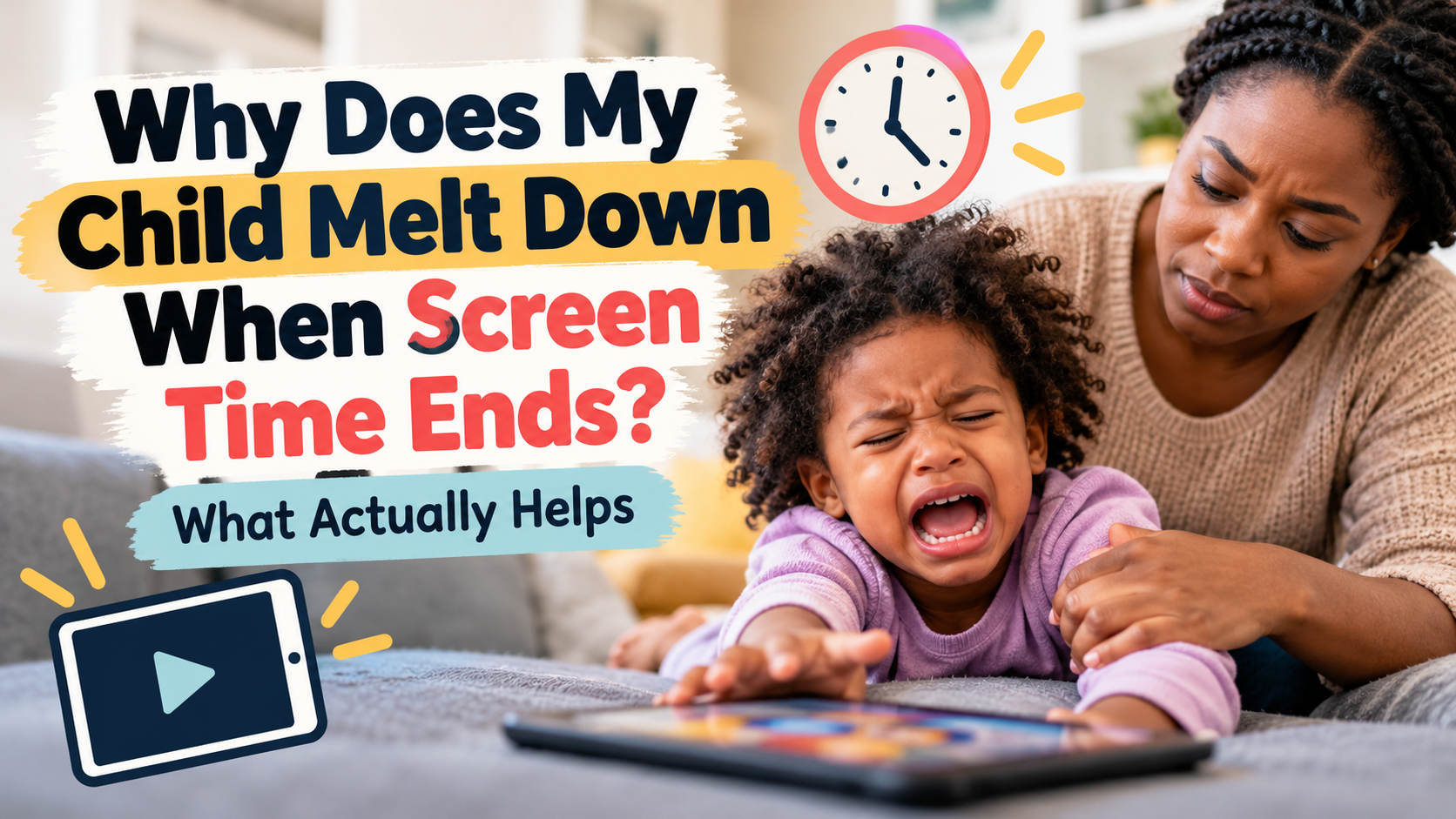
You tell your child they have five minutes left on the tablet. They agree. You give another warning. Everything seems fine until the screen actually goes off.
Then comes the crying, shouting, bargaining, grabbing for the device, or dropping to the floor.
If this happens regularly, the problem is not necessarily that your child needs more screen time. For many toddlers and preschoolers, stopping the screen is the difficult part. They are moving from something highly engaging to something less exciting while still learning how to handle frustration and transitions.
The American Academy of Pediatrics notes that children can struggle when digital media ends because they are losing an enjoyable activity and may not yet have the emotional skills to manage that frustration easily. Difficulty switching off does not automatically mean a child is addicted to screens. HealthyChildren.org
The good news is that changing how screen time ends can make a noticeable difference.
One of the easiest ways to create a daily battle is deciding the limit while your child is already watching.
Instead, make the boundary clear before the screen turns on.
Try:
“You can watch two episodes, then the TV goes off.”
Or:
“You can use the tablet until 5:30, then we are going to eat.”
This does not guarantee your child will happily stop, but it removes the feeling that the rule suddenly appeared halfway through their activity.
For younger preschoolers, an amount they can understand often works better than saying, “You have 27 minutes.”
“One episode” or “until the timer rings” is much easier to follow.
Turning off a show halfway through an episode or taking a tablet away while your child is completing a game can make the transition much harder.
Whenever possible, plan screen time around a natural stopping point.
You might say:
“This is your last episode.”
“This is your last game.”
“When this video finishes, we are putting the tablet away.”
This gives your child a clear finish instead of making the screen disappear at an unpredictable moment.
Parents often focus entirely on what the child has to stop doing.
But your child also needs to know what they are moving toward.
Instead of:
“Turn the tablet off.”
Try:
“When the timer rings, we are putting the tablet away and then you can help me make your snack.”
Or:
“After this episode, we are getting your scooter and going outside.”
The next activity does not need to be more exciting than the screen. It simply needs to be predictable.
Children who struggle with screen time may also struggle with other changes during the day. If transitions are difficult more generally, why toddlers struggle with daycare transitions can help you identify the patterns behind them.
Warnings can help some children, but repeatedly announcing that screen time is nearly finished can also turn the final ten minutes into a negotiation.
You do not need:
“Ten minutes.”
“Eight minutes.”
“Five minutes.”
“Three minutes.”
“One minute.”
Instead, try one clear reminder:
“Five more minutes. When the timer rings, the tablet is finished.”
You can let your child press the timer button or turn the device off themselves when time is up. Giving them a small role can make the transition feel more predictable without changing the boundary.
Child development guidance also recommends routines, previews, and visual cues to make transitions easier for children who find changing activities difficult. Child Mind Institute
Your child cries.
“Just one more.”
You say no.
They cry harder.
“Please, just five minutes.”
It is very tempting to give the screen back just to restore peace.
The problem is that your child may gradually learn that the real screen-time limit begins only after enough crying or negotiating.
You can acknowledge the disappointment without reopening the decision.
Try:
“I know you wanted to keep watching. Screen time is finished.”
Then stop explaining.
You do not need a long speech about why too much television is unhealthy while your preschooler is already upset.
Keep the limit simple and help them through the feeling.
Once your child is screaming or completely overwhelmed, this is usually not the best time for a lesson.
Avoid asking:
“Why are you doing this?”
“How many times have I told you?”
“Why can’t you just turn it off nicely?”
Instead, stay close and use one calm sentence.
“I know stopping was hard. The tablet is finished.”
If your child appears genuinely overwhelmed rather than simply protesting the boundary, reducing noise, questions, and stimulation may help.
Our guide to sensory meltdown vs tantrum explains what to look for when you are unsure whether your child is frustrated about a limit or struggling to regulate themselves.
If turning off the screen causes a huge reaction sometimes but not others, look at the circumstances.
For one week, notice:
You may discover that screen time ends badly mostly before dinner, before bedtime, after preschool, or after particularly long sessions.
That gives you something practical to change.
For example, if your child already arrives home exhausted and emotional, putting a highly engaging screen immediately before dinner may create another difficult transition. Children who regularly fall apart after childcare may also be experiencing after-daycare meltdowns.
Before the screen goes on, say exactly when it will end and what will happen next.
For example:
“You can watch one episode. When it finishes, the TV goes off and we are having your snack.”
When the episode finishes, follow through.
If your child protests, keep the response short:
“You wanted another one. I know. TV is finished.”
Then move on to the next part of the routine.
Do not judge the strategy based on whether your child complains the first time. The goal is not to eliminate disappointment instantly. The goal is to make the ending predictable enough that your child gradually learns what happens when screen time is over.
Occasional protests when a favorite activity ends are common in young children.
It is worth speaking with your child’s pediatrician if intense meltdowns happen almost every time screens are removed, screen use is seriously affecting sleep, eating, family activities or social interaction, or your child seems unable to tolerate ordinary periods of boredom without demanding a device. The American Academy of Pediatrics recommends discussing these patterns with a pediatrician when families are concerned. HealthyChildren.org
The most useful goal is not getting your child to love turning off the tablet.
It is helping them learn that enjoyable things can end, disappointment can be handled, and the day can move on without every screen-time transition becoming a battle.