Physical Address
381 Myrtle Avenue, Brooklyn, NY 11205
Physical Address
381 Myrtle Avenue, Brooklyn, NY 11205


You finally get your preschooler into bed, switch off the light, and sit down for the first time all evening.
Three minutes later, you hear footsteps.
“I need water.”
You take them back. Five minutes later, they need the toilet. Then it is another cuddle, another question, another trip down the hallway. Before long, bedtime has stretched into an hour, and everyone is frustrated.
If this sounds familiar, the goal is not to create a longer bedtime routine. The goal is to make bedtime predictable enough that your child knows exactly what happens next.
Before your child gets into bed, deal with the things they usually come back for.
Let them use the toilet, have a small drink, choose their comfort toy, and have their cuddle.
Then say something simple:
“You have had your drink, used the toilet, and had your cuddle. It is bedtime now. I love you. I will see you in the morning.”
Try to use roughly the same words every night.
If your child asks for another story after bedtime has ended, avoid starting the routine again.
You can say:
“We have finished stories for tonight. We can read again tomorrow.”
The same applies to another snack, another song, or another long conversation.
If every request creates five more minutes with you, your child quickly learns that getting out of bed keeps bedtime going.
This is the most practical change you can make.
When your child comes out again, do not start negotiating.
Say:
“It is bedtime. Let’s go back to bed.”
Walk them back calmly.
If they come out again, repeat the same response.
You might have to do this several times for the first few nights. What matters is that getting out of bed becomes predictable and boring rather than an opportunity for extra attention.
If your child lies awake for 45 minutes every night, bedtime may simply be too early.
For three nights, note what time they actually fall asleep.
If bedtime is 7:00 p.m. but they consistently do not sleep until 8:00 p.m., try moving bedtime slightly later and see whether they settle faster.
A child who is not tired enough will struggle to stay in bed no matter how good the routine is.
If your child says they are afraid, do not dismiss them.
Try:
“You are safe. I am nearby.”
A nightlight, comfort toy, or slightly open door may help.
You can also say:
“I will come back and check on you in five minutes.”
Then actually return.
This reassures your child without turning fear into another hour of bedtime interaction.
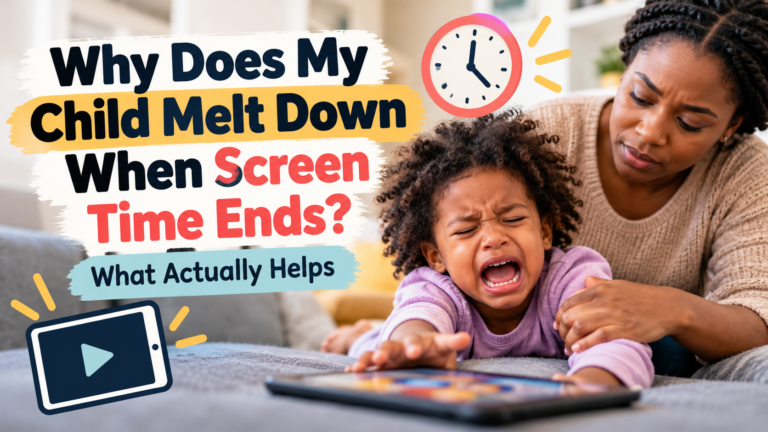
A difficult transition from television or a tablet can make bedtime harder before it even begins.
If your child becomes upset whenever a device is turned off, child meltdown when screen time ends can help you make that transition more predictable.
Try ending screens before the bedtime routine starts, then move into something calmer such as a bath, pajamas, or one story.
If your child seems completely overwhelmed during transitions rather than simply frustrated, sensory meltdown vs tantrum can help you understand what may be happening.
Keep tonight very simple:
Do not expect one perfect night. What you are trying to build is consistency.
When bedtime has a clear beginning and a clear ending, children gradually learn that coming back into the hallway does not restart the evening.