Physical Address
381 Myrtle Avenue, Brooklyn, NY 11205
Physical Address
381 Myrtle Avenue, Brooklyn, NY 11205

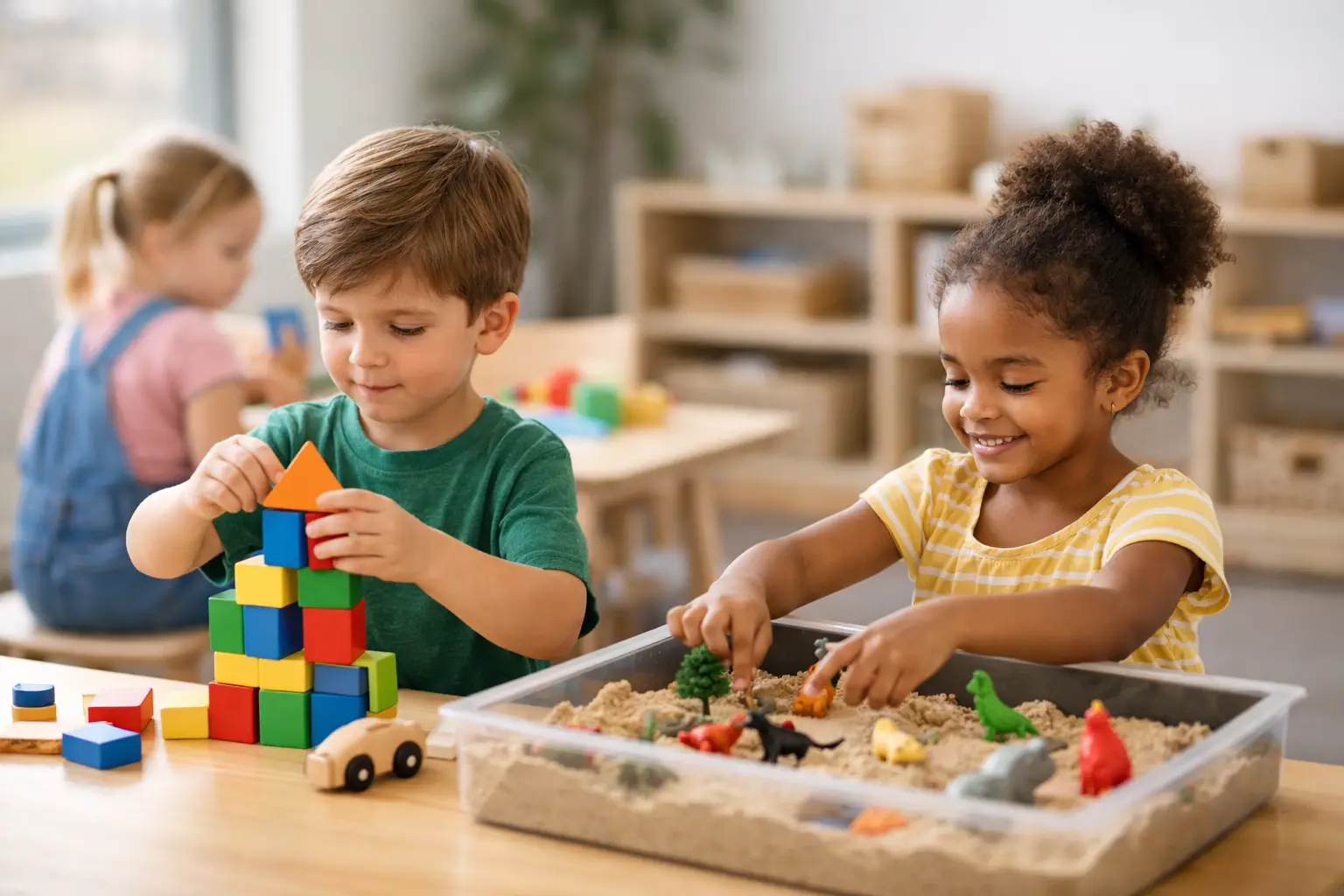
See how play based learning builds confidence, language, friendships, and school readiness while honoring each child's pace, strengths, curiosity, joy.
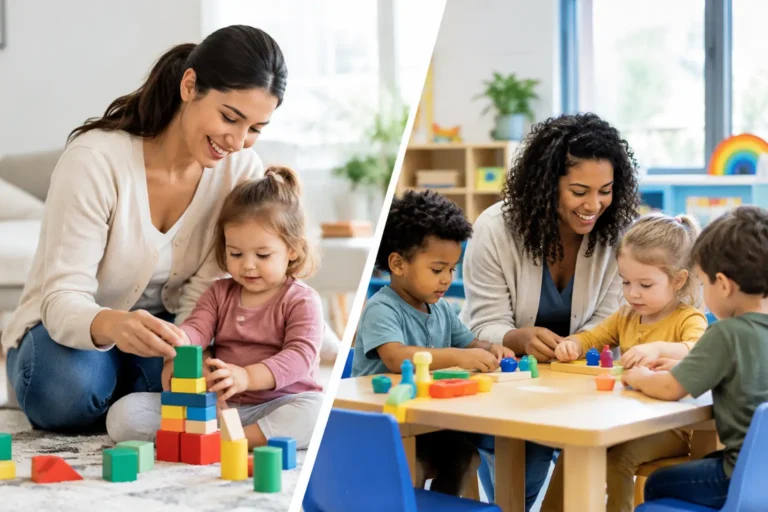
A toddler carefully stacks blocks until the tower falls. A preschooler turns a cardboard box into a veterinary clinic. An elementary-age child negotiates the rules of a backyard-style game with friends. These moments may look simple, but play based learning is meaningful work for children. Through play, they test ideas, practice skills, recover from mistakes, and discover that effort can lead to growth.
For parents, the value is not that every activity produces a worksheet or a polished project to bring home. The value is in what children are building beneath the surface: confidence, communication, persistence, self-regulation, creativity, and a genuine desire to learn. When adults provide a safe, responsive environment, play gives children room to become active participants in their own development.
Play based learning is an approach to early education that uses purposeful, hands-on experiences to support a child’s social, emotional, physical, and academic development. Children learn by exploring materials, asking questions, moving their bodies, imagining possibilities, and connecting with other people.
It is not simply free time with toys, and it is not a choice between play and learning. Skilled educators observe what children are interested in, set up inviting experiences, ask thoughtful questions, and gently extend learning without taking over. A child mixing pretend soup may be practicing language and storytelling. Measuring ingredients at a sensory table can introduce early math. Building a bridge with blocks invites problem-solving, planning, and collaboration.
The goal is not to rush children toward the next milestone. It is to meet them where they are, then offer the encouragement and challenge that helps them take a next step. That is the heart of a growth mindset: not “I can’t do it,” but “I can’t do it yet.”
Young children learn best when an experience matters to them. When they choose a role in dramatic play, investigate why a ramp makes a car move faster, or work with a friend to complete a puzzle, they have a reason to pay attention. Their motivation comes from curiosity, not pressure.
Play also gives children repeated chances to practice. A child who is learning to use scissors may return to cutting paper again and again because they want to make a ticket, a superhero cape, or a collage. That repetition strengthens fine motor skills, but it also teaches patience. If the paper tears or the shape does not turn out as planned, a caring teacher can name the effort and help the child try a new strategy.
This kind of learning often feels joyful because it is active. Children are not expected to sit still and absorb information before they are developmentally ready. They can touch, move, create, talk, and try. For many children, especially those with different communication, sensory, or developmental needs, that flexibility is what makes participation possible.
A well-planned play environment supports many areas of growth at once. During a simple game of restaurant, children may write menus with beginning marks or letters, count play money, take turns, use new vocabulary, and work through disagreements. None of those skills live in isolation in real life, and they do not need to be separated in the classroom either.
Play asks children to share space, read social cues, express preferences, and repair small conflicts. They learn phrases such as “Can I have a turn when you’re done?” and “Let’s make room.” With consistent guidance, children begin to understand that their feelings are welcome and that they can respond to big feelings safely.
These early experiences matter. A child who feels heard is more likely to take healthy risks, join a group activity, and speak up when they need help. Emotional security is not separate from school readiness. It is part of it.
Stories, songs, conversations, pretend play, and shared reading all build language. Children grow their vocabulary when teachers describe what they notice, introduce meaningful new words, and give them time to respond. A child who says, “My tower fell,” might hear, “It tumbled because the bottom was narrow. What could make the base stronger?”
That exchange supports more than vocabulary. It teaches children that their ideas have value and that questions are worth pursuing. As children dictate a story, recognize their name, explore rhyme, or make marks that represent a message, they are laying foundations for literacy in ways that feel connected to their lives.
Children do not need formal drills to begin thinking mathematically and scientifically. They compare sizes while sorting buttons, notice patterns when making necklaces, and explore cause and effect while pouring water through different containers. They test predictions every time they ask, “What happens if I add one more?”
Teachers can deepen these moments by pausing before giving an answer. Rather than fixing a block structure immediately, they might ask, “What do you notice?” or “What else could we try?” Children learn that problems are not proof they have failed. Problems are invitations to think.
Running, climbing, dancing, squeezing play dough, painting, and threading beads all develop coordination and body awareness. Active play can also help children release energy, reset after a hard moment, and practice listening to their bodies.
Self-regulation develops gradually, and it looks different at different ages. An infant may need a familiar adult to soothe them. A toddler may need help waiting for a turn. A preschooler may be learning to use words instead of grabbing. A supportive setting treats these moments as opportunities for guidance, not reasons for shame.
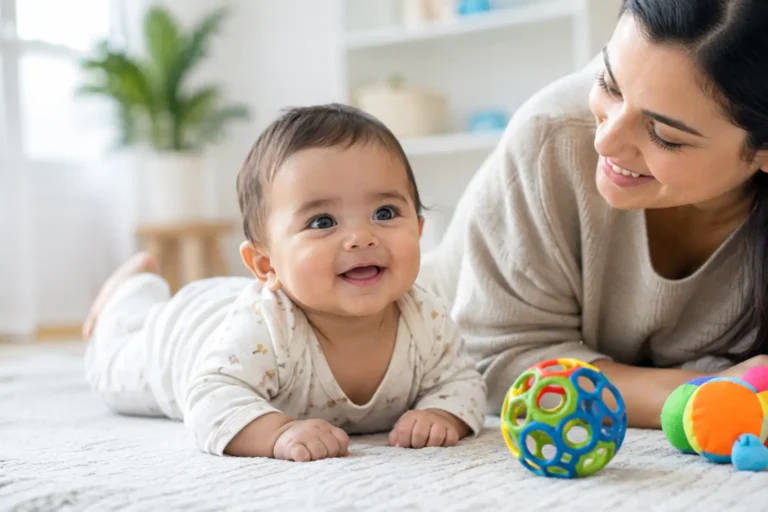
Play evolves as children grow, but the need for exploration and connection remains. Infants learn through warm, responsive relationships and sensory discovery. Reaching for a textured toy, making eye contact during a song, or dropping an object repeatedly are important experiments. Adults support learning by talking, responding, and creating predictable routines that help babies feel secure.
Toddlers are busy testing independence. They may fill and dump containers, imitate everyday tasks, move constantly, and use emerging words to communicate big ideas. Their play benefits from patient supervision, clear boundaries, and plenty of chances to make manageable choices.
Preschool and pre-kindergarten children often engage in richer imaginative play, cooperative building, early writing, and investigations that can last for days. A classroom interest in bugs, for example, might lead to outdoor observation, drawings, books, counting legs, and a shared habitat project. The educator follows children’s curiosity while making sure core developmental skills are woven into the experience.
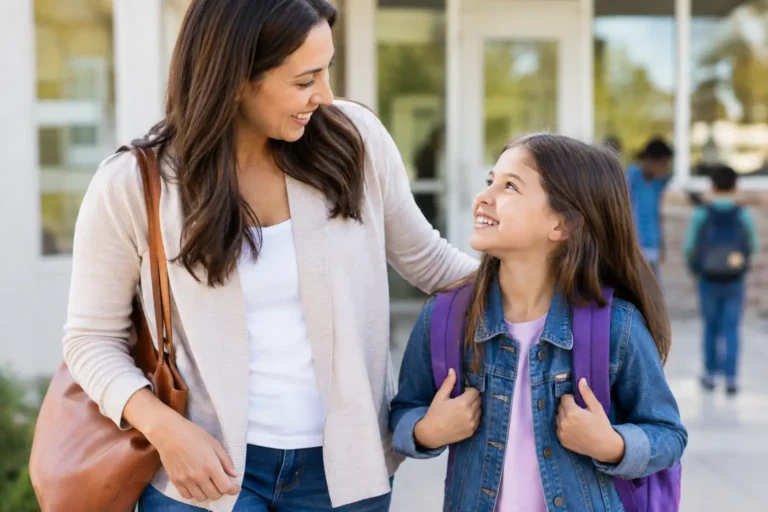
For children in kindergarten through fourth grade, play still has a place. Board games, engineering challenges, art, outdoor movement, collaborative projects, and interest-based activities can build executive functioning and friendships after a long school day. After-school care should give children a chance to decompress while still feeling capable, connected, and engaged.
Children need freedom in play, but they also need attentive adults. The best learning experiences balance child choice with thoughtful structure. Educators prepare materials that invite investigation, maintain predictable routines, and stay close enough to support safety and social problem-solving.
They also observe. Observation helps teachers recognize when a child is ready for a new challenge, when they need more time, and when an additional support may be helpful. For a child with speech, sensory, or motor differences, individualized strategies and collaboration with families and outside professionals can make play more accessible and meaningful.
Parents are essential partners in this process. When families share what a child enjoys, what they are working on, or what has changed at home, educators can respond with greater care. In return, clear communication gives parents a fuller picture of their child’s progress beyond a daily report. The small moments count: trying a new food, inviting a friend into play, using a new word, or returning to a difficult task.
You do not need a picture-perfect playroom or a schedule packed with enrichment activities. A few open-ended materials, time to explore, and your interested presence go a long way. Blocks, recycled boxes, crayons, dress-up clothes, puzzles, water, and everyday household items can inspire meaningful play.
Try following your child’s lead before offering a lesson. If they are lining up toy animals, you might wonder aloud which animal is tallest or ask where the animals are going. If they are frustrated, resist the urge to fix everything right away. Offer reassurance, name the challenge, and give them time to think: “That piece is tricky. You’re working hard to find where it fits.”
It also helps to protect unhurried time. Children need room for boredom, imagination, movement, and repetition. Some days, play will be energetic and social. Other days, a child may want quiet, solitary play. Both can be valuable when children feel safe and supported.
At Growth Mindset Learning Lab, we believe children deserve a judgment-free place to explore, make mistakes, and celebrate progress at their own pace. When we honor the process, children learn something lasting: their ideas matter, their effort matters, and there is always another way to try.