Physical Address
381 Myrtle Avenue, Brooklyn, NY 11205
Physical Address
381 Myrtle Avenue, Brooklyn, NY 11205
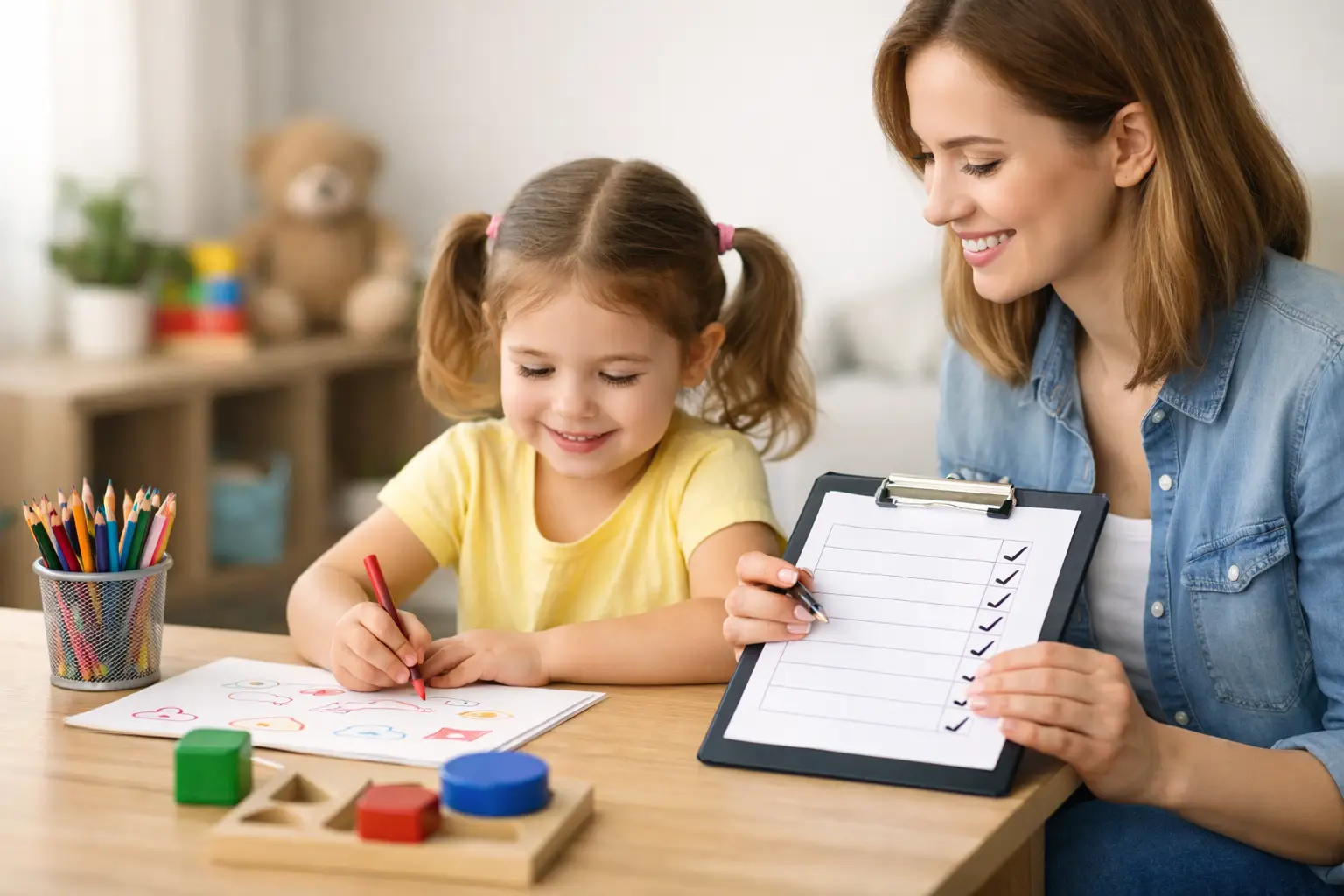
Use this preschool readiness skills checklist to notice independence, communication, play, and confidence as your child prepares for school with ease.
The morning rush can make preschool feel like a big leap: a new classroom, new routines, a backpack that suddenly looks enormous on small shoulders. A preschool readiness skills checklist can help you notice what your child is already learning and where a little extra practice or support may help. It is not a test, a deadline, or a measure of your child’s potential. Children grow in wonderfully different ways, and readiness is built through caring relationships, repeated routines, play, and the powerful word yet.
Preschool readiness is less about knowing letters, counting high, or sitting still for long stretches. Those skills can be part of learning, but they are not the whole picture. A child who can communicate a need, recover after a hard moment with support, join a simple routine, and stay curious about the world has strong building blocks for a preschool classroom.
Readiness also depends on the setting. A young three-year-old entering a play-based class may need different support than a child beginning a more structured pre-K program. Some children arrive eager to talk with everyone; others need time to watch, warm up, and trust their new teachers. Neither approach is wrong.
The goal is not to make children perform like older children. It is to help them feel safe, capable, and ready to participate in a community where learning happens through exploration.
Use these areas as conversation starters. Notice patterns over time rather than checking off every item in one afternoon. If your child is still developing a skill, that is useful information, not a reason for worry.
Preschoolers do not need perfect pronunciation or long conversations. They do benefit from being able to share basic needs in the way that works for them, whether through words, gestures, signs, pictures, or a communication device.
You may notice that your child can tell an adult they need help, make a choice between two options, respond to their name, and follow a simple one- or two-step direction such as, “Put your cup on the table, then come wash your hands.” They may enjoy songs, stories, rhymes, or talking about something they see.
Children who are bilingual may use different words or sentence lengths in each language. That is a normal part of multilingual development, not a sign that families should stop using their home language. Rich, loving conversation in any language supports learning.
A preschool classroom is a small community. Children are learning to take turns, play alongside peers, express big feelings, and begin to understand that other people have ideas and needs too. They do not need to share perfectly or avoid every meltdown. In fact, preschool is a place to practice these skills with patient adult guidance.
Look for early signs such as showing interest in other children, playing near or with a peer for a short time, accepting comfort from a trusted adult, and beginning to use words or gestures instead of hitting, grabbing, or screaming when frustrated. Your child may still need help saying, “My turn,” “Stop,” or “I’m mad.” Most do.
Separating from a parent can be a particularly tender skill. A child may cry at drop-off and still settle into a happy, engaged day. What matters is not a tear-free goodbye. It is whether caring teachers and predictable routines can help your child reconnect, regulate, and feel secure.
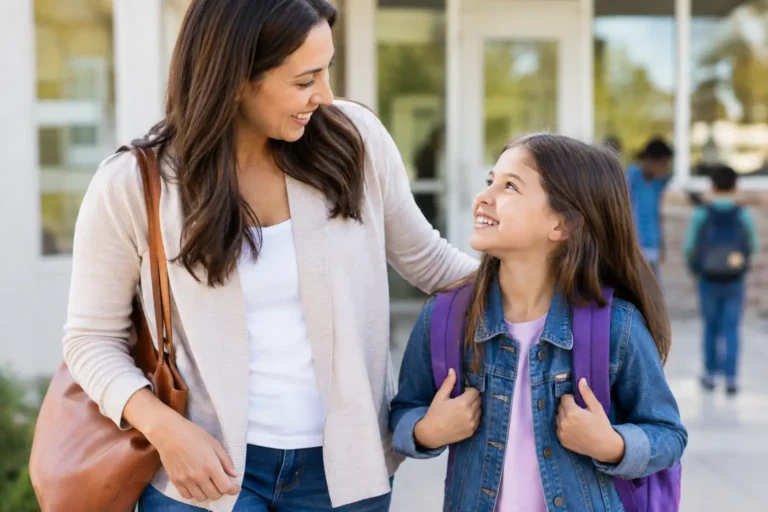
Independence grows one tiny action at a time. Preschoolers are often proud to carry their own belongings, attempt a zipper, throw away a napkin, or wash their hands with reminders. These tasks build confidence because children see that their efforts matter.
Before preschool, it helps if your child is beginning to participate in routines such as putting on or taking off simple clothing, eating with a spoon or fork, drinking from an open cup or water bottle, cleaning up with help, and sitting at a table for a brief meal or activity. Toilet learning is handled differently by each program, so ask your chosen school about its expectations and how teachers support children who are still learning.
Avoid turning routines into pressure-filled drills. Offer choices that are manageable: “Do you want to try the left shoe or the right shoe first?” Celebrate effort, even when the shoe lands on the wrong foot.
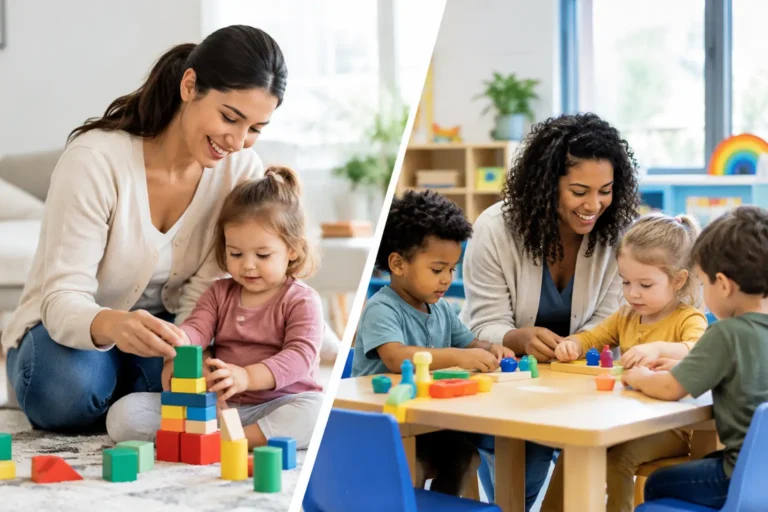
Play is serious learning for young children. When a child stacks blocks, pretends to cook, investigates a bug, or tries a puzzle again after it falls apart, they are building early problem-solving, attention, language, and flexible thinking.
Many preschool-ready children can explore an activity for a few minutes, imitate a simple action, enjoy pretend play, and transition to a new activity with support. They may recognize familiar colors, shapes, letters in their name, or small quantities, but memorizing academic facts is not required for meaningful preschool learning.
A child who is highly active, cautious with new materials, or intensely focused on one favorite interest can still thrive in preschool. The best classrooms make room for movement, sensory needs, curiosity, and different ways of engaging. If transitions are hard, practicing a simple “first, then” routine at home can be more helpful than expecting a child to suddenly love stopping a preferred activity.
Children use their bodies all day in preschool: climbing, dancing, building, drawing, carrying, scooping, and navigating a busy room. Gross motor skills support confidence on the playground, while fine motor skills help with art, manipulatives, and early writing experiences.
Your child may be ready to practice walking safely with an adult, climbing age-appropriate structures, throwing or rolling a ball, turning pages in a book, using crayons or markers, and manipulating small objects with supervision. There is no need to force a pencil grip or expect neat handwriting. Scribbles, big movements, and messy art are all meaningful steps.
If you have concerns about speech, movement, sensory processing, feeding, or daily living skills, bring them up early with your child’s pediatrician and prospective school. Support from speech or occupational therapy professionals can be a helpful partnership, and an inclusive program can adapt routines so children can participate fully.
The strongest preparation often looks ordinary. Invite your child to help sort socks, set napkins on the table, choose a book for bedtime, or place toys in a basket before moving to the next activity. Narrate what is happening: “You kept trying that zipper. It was tricky, and you got it started.” This kind of specific encouragement teaches children that effort and practice lead to growth.
Read together every day, even if your child only listens for a few pages. Sing songs with repeated motions. Visit a playground or library story time when it feels comfortable. Practice brief goodbyes with a trusted caregiver. These experiences build familiarity with groups, routines, language, and transitions without asking children to act older than they are.
It also helps to talk positively and honestly about preschool. Explain what your child can expect: a teacher will help, there will be playtime and meals, and you will come back after a predictable part of the day. If possible, visit the classroom, meet the teacher, and share details that help staff know your child well, including comfort items, favorite interests, allergies, communication styles, and strategies that work during hard moments.
A checklist should never overshadow your relationship with your child. If several skills are still emerging, begin with curiosity. Is your child getting enough chances to practice? Do they show the skill in one environment but not another? Are they tired, overwhelmed, adjusting to change, or communicating in a different way?
Speak with your child’s teacher, pediatrician, or an early childhood professional when concerns persist or interfere with daily participation. Early support is not a label or a failure. It is a way to understand your child’s needs and give them useful tools sooner.
At Growth Mindset Learning Lab, we believe children deserve a judgment-free place to grow at their own pace, with adults who notice both the big milestones and the quiet progress in between. The child who tries one new food, waves goodbye after a hard week, or asks for help instead of giving up is learning something that matters.
As preschool approaches, keep the focus on connection. Your calm confidence, warm routines, and belief in your child’s ability to grow can become the steady foundation they carry into a new classroom.