Physical Address
381 Myrtle Avenue, Brooklyn, NY 11205
Physical Address
381 Myrtle Avenue, Brooklyn, NY 11205

As preschool approaches, many parents find themselves asking the same question: Is my child really ready?
I’ve had countless conversations with parents who worried their child wasn’t prepared because they couldn’t recite the alphabet, count to 20, or recognize every shape and color.
Then I’ve watched those same children walk into a classroom, make friends, follow routines, and thrive.
I’ve also seen children who knew plenty of academic skills struggle with everyday classroom expectations because they found it difficult to communicate their needs, separate from a parent, or participate in group activities.
This is why preschool readiness can feel confusing.
Many parents focus on what their child knows. Preschool teachers often focus on how a child functions within a classroom environment.
The good news is that readiness isn’t about perfection. It’s about having a foundation of social, emotional, communication, and self-help skills that help children adjust to a new setting.
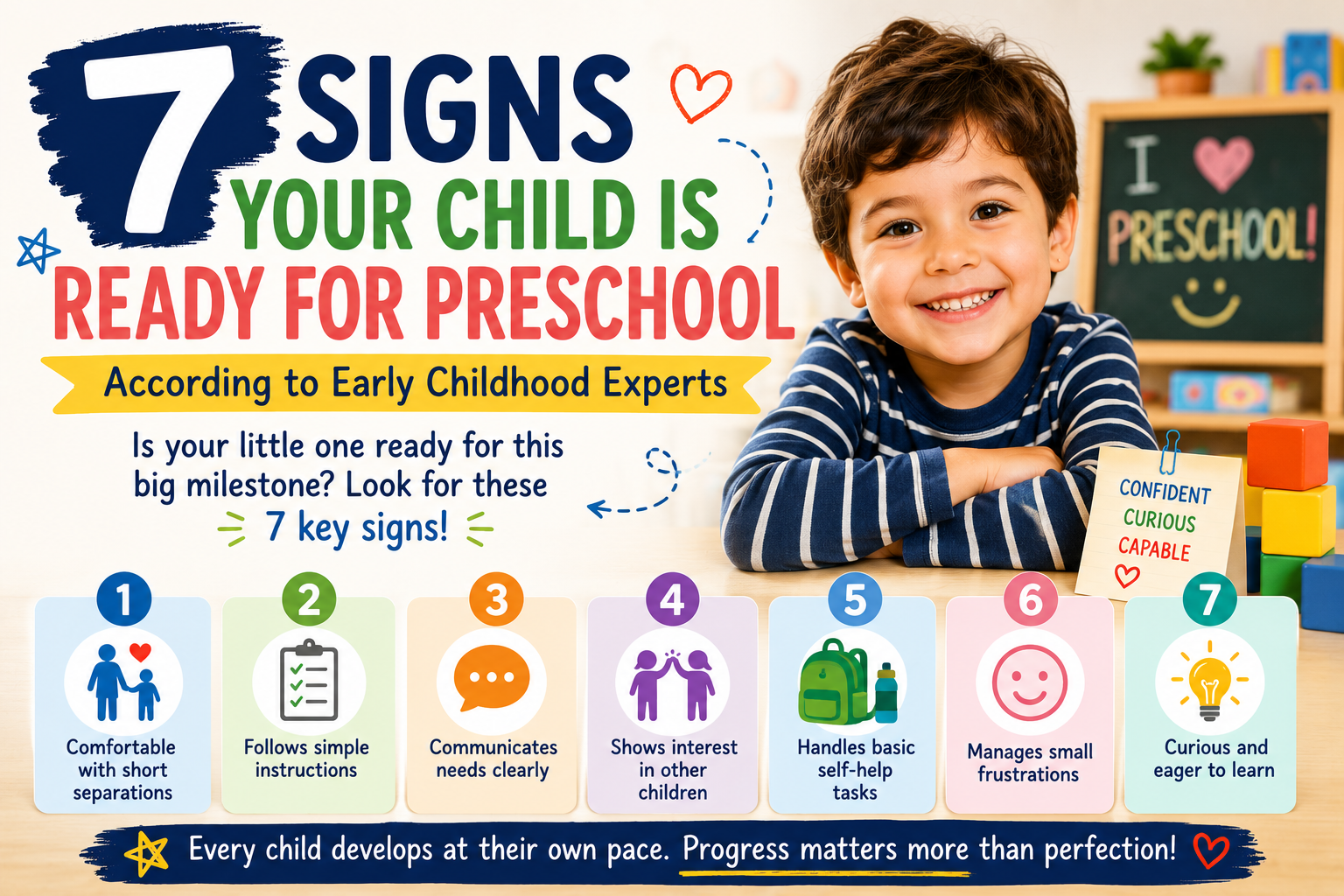
If you’re wondering whether your child is ready for preschool, these seven signs can give you a clearer picture of where they are today and what skills you can continue building at home.
When parents think about preschool readiness, academics are often the first thing that comes to mind.
Can my child count?
Do they know their letters?
Can they recognize colors?
While these skills can certainly be helpful, they are not usually what determines whether a child adjusts successfully to preschool.
In most preschool classrooms, children spend much of their day:
That’s why readiness is less about academic achievement and more about a child’s ability to function comfortably in a structured environment.
A child who can ask for help, follow simple directions, and participate in daily routines often settles into preschool more easily than a child who knows advanced academic concepts but struggles socially or emotionally.
One of the biggest misconceptions I see is the belief that preschool readiness is measured by academic skills alone.
Many parents spend months practicing flashcards, worksheets, and counting exercises while overlooking the skills that teachers use every day.
Another common mistake is comparing children.
One child may be outgoing and eager to join group activities.
Another may be quieter but highly independent.
Both can be ready for preschool.
Readiness doesn’t look exactly the same for every child.
Children develop at different rates, and that’s completely normal.
The goal isn’t to check every box perfectly. The goal is to ensure your child has enough foundational skills to participate, learn, and feel secure in a preschool environment.
One of the clearest indicators of readiness is a child’s ability to spend time with another trusted adult without becoming overwhelmed.
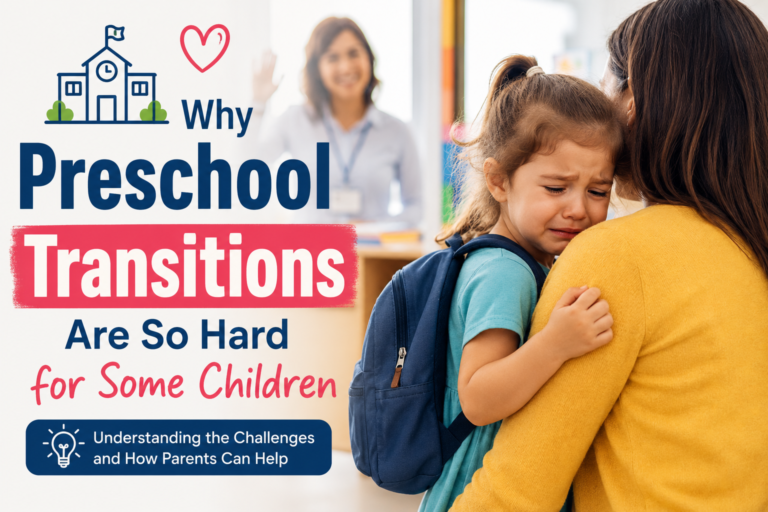
This doesn’t mean there won’t be tears at drop-off.
In fact, many children who are fully ready for preschool still cry during their first few days.
What matters is that they can gradually settle and engage once they feel safe.
I’ve seen children cry when a parent leaves and then happily join circle time five minutes later.
What to observe at home:
Preschool teachers give directions throughout the day.
Children are asked to line up, wash hands, clean up toys, and move between activities.
A child who can follow simple instructions often finds classroom routines much easier.
Real-life example:
When a teacher says, “Put your blocks away and come sit on the rug,” children need to understand and respond appropriately.
What to observe at home:
Teachers aren’t mind readers.
Children need some ability to express what they need, even if their speech isn’t perfect.
A child who can say “I’m thirsty,” “I need help,” or “I have to use the bathroom” is often better equipped to handle preschool routines.
What to observe at home:
Preschool is a social environment.
Children don’t need to be social butterflies, but some curiosity about other children is often a positive sign.
This might look like:
What to observe at home:
Notice how your child behaves at playgrounds, family gatherings, or playdates.
Preschool teachers encourage independence.
While adults provide support, children are expected to participate in simple self-care routines.
Examples include:
These skills help children feel more capable and confident.
What to observe at home:
Does your child attempt tasks independently before asking for help?
No preschool day is perfect.
Someone may get the toy they wanted.
A tower may fall down.
A game may not go their way.
Children who are beginning to recover from disappointment without major meltdowns often adjust more smoothly to classroom life.
This doesn’t mean they never get upset.
It means they’re slowly learning how to move through frustration.
What to observe at home:
How does your child react when things don’t go as planned?
One of my favorite signs of readiness is curiosity.
Children who ask questions, investigate new objects, and show interest in learning are often eager participants in preschool activities.
Curiosity drives learning.
A child doesn’t need to know everything.
They simply need to be interested in discovering new things.
What to observe at home:
Here’s something I tell parents all the time:
Very few children show every readiness sign perfectly before starting preschool.
Some children are excellent communicators but struggle with separation.
Others are independent but shy around peers.
Readiness exists on a spectrum.
Children continue developing these skills throughout preschool.
If your child needs extra support in one or two areas, that doesn’t mean they’re not ready. It simply means those are areas where additional practice may help.
Progress matters far more than perfection.
Consistent routines help children feel secure and build confidence.
Allow your child to practice dressing, cleaning up, and washing hands.
Playdates, library story times, and community activities provide valuable opportunities to interact with peers.
Books help children build listening, language, and social-emotional skills.
Ask open-ended questions during meals, walks, and playtime.
Pretend play, puzzles, building blocks, and art activities all support preschool readiness.
Every child develops differently.
Social and emotional skills often matter just as much.
Children need support while developing new skills.
Preschool readiness should never feel like a test.
Confidence, resilience, and communication play a huge role in classroom success.
After years of working with preschoolers, I’ve learned that readiness rarely looks exactly how parents expect.
The children who adjust best are not always the ones who know the most letters or numbers.
They’re often the children who feel safe trying new things, asking for help, following routines, and connecting with others.
If your child is still working on some of these skills, that’s okay.
Preschool isn’t a place where children are expected to arrive fully prepared.
It’s a place where they continue growing.
Focus on steady progress, celebrate small wins, and remember that every child develops at their own pace.
The fact that you’re taking the time to prepare your child already puts them on a strong path toward a positive preschool experience.
Most children begin preschool between ages 2 and 5, depending on the program and individual development.
Requirements vary by program, but many schools prefer children to have basic toilet independence.
No. Most preschools teach letters as part of their curriculum.
Look for growing independence, curiosity, and the ability to recover from minor frustrations.
This is very common and often improves as children become familiar with the environment.
Absolutely. Many shy children thrive once they feel comfortable and secure.
Provide opportunities for playdates, group activities, and cooperative play.
Communication, independence, emotional regulation, and following simple directions.
Many children adjust within a few weeks, though timelines vary.
Focus on gradual skill-building at home and discuss concerns with prospective preschool staff.