Physical Address
381 Myrtle Avenue, Brooklyn, NY 11205
Physical Address
381 Myrtle Avenue, Brooklyn, NY 11205


Choosing a daycare isn’t just about avoiding the wrong one—it’s about finding a place where your child feels safe, supported, and excited to learn.
Walking into a daycare for the first time can leave you with lots of questions.
Is this the right place for my child?
Will the teachers care for them the way I do?
Will they be happy here?
While it’s important to know the warning signs of a poor-quality daycare, it’s just as important to recognize the positive signs of a truly great one.
Want to know what warning signs to avoid? Read our guide on the daycare tour red flags every parent should know.
A beautiful classroom, expensive toys, or a long list of activities might make a good first impression, but they don’t tell the whole story.
The best daycare centers stand out because of how they care for children every single day.
You’ll see warm teachers who know every child by name, children who feel comfortable asking for help, meaningful play that supports learning, and strong partnerships with families.
These are the qualities that help children feel secure, build confidence, and develop a lifelong love of learning.
In this guide, we’ll walk you through 10 green flags that every parent should look for during a daycare tour. You’ll also learn why each one matters, what it looks like in a real classroom, and a simple question you can ask to help you make a confident decision.
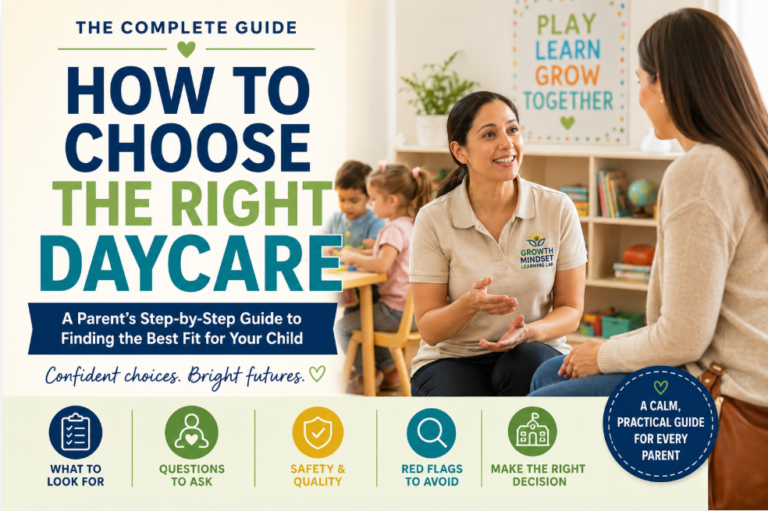
If you’re still comparing daycare options, be sure to read our complete guide to choosing the right daycare, where we cover everything from licensing and safety to comparing programs and preparing your child for a successful transition.
As you visit different daycare centers, these are the positive signs you should hope to see:
Remember, one positive interaction doesn’t automatically mean you’ve found the perfect daycare. Look for these green flags to appear consistently throughout your visit. When they do, they’re a strong indication that you’ve found a place where children are genuinely cared for and supported.
What you might notice:
The first thing to observe during a daycare tour isn’t the classroom—it’s the teachers.
Watch how they interact with the children.
Do they:
These small interactions reveal a lot about the culture of the daycare.
Young children learn best when they feel safe, valued, and understood.
Warm, respectful relationships help children build confidence, develop social skills, and feel secure enough to explore and learn.
A caring teacher doesn’t just supervise children—they help them feel seen and supported every day.
Imagine a child struggling to put on their shoes before going outside.
Instead of saying,
“Hurry up, everyone is waiting!”
A nurturing teacher might kneel beside the child and say,
“You’re almost there. Let me help you with this strap, then I know you can finish the rest.”
The child feels encouraged rather than embarrassed, and the moment becomes an opportunity to build confidence instead of frustration.
These everyday interactions often tell you more about a daycare than any brochure or website ever could.
“How do your teachers build trusting relationships with children who are new or feeling anxious?”
A quality daycare should be able to explain how they help every child feel welcomed, supported, and emotionally safe from their very first day.
Remember: A great daycare isn’t one where teachers simply watch children. It’s one where children feel comfortable talking to them, asking for help, and knowing they’ll be treated with kindness and respect.
What you might notice:
Take a moment to observe the children.
Do they naturally walk up to their teachers to ask questions, share a drawing, or seek comfort when they’re upset?
Children who trust their caregivers aren’t afraid to ask for help because they know they’ll be met with patience and kindness.
Strong relationships are the foundation of early learning.
When children feel emotionally safe, they’re more confident to explore, make friends, and try new things.
You might see a child proudly showing their teacher a block tower they built or running to them for a hug after a small fall. These everyday moments show that children feel secure and connected.
“How do you help children who are shy or need extra reassurance?”
What you might notice:
Great teachers don’t simply watch children—they actively engage with them while making sure everyone is safe.
Look to see if teachers are:
Active supervision helps prevent accidents while allowing children the freedom to explore, play, and learn confidently.
During outdoor play, teachers are spread across the playground, interacting with children while keeping a watchful eye on everyone—not standing together chatting.
“How do you ensure children are always supervised during playtime and transitions?”
Remember: A busy classroom isn’t a bad sign. A great daycare is one where children can play confidently because caring adults are always attentive, engaged, and ready to support them.
What you might notice:
A great daycare doesn’t treat children as just another number.
Instead, teachers take time to learn each child’s personality, interests, strengths, and comfort needs.
You might hear a teacher say:
These small details show that teachers genuinely know the children in their care.
Every child learns differently.
When teachers understand each child’s unique needs, they can provide the right support, build stronger relationships, and create a more positive learning experience.
A teacher notices that a child is unusually quiet during an activity and gently checks in to see if they’re feeling okay instead of assuming they’re simply being shy.
“How do teachers get to know each child’s personality, interests, and individual needs?”
What you might notice:
Children won’t behave perfectly all the time—and they shouldn’t be expected to.
Watch how teachers respond when a child refuses to share, becomes frustrated, or has a tantrum.
Do they remain calm?
Do they help the child understand their feelings?
Or do they immediately yell, shame, or punish?
Young children are still learning how to manage their emotions.
Patient guidance teaches them important life skills like empathy, problem-solving, and self-control.
Two children want the same toy.
Instead of raising their voice, the teacher calmly helps them take turns, talk through the problem, and find a solution together.
The focus is on teaching—not punishing.
“How do your teachers handle challenging behavior while helping children learn from the experience?”
Remember: A great daycare understands that mistakes are part of childhood. Instead of expecting perfect behavior, teachers use everyday moments to help children grow emotionally and socially.
What you might notice:
At a great daycare, children aren’t just being kept busy—they’re learning through play.
Look for activities such as:
These activities help children develop language, creativity, problem-solving, and social skills in ways that feel natural and enjoyable.
Play is how young children learn best.
A high-quality daycare plans activities with a purpose, helping children grow academically, socially, emotionally, and physically.
Instead of children spending long periods watching screens, they’re actively exploring, asking questions, creating, and interacting with both teachers and classmates.
“How do you plan activities that support children’s learning and development?”
What you might notice:
Young children feel more secure when they know what to expect.
Ask to see the daily schedule and look for a balanced routine that includes:
At the same time, teachers should be flexible enough to meet individual children’s needs rather than rushing everyone through the day.
Predictable routines help children feel safe and reduce anxiety, especially during their first few weeks at daycare.
Flexibility ensures that children receive the support they need when unexpected situations arise.
A teacher notices that a child needs a little extra time to finish an activity before moving on. Instead of hurrying them, the teacher offers gentle guidance while keeping the classroom running smoothly.
“How do you balance a daily routine with each child’s individual needs?”
Remember: A well-run daycare isn’t one where every minute is strictly controlled. It’s one where children enjoy a consistent routine while still receiving the patience, care, and flexibility they need to thrive.
What you might notice:
A great daycare views parents as partners, not just customers.
From your first visit, the staff should be open, welcoming, and willing to answer your questions honestly.
Look for signs such as:
Good communication builds trust.
You’ll want to know how your child is adjusting, what they’re learning, and whether there are any concerns that need your attention.
A daycare that communicates openly helps parents and teachers work together to support the child’s development.
A teacher doesn’t just say, “Your child had a good day.”
Instead, they share specific details like:
“Emma loved painting today, made a new friend during outdoor play, and needed a little reassurance after nap time, but she settled quickly.”
These meaningful updates help parents stay connected to their child’s day.
“How do you keep parents informed about their child’s day and development?”
What you might notice:
High-quality daycare centers invest in their teachers.
Ask about:
A daycare that supports its educators is more likely to provide consistent, high-quality care for children.
Children benefit when they’re cared for by confident, knowledgeable educators who continue to learn and grow in their profession.
Experienced teachers are often better equipped to support children’s emotional, social, and developmental needs.
The director proudly explains how teachers attend regular training sessions and how new staff are mentored by experienced educators.
This shows a commitment to continuous improvement rather than simply meeting minimum requirements.
“How do you support your teachers’ professional growth and development?”
What you might notice:
Trustworthy daycare centers don’t avoid difficult questions.
Instead, they’re happy to explain:
Transparency is often one of the strongest signs that a daycare has confidence in the quality of its program.
Parents deserve to understand exactly how their child will be cared for.
Clear policies reduce confusion and help families know what to expect.
When you ask about safety procedures, the director provides a clear explanation, offers written policies, and encourages you to ask additional questions without making you feel rushed.
“Can you walk me through your health, safety, and emergency policies?”
Remember: A great daycare doesn’t expect parents to trust them blindly. They earn that trust through honesty, transparency, and a genuine commitment to children’s safety and well-being.
By now, you might be thinking:
“What if a daycare has some of these green flags, but not all of them?”
That’s a great question.
The truth is, no daycare is perfect.
A child may cry during your tour. A classroom might be a little noisy after an exciting activity. A teacher may be helping one child while another waits for a moment.
These situations are completely normal.
What matters is the overall pattern.
Ask yourself:
If the answer is “yes” to most of these questions, you’re likely looking at a high-quality daycare.
| If a Daycare Says… | Look for This Instead… |
|---|---|
| “We treat every child like family.” | Teachers know children by name, comfort them when they’re upset, and build trusting relationships. |
| “We have an excellent curriculum.” | Children are actively learning through play, conversation, and exploration. |
| “Safety is our top priority.” | Secure entrances, active supervision, clean classrooms, and clear emergency procedures. |
| “We communicate with parents.” | Teachers share regular, honest updates and welcome questions. |
| “Our teachers are experienced.” | Staff confidently explain routines, know the children well, and work together as a team. |
Remember, actions speak louder than words.
The best daycare centers don’t just tell you they’re great—they show you through their daily interactions with children and families.
Before you leave your next daycare tour, ask yourself:
✔ Teachers spoke kindly and respectfully to children.
✔ Children felt comfortable approaching their teachers.
✔ Supervision was active and consistent.
✔ Learning happened through meaningful play.
✔ The daily routine felt organized and child-friendly.
✔ Parents were welcomed and questions were encouraged.
✔ Safety procedures were clear.
✔ I left feeling informed and confident.
The more boxes you can honestly check, the more likely you’ve found a daycare where your child can thrive.
Choosing a daycare is one of the biggest decisions you’ll make as a parent.
While no program is perfect, a great daycare will consistently show the qualities that matter most: caring teachers, safe environments, meaningful learning, and strong partnerships with families.
Trust your observations, ask thoughtful questions, and look for patterns—not perfection.
When children feel safe, respected, and excited to learn, you’ve found something far more valuable than a beautiful classroom.
You’ve found a place where they can grow with confidence.
Want to make an even more informed decision?
Explore these helpful guides from Mindset Moment:
If you’re looking for a nurturing daycare in Brooklyn, NY, we’d love to welcome you to Growth Mindset Learning Lab.
Schedule a tour, meet our educators, and see firsthand how we help children feel safe, supported, and excited to learn every day.