Physical Address
381 Myrtle Avenue, Brooklyn, NY 11205
Physical Address
381 Myrtle Avenue, Brooklyn, NY 11205

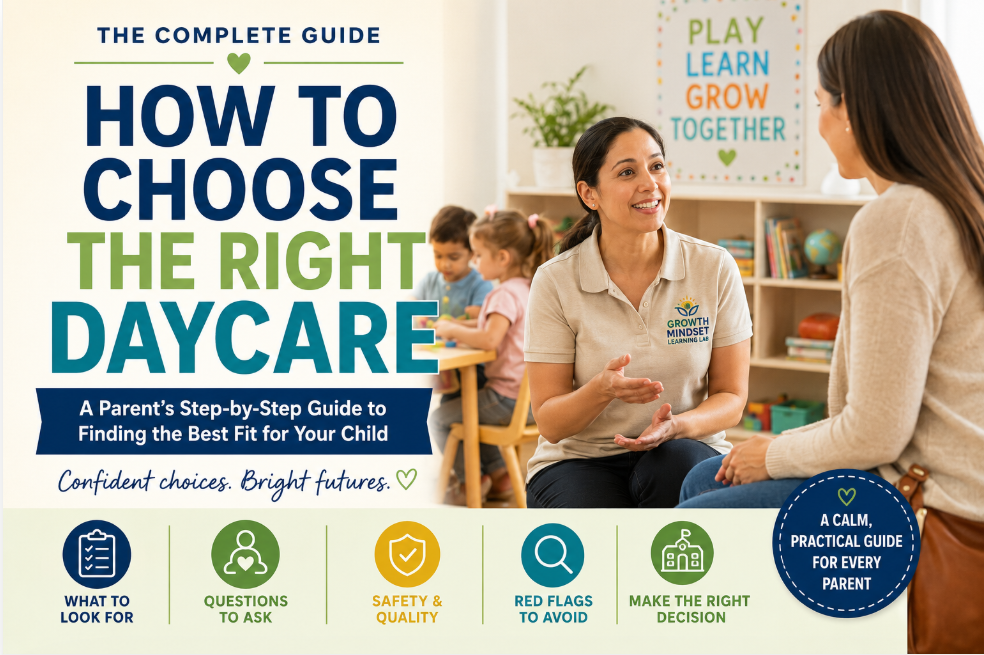
Everything you need to confidently choose a daycare where your child will be safe, happy, and supported.
You’ve probably spent hours searching online.
You’ve read reviews, asked friends for recommendations, compared tuition fees, and maybe even driven past a few daycare centers wondering, “Could this be the right place for my child?”
Yet, despite all that research, you may still have one overwhelming question:
“How do I know I’m making the right decision?” Download our daycare decision workbook here
If that’s how you feel, you’re not alone.
For many parents, choosing a daycare is one of the first major decisions they’ll make on behalf of their child. It can feel exciting, emotional, and even intimidating because you’re not simply choosing a building or a classroom.
You’re choosing the people who will comfort your child when they’re upset.
The teachers who will celebrate their first achievements.
The environment where they’ll build friendships, develop confidence, and discover the joy of learning.
That responsibility can feel overwhelming, especially if you’re a first-time parent, returning to work, relocating, or enrolling your child in daycare for the very first time.
The good news is this:
You don’t need to be an early childhood expert to recognize a high-quality daycare.
You simply need the right information, the right questions, and a clear process for evaluating your options.
That’s exactly what this guide is designed to give you.
If you’re short on time, here’s the answer in one sentence:
A great daycare is licensed, safe, emotionally supportive, developmentally appropriate, transparent with families, staffed by caring educators, and committed to helping every child grow with confidence.
However, finding the right daycare involves much more than checking a few boxes.
The best choice for your family depends on your child’s personality, your family’s needs, the quality of the educators, the learning environment, safety practices, communication, and whether the program genuinely supports children’s emotional and developmental growth.
Throughout this guide, we’ll show you exactly how to evaluate each of these areas with confidence.
By the time you finish reading, you’ll know how to:
You’ll also find practical checklists, expert recommendations, comparison tables, and printable resources that can help make your decision easier.
Many parents spend weeks searching for the “perfect” daycare.
The reality is that no childcare program is perfect.
Every daycare has different strengths, teaching styles, routines, personalities, and learning environments.
Rather than searching for perfection, your goal should be to find the program that is the best fit for your child and your family.
A daycare that works beautifully for one child may not be the best choice for another.
For example:
Understanding your child’s individual needs is just as important as evaluating the daycare itself. Download the Daycare Decision Workbook.
Think of this guide as your complete decision-making framework.
You can read it from beginning to end if you’re just starting your search, or jump directly to the sections that matter most right now.
We’ll walk through every stage of the process, including:
By the end, you won’t simply feel more informed.
You’ll have a practical system you can use to confidently evaluate any daycare you visit.
Before you compare daycare centers, it’s important to understand the different types of childcare available.
Many parents use terms like daycare, childcare, preschool, nursery, and pre-K interchangeably, but they don’t always mean the same thing.
Each option has its own strengths, limitations, teaching approach, schedule, and learning environment.
Understanding these differences will help you narrow your search and focus on the type of care that best fits your family’s needs.
In the next section, we’ll break down the most common childcare options, explain who each one is best suited for, and help you decide which setting is likely to give your child the best start.
Quick Summary:
Not all childcare programs are the same. Understanding the different types of childcare available will help you narrow your search and focus on the options that best meet your child’s needs and your family’s lifestyle.
Many parents begin their search by typing “best daycare near me” into Google. While that’s a great starting point, the first question isn’t Which daycare is best?
It’s:
“What type of childcare is best for my child and my family?”
The answer depends on several factors, including your child’s age, your work schedule, your budget, your parenting preferences, and the kind of environment where your child is most likely to thrive.
Let’s look at the most common childcare options.
A daycare center is a licensed facility that cares for groups of children in classrooms, usually organized by age.
For many working families, daycare centers provide the best balance of structured learning, social interaction, and reliable care.
If you’re considering a daycare center, don’t be impressed only by colorful classrooms or expensive toys. Pay close attention to the teachers, classroom atmosphere, and how children interact with adults.
Family daycare is childcare provided in a caregiver’s home, usually with a smaller number of children of different ages.
Some families prefer this setting because it often feels more like an extended family environment.
If you’re visiting a family daycare, ask the same questions you would ask a daycare center about licensing, safety, training, emergency procedures, and communication with parents.
Preschool focuses on preparing children, typically between ages three and five, for kindergarten through structured play and intentional learning experiences.
Many preschool programs operate during school hours rather than providing full-day childcare.
A high-quality preschool helps children develop:
If you’re unsure whether your child is ready, you may also find our guide on Signs Your Child Is Ready for Preschool helpful.
Some families choose to have care provided in their own home.
This option offers one-on-one attention and maximum flexibility but is generally the most expensive.
Some children are cared for by grandparents or other relatives.
For many families, this arrangement offers familiarity and flexibility.
However, it’s still important to discuss routines, discipline approaches, communication, safety practices, and expectations to ensure everyone is working together consistently.
One of the most common questions parents ask is whether daycare and preschool are the same thing.
The answer is not always.
| Daycare | Preschool |
|---|---|
| Primarily provides childcare while supporting early learning | Primarily focuses on school readiness and early education |
| Often serves infants through preschool-age children | Usually serves children ages 3–5 |
| Generally offers full-day care | Often follows shorter school-day schedules |
| Supports working families with extended hours | May follow a school calendar |
Today, many high-quality daycare centers also provide outstanding educational experiences, making the distinction less important than it once was.
Rather than asking whether a program is a daycare or a preschool, ask:
Those answers tell you far more than the label on the building.
Once you’ve identified the type of childcare you’re looking for, it’s time to think about something equally important:
What does your family actually need?
This step is often overlooked, but it’s one of the biggest reasons parents feel overwhelmed.
When you visit several beautiful daycare centers, they can quickly begin to blend together.
Having a clear list of your family’s priorities before you start touring programs helps you compare options objectively instead of making decisions based only on first impressions.
In the next section, we’ll create a practical decision framework that helps you identify your non-negotiables, separate them from your preferences, and choose a daycare that truly fits your family’s daily life.
Quick Summary:
Before you fall in love with a daycare’s classrooms, teachers, or playground, verify that it meets important health, safety, and licensing standards. A beautiful website or glowing reviews should never replace careful research.
Many parents make the same mistake.
They search “best daycare near me,” read a few online reviews, book a tour, and assume everything they see online is accurate.
Unfortunately, that’s not always the case.
The best daycare isn’t necessarily the one with the highest number of five-star reviews or the most impressive social media photos.
It’s the one that consistently provides a safe, nurturing, and developmentally appropriate environment for children.
That’s why your research should begin before you walk through the front door.
Personal recommendations are a great starting point because they come from people you trust.
Ask:
Ask questions like:
Remember, every child and every family is different.
A daycare that worked well for one family may not necessarily be the best fit for yours.
Treat recommendations as the beginning of your research—not the final answer.
Online reviews can provide useful insights, but they should never be your only source of information.
Instead of focusing on one extremely positive or negative review, look for patterns.
For example:
If the same issue appears repeatedly across multiple reviews, it’s worth asking about during your tour.
One of the first things every parent should check is whether the daycare is properly licensed.
Licensing helps ensure that a daycare meets minimum state requirements for health, safety, staffing, and supervision.
Ask the director:
A reputable daycare should be happy to answer these questions openly.
Transparency is a sign of confidence.
Avoid programs that become defensive or reluctant to discuss licensing or inspections.
Many parents don’t realize that inspection reports are often publicly available.
These reports can tell you whether a daycare has been cited for issues such as:
One minor issue from several years ago isn’t necessarily a reason to avoid a daycare.
Instead, look for patterns.
Ask yourself:
A daycare that openly explains past issues and the steps taken to improve often inspires more confidence than one that avoids the conversation altogether.
One of the biggest misconceptions about daycare is that newer facilities automatically provide better care.
A modern building can certainly be a positive feature, but it doesn’t tell you:
Research consistently shows that warm, responsive relationships between educators and children have a far greater impact on development than expensive furniture or elaborate classrooms.
When comparing programs, remember this simple rule:
People matter more than paint.
A caring teacher in a simple classroom will usually have a greater positive impact on your child than an impressive building with disengaged staff.
Some of the most valuable information isn’t found online.
Ask people in your community:
Long-standing trust within a community often speaks volumes about a daycare’s consistency and commitment to families.
By now, you should be able to narrow your options to three to five daycare centers.
This makes it much easier to compare programs without feeling overwhelmed.
For each daycare, record:
| Daycare | Licensed | Positive Reviews | Inspection Checked | Tour Booked |
|---|---|---|---|---|
| Daycare A | ☐ | ☐ | ☐ | ☐ |
| Daycare B | ☐ | ☐ | ☐ | ☐ |
| Daycare C | ☐ | ☐ | ☐ | ☐ |
| Daycare D | ☐ | ☐ | ☐ | ☐ |
| Daycare E | ☐ | ☐ | ☐ | ☐ |
Keeping everything in one place makes comparing programs much easier later.
Don’t schedule ten daycare tours.
After about five visits, many parents experience “decision fatigue,” where the details of each program begin to blend together.
Instead, research thoroughly first, then visit only the programs that genuinely meet your family’s priorities.
Quality matters far more than quantity.
Once you’ve narrowed your list and verified the basics, it’s time for one of the most important parts of the entire process:
Learning how to recognize a truly high-quality daycare once you’re inside the classroom.
In the next section, we’ll show you exactly what to look for—from teacher-to-child ratios and classroom interactions to curriculum, emotional support, and the qualities that separate exceptional daycare programs from average ones.
Quick Summary:
Not all daycare programs offer the same quality of care. A beautiful classroom or impressive curriculum means very little if children don’t feel safe, supported, and valued. This section will help you recognize the qualities that truly matter when evaluating a daycare.
By this point, you’ve identified your family’s priorities and narrowed your list of daycare centers.
Now comes the most important question:
How do you know if a daycare is actually high quality?
Many parents assume quality is measured by expensive facilities, fancy learning materials, or long lists of extracurricular activities.
While those features can be nice, they are not what experts consider the strongest indicators of quality.
Research consistently shows that children thrive when they have warm relationships with caring adults, opportunities to learn through play, safe environments, and predictable daily routines.
Here’s what you should look for.
The teachers will have the biggest influence on your child’s experience.
As you observe the classroom, pay close attention to how educators interact with children.
Ask yourself:
You want educators who respond with patience, kindness, and respect—not just supervision.
A child falls while playing.
Instead of saying:
“You’re fine. Stop crying.”
The teacher calmly kneels beside the child and says:
“That looked like it surprised you. Let’s check you’re okay.”
That small interaction tells you a lot about the emotional culture of the classroom.
One teacher can only provide so much attention.
That’s why teacher-to-child ratios matter.
Smaller ratios usually mean:
Ask the director:
Don’t settle for vague answers.
A quality daycare should know these numbers immediately.
This is one of the most overlooked signs of quality.
Children build trust through consistent relationships.
If teachers leave every few months, children have to repeatedly adjust to new caregivers.
Ask questions like:
A daycare with experienced, long-term educators often provides greater consistency and stability for children.
Young children learn best by exploring, experimenting, asking questions, and playing.
During your visit, look for children who are:
You should hear conversations—not constant instructions.
The classroom should feel active, curious, and joyful.
Children feel safer when they know what comes next.
Ask to see the daily schedule.
A balanced routine usually includes:
The schedule shouldn’t feel rushed or overly rigid.
Instead, it should provide a comfortable rhythm that helps children feel secure.
Every child has difficult moments.
What matters is how the adults respond.
Ask the director:
“How do teachers handle tantrums, biting, hitting, or challenging behavior?”
Listen carefully.
Look for answers involving:
Be cautious if you hear responses focused on punishment, shame, yelling, or unrealistic expectations for young children.
Children learn best when adults guide them with patience and consistency.
A clean classroom is important—but safety goes much further.
Observe whether the daycare has:
Don’t hesitate to ask:
A trustworthy daycare welcomes these questions.
Parents shouldn’t have to wonder how their child’s day went.
Ask:
Great partnerships are built on honest, respectful communication.
You should feel like part of your child’s learning journey—not an outsider.
This may sound simple, but it’s incredibly important.
Spend a few minutes quietly observing the children.
Do they:
Every child has difficult moments, so don’t expect constant happiness.
Instead, look for an overall atmosphere where children appear emotionally safe and genuinely engaged.
As you tour each daycare, ask yourself:
✔ The teachers are warm and responsive.
✔ Children appear comfortable and engaged.
✔ Teacher-to-child ratios are appropriate.
✔ Staff seem experienced and happy.
✔ Learning happens through play.
✔ Daily routines are predictable.
✔ Positive guidance is used instead of punishment.
✔ Safety procedures are clear.
✔ Communication with families is encouraged.
✔ I can picture my child feeling safe here.
If you confidently checked most of these boxes, you’re likely looking at a high-quality program.
One of the biggest mistakes parents make is choosing a daycare based on appearances alone.
Children won’t remember the color of the walls or whether the building had the newest furniture.
They will remember how their teachers made them feel.
Warm relationships, consistent care, and emotionally responsive educators are the foundation of healthy child development.
When you find a daycare where children feel safe, respected, and encouraged to learn through play, you’ve found something far more valuable than a beautiful building.
Now that you know what quality looks like, it’s time to experience it for yourself.
In the next section, you’ll learn exactly how to tour a daycare like an expert, including the questions to ask, the green flags to look for, the red flags that shouldn’t be ignored, and how to compare your top choices with confidence.
Quick Summary:
A daycare tour is your opportunity to see beyond brochures, websites, and online reviews. The goal isn’t simply to look around—it’s to observe how the daycare operates when real children are learning, playing, and interacting with their teachers.
By now you’ve done your research.
You’ve identified your family’s priorities.
You’ve verified licenses and narrowed your shortlist.
Now it’s time to answer one important question:
“Can I truly picture my child being happy here?”
A daycare tour should help you answer that with confidence.
Rather than being impressed by colorful classrooms or expensive equipment, focus on the people, the atmosphere, and how the program functions throughout the day.
A little preparation will help you get much more value from your visit.
Before your tour:
If the daycare allows it, schedule your visit while children are actively participating in their normal routine rather than before opening or after closing.
A classroom in action tells you much more than an empty one.
Many parents begin asking questions immediately.
Instead, spend the first few minutes simply observing.
Watch what happens naturally.
Pay attention to:
Sometimes the most valuable information comes from what you see rather than what you’re told.
If there’s one thing you should focus on during the tour, it’s this.
The quality of the relationship between educators and children tells you more than almost anything else.
Look for teachers who:
Children should appear comfortable asking questions, seeking help, or sharing their excitement with their teachers.
A classroom built on trust is usually easy to recognize.
Children often tell you everything you need to know about a daycare.
Ask yourself:
Remember, you don’t expect every child to be smiling every minute.
Young children cry, disagree, and have difficult moments.
What matters is how those moments are handled.
Don’t leave your tour without asking these essential questionsAbout Safety
These questions often reveal how much experience a daycare has supporting children through important transitions.
While every daycare is different, these signs often indicate a healthy learning environment.
✅ Teachers interact warmly with children.
✅ Children appear confident and engaged.
✅ The classrooms are clean without feeling sterile.
✅ Learning materials are accessible to children.
✅ Daily schedules are visible.
✅ Teachers speak calmly.
✅ Staff members work well together.
✅ Parents are greeted warmly.
✅ Questions are answered openly.
✅ The director welcomes transparency.
When you see several of these signs together, you’re likely visiting a well-managed program.
Not every concern means a daycare is unsafe.
However, certain warning signs deserve careful attention.
🚩 Teachers yelling frequently.
🚩 Children left crying without comfort.
🚩 Poor supervision.
🚩 Classrooms that feel chaotic for long periods.
🚩 Staff unwilling to answer questions.
🚩 High staff turnover.
🚩 Safety procedures that seem unclear.
🚩 Dirty bathrooms or changing areas.
🚩 Broken toys or unsafe equipment.
🚩 Pressure to enroll immediately without giving you time to think.
Trustworthy daycare providers understand that parents need time to make an informed decision.
After each visit, don’t rely on memory.
Complete a simple evaluation while the experience is still fresh.
| Category | Rating (1–5) |
|---|---|
| Teacher warmth | ☐ |
| Safety | ☐ |
| Cleanliness | ☐ |
| Learning environment | ☐ |
| Communication | ☐ |
| Child engagement | ☐ |
| Staff professionalism | ☐ |
| Overall atmosphere | ☐ |
| Family fit | ☐ |
Also answer these questions:
These notes will become incredibly valuable once you’ve toured several daycare centers.
Parents sometimes feel guilty for trusting their instincts.
Don’t.
Your instincts matter—but they should be supported by evidence.
For example, instead of saying:
“Something didn’t feel right.”
Ask yourself:
Likewise, if a daycare felt right, ask yourself why.
Perhaps:
Combining careful observation with your instincts often leads to the best decisions.
Before finishing your visit, ask yourself one final question:
“If my child had a difficult day, would I trust these educators to care for them with patience, kindness, and respect?”
If your answer is yes—and everything you’ve researched supports that feeling—you’ve likely found a strong contender.
Remember, the goal isn’t to find a perfect daycare.
It’s to find a place where your child will be safe, supported, encouraged, and genuinely cared for.
You’ve done the research.
You’ve visited the daycare.
Now comes the final step:
How do you compare your options, make your decision with confidence, prepare your child for the transition, and know you’ve chosen the right daycare?
In the next section, we’ll bring everything together with a practical decision framework, transition tips, frequently asked questions, and a complete checklist you can use before enrolling your child.
Quick Summary:
After researching, touring, and comparing your options, it’s time to make your decision. While no daycare is perfect, the right one should meet your child’s needs, align with your family’s values, and give you confidence every time you walk through the door.
After visiting several daycare centers, it’s normal to feel overwhelmed.
Many parents tell themselves:
“Every daycare seemed nice.”
“Now I’m even more confused.”
That’s completely understandable.
When you’re making an important decision, it’s easy to focus on small differences and lose sight of what matters most.
Instead of asking,
“Which daycare is perfect?”
Ask yourself:
“Which daycare gives my child the best opportunity to feel safe, supported, and excited to learn?”
That simple shift in thinking often makes the decision much clearer.
Rather than relying on memory, compare each daycare using the same criteria.
| Criteria | Daycare A | Daycare B | Daycare C |
|---|---|---|---|
| Licensed and compliant | ⭐⭐⭐⭐⭐ | ⭐⭐⭐⭐⭐ | ⭐⭐⭐⭐⭐ |
| Teacher warmth | ⭐⭐⭐⭐⭐ | ⭐⭐⭐⭐⭐ | ⭐⭐⭐⭐⭐ |
| Safety practices | ⭐⭐⭐⭐⭐ | ⭐⭐⭐⭐⭐ | ⭐⭐⭐⭐⭐ |
| Communication | ⭐⭐⭐⭐⭐ | ⭐⭐⭐⭐⭐ | ⭐⭐⭐⭐⭐ |
| Emotional support | ⭐⭐⭐⭐⭐ | ⭐⭐⭐⭐⭐ | ⭐⭐⭐⭐⭐ |
| Learning environment | ⭐⭐⭐⭐⭐ | ⭐⭐⭐⭐⭐ | ⭐⭐⭐⭐⭐ |
| Staff stability | ⭐⭐⭐⭐⭐ | ⭐⭐⭐⭐⭐ | ⭐⭐⭐⭐⭐ |
| Schedule works for family | ⭐⭐⭐⭐⭐ | ⭐⭐⭐⭐⭐ | ⭐⭐⭐⭐⭐ |
| Overall confidence | ⭐⭐⭐⭐⭐ | ⭐⭐⭐⭐⭐ | ⭐⭐⭐⭐⭐ |
Sometimes seeing everything side by side makes your decision much easier.
Although every family has different priorities, parents often feel confident about their decision when they can honestly say:
✔ My child will be physically safe.
✔ The teachers genuinely care about children.
✔ The educators communicate openly with families.
✔ The learning environment feels calm and welcoming.
✔ I trust the people caring for my child.
✔ My questions were answered honestly.
✔ I can imagine building a long-term partnership with this school.
If you can confidently check those boxes, you’ve probably found a daycare that deserves serious consideration.
Even after choosing the right daycare, don’t expect your child to adjust overnight.
Many children:
These reactions are often a normal part of adjusting to a new environment.
What matters is that, over time, your child begins to:
If you’d like to learn more about supporting your child during this transition, you may also enjoy:
Together, these guides will help you feel more prepared for every stage of your child’s daycare journey.
If possible, begin your search several months before you need care. Infant programs and highly rated daycare centers often have waiting lists, so starting early gives you more choices and reduces the pressure to make a rushed decision.
No.
Licensing confirms that a daycare meets minimum legal requirements, but it doesn’t tell you everything about the quality of relationships, communication, or teaching.
That’s why visiting the daycare and observing the classroom is so important.
For most families, visiting three to five daycare centers provides enough comparison without becoming overwhelming.
Focus on quality rather than quantity.
If the daycare allows it, yes.
Watching how your child interacts with the environment and how teachers respond can provide valuable insights.
However, don’t expect your child to feel immediately comfortable.
Many children need multiple visits before they begin to relax.
This is common, especially during the first few weeks.
Many children calm down shortly after their parents leave.
Maintain a consistent goodbye routine, communicate with teachers, and give your child time to adjust.
The teachers.
Children benefit most from warm, responsive relationships with caring adults.
A simple classroom with exceptional educators is often a better choice than a beautiful facility where meaningful relationships are lacking.
Choosing a daycare is one of the first major decisions you’ll make as a parent.
It’s also one of the most personal.
While it’s natural to feel nervous, remember that you don’t need to find a perfect daycare.
You need to find a place where your child will be safe, respected, encouraged, and supported every single day.
Take your time.
Ask questions.
Observe carefully.
Trust both the evidence you’ve gathered and your instincts as a parent.
When you find a daycare where caring educators, strong communication, thoughtful routines, and meaningful learning come together, you’re giving your child more than childcare.
You’re giving them a place where they can build confidence, develop friendships, and begin a lifelong love of learning.
Reading about what makes a great daycare is a wonderful first step.
Seeing it in action is even better.
At Growth Mindset Learning Lab, we believe every child deserves a safe, nurturing, and engaging environment where they feel valued from the moment they arrive.
Our experienced educators partner closely with families to support children’s emotional well-being, encourage curiosity through play, and help every child grow with confidence.
If you’re exploring daycare or preschool options in Brooklyn, we’d love to welcome you for a visit.
Schedule a tour today, meet our teaching team, explore our classrooms, and discover how we support children through every stage of their early learning journey.
We look forward to helping your family take this exciting next step.
To learn more about choosing quality childcare, visit these trusted organizations:
These organizations provide evidence-based guidance on child development, early learning, health, safety, and choosing high-quality childcare.