Physical Address
381 Myrtle Avenue, Brooklyn, NY 11205
Physical Address
381 Myrtle Avenue, Brooklyn, NY 11205

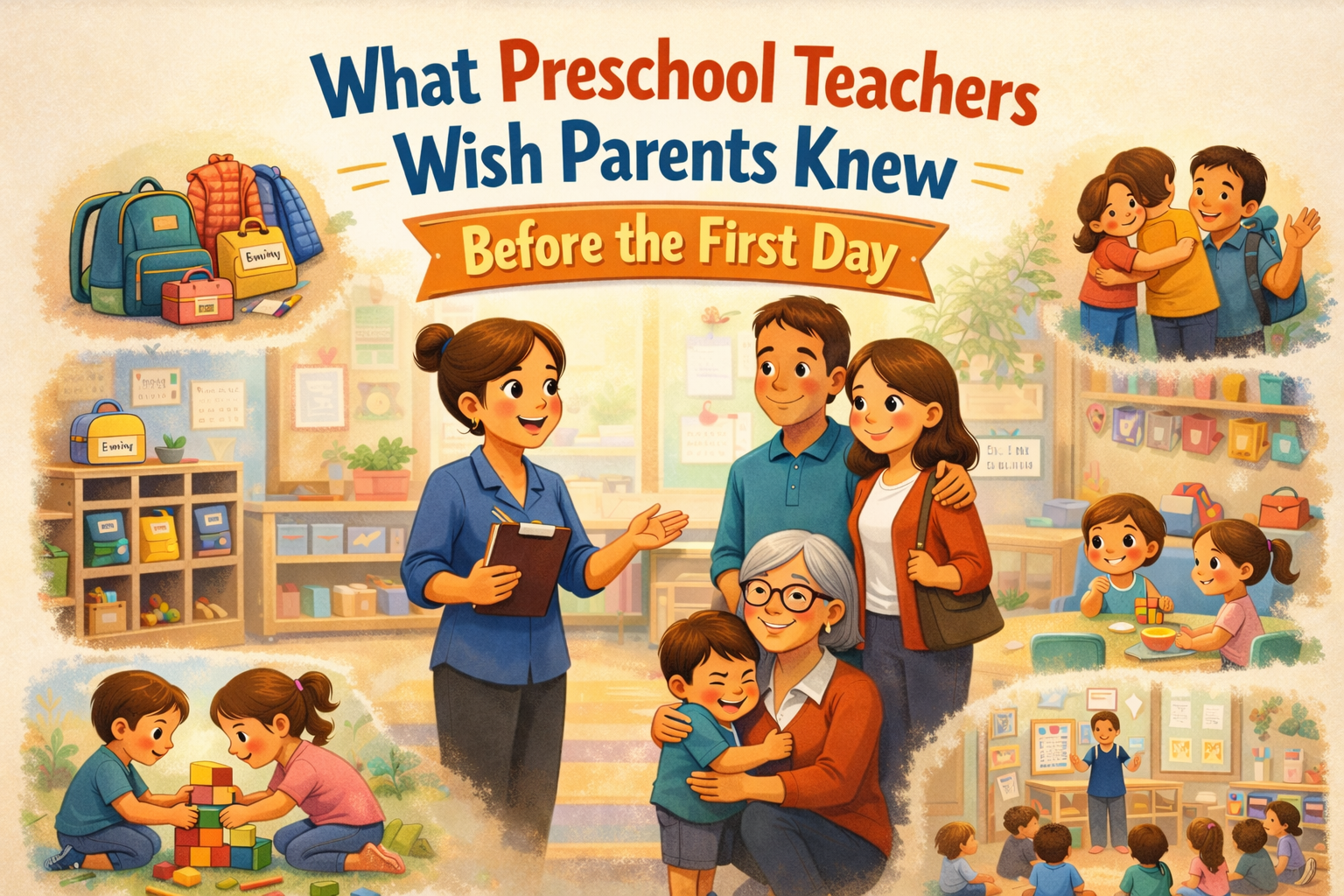
For many parents, the first day of preschool is filled with excitement, nervousness, and dozens of unanswered questions.
You spend weeks choosing the right backpack, labeling water bottles, buying extra clothes, and making sure everything is ready.
Meanwhile, your child may be asking questions of their own.
“Will you stay with me?”
“Who will help me?”
“What if I don’t know anyone?”
As a preschool teacher, I’ve welcomed hundreds of children through the classroom door. I’ve seen children run in without looking back and I’ve seen children cling tightly to a parent’s leg while tears streamed down their face.
Here’s what may surprise you.
Neither reaction tells me whether a child will have a successful preschool experience.
The first few weeks of preschool are not about perfection. They’re about adjustment.
Many parents worry about whether their child knows enough letters, numbers, or colors. Teachers are often paying attention to something entirely different.
Can your child communicate their needs?
Can they follow simple routines?
Can they recover when things don’t go their way?
Can they gradually learn to feel comfortable in a new environment?
If your child is about to start preschool, there are a few things teachers wish every parent understood before that first drop-off. Knowing these insights can help ease your worries and make the transition smoother for both you and your child.
A child’s first preschool experience often shapes how they feel about school for years to come.
That doesn’t mean everything has to go perfectly.
In fact, most children experience some bumps along the way.
What matters is helping children develop positive feelings about learning, friendships, and being part of a classroom community.
When children feel safe and supported, they are more willing to:
Preparation plays an important role.
Children who have practiced simple routines and independence skills often feel more comfortable during the adjustment period.
Parents who approach preschool positively also help children view school as an exciting new adventure rather than something to fear.
Parents often focus on academics before preschool starts.
Teachers notice very different things.
One of the first things teachers observe is how children respond when parents leave.
Some children cry.
Some don’t.
Both reactions are completely normal.
I’ve had children sob at drop-off and then spend the rest of the day happily building block towers.
I’ve also had children walk in confidently and become emotional later when they realized their parent wasn’t returning immediately.
Teachers understand that adjustment takes time.
We pay close attention to how children interact with others.
Do they watch other children?
Do they join activities?
Do they attempt to communicate?
Not every child arrives ready to make friends on day one.
We’re simply looking for signs that they are beginning to engage.
Can a child tell us when they need help?
Can they ask for water?
Can they let us know when they’re uncomfortable?
Communication is one of the most valuable preschool readiness skills.
Teachers notice whether children attempt simple tasks independently.
This might include:
The effort matters more than perfection.
Preschool classrooms run on routines.
Children who gradually learn classroom expectations often settle more comfortably into the school environment.
One of the biggest mistakes parents make is comparing children.
I’ve seen children cry for two weeks before happily settling into school.
I’ve also seen children appear comfortable immediately.
Neither experience is better or worse.
Every child has their own adjustment timeline.
What parents can do: Focus on your child’s progress rather than comparing them to classmates.
Parents often worry about academics.
Teachers spend far more time helping children manage everyday tasks.
A child who can wash their hands, clean up toys, and attempt to put on their jacket often feels more confident in the classroom.
What parents can do: Practice simple self-help skills at home.
Many parents worry that tears mean preschool isn’t working.
In reality, tears are often part of the transition process.
Children can feel both nervous and excited at the same time.
I’ve comforted many children who were laughing and playing within minutes of a difficult goodbye.
What parents can do: Keep goodbyes brief, calm, and consistent.
Children thrive when they know what to expect.
A predictable morning routine helps reduce stress and uncertainty.
When children know what comes next, they often feel more secure.
What parents can do: Practice the school morning routine before preschool begins.
Teachers can teach letters and numbers.
It’s harder to teach a child how to cooperate with others if they haven’t had opportunities to practice.
Sharing, taking turns, listening, and participating in group activities help children succeed in preschool.
What parents can do: Arrange playdates and social opportunities whenever possible.
Many parents accidentally do too much for their children.
While helping is natural, children gain confidence when they practice doing things independently.
What parents can do: Allow your child to try before stepping in to help.
Children do not need to arrive knowing everything.
Preschool exists to teach and develop skills.
Teachers expect children to still be learning.
What parents can do: Focus on growth rather than perfection.
The strongest preschool experiences happen when teachers and parents work together.
Teachers appreciate open communication and shared goals.
What parents can do: Share important information about your child’s personality, routines, and needs.
Children often take emotional cues from parents.
If you appear anxious, they may become anxious too.
If you appear confident and positive, they are more likely to feel secure.
What parents can do: Speak positively about preschool.
This may be the most important lesson of all.
I’ve watched children struggle during their first week and become some of the happiest students in the classroom a month later.
A difficult start does not mean preschool will be difficult long-term.
What parents can do: Give the adjustment process time.
Children absorb more than we realize.
Avoid comments that make school sound scary or stressful.
Every child’s developmental journey is unique.
Comparisons often create unnecessary worry.
Flashcards and worksheets are not the key to preschool success.
Social, emotional, and self-help skills deserve equal attention.
Children should feel excited about preschool, not tested.
Lengthy emotional goodbyes can make separation more difficult.
A short, loving goodbye is usually more effective.
Children feel more secure when mornings are predictable.
Familiarity can reduce anxiety.
Stories help children understand what to expect.
Encourage your child to:
Children benefit from knowing exactly what will happen each morning.
Pretend play can help children rehearse classroom experiences in a fun and low-pressure way.
Teachers appreciate parents who view them as teammates.
Sharing concerns early allows teachers to provide support.
Children benefit when parents trust the classroom process.
Consistent routines help children feel secure.
Excitement and encouragement often transfer directly to children.
One of my favorite things is seeing a parent smile confidently and say, “You’re going to have a great day.”
That simple message can make a huge difference.
If there’s one thing I wish every parent knew, it’s this:
The first few weeks of preschool are rarely perfect.
Some children jump right in.
Others take time.
Some children make friends immediately.
Others prefer to observe before joining in.
All of these experiences are normal.
The goal isn’t to have a child who never cries, never struggles, or never needs reassurance.
The goal is to help them gradually build confidence in a new environment.
Celebrate small victories.
The first successful drop-off.
The first classroom friendship.
The first time they tell you about their day.
These moments may seem small, but they’re signs that your child is growing.
Trust the process.
Trust your child.
And remember that most preschool journeys begin with uncertainty and end with far more confidence than parents ever imagined.
Focus on routines, communication, social experiences, and independence skills.
Yes. Many children experience separation anxiety during the adjustment period.
Most children adjust within a few weeks, though every child is different.
No. Most preschool programs teach these skills.
Communication and independence are often among the most important.
Practice short separations and maintain consistent drop-off routines.
Many children need time to observe before engaging.
Provide opportunities for social interaction through playdates and group activities.
In most cases, a brief goodbye is more helpful.
Keep conversations positive, simple, and reassuring.