Physical Address
381 Myrtle Avenue, Brooklyn, NY 11205
Physical Address
381 Myrtle Avenue, Brooklyn, NY 11205

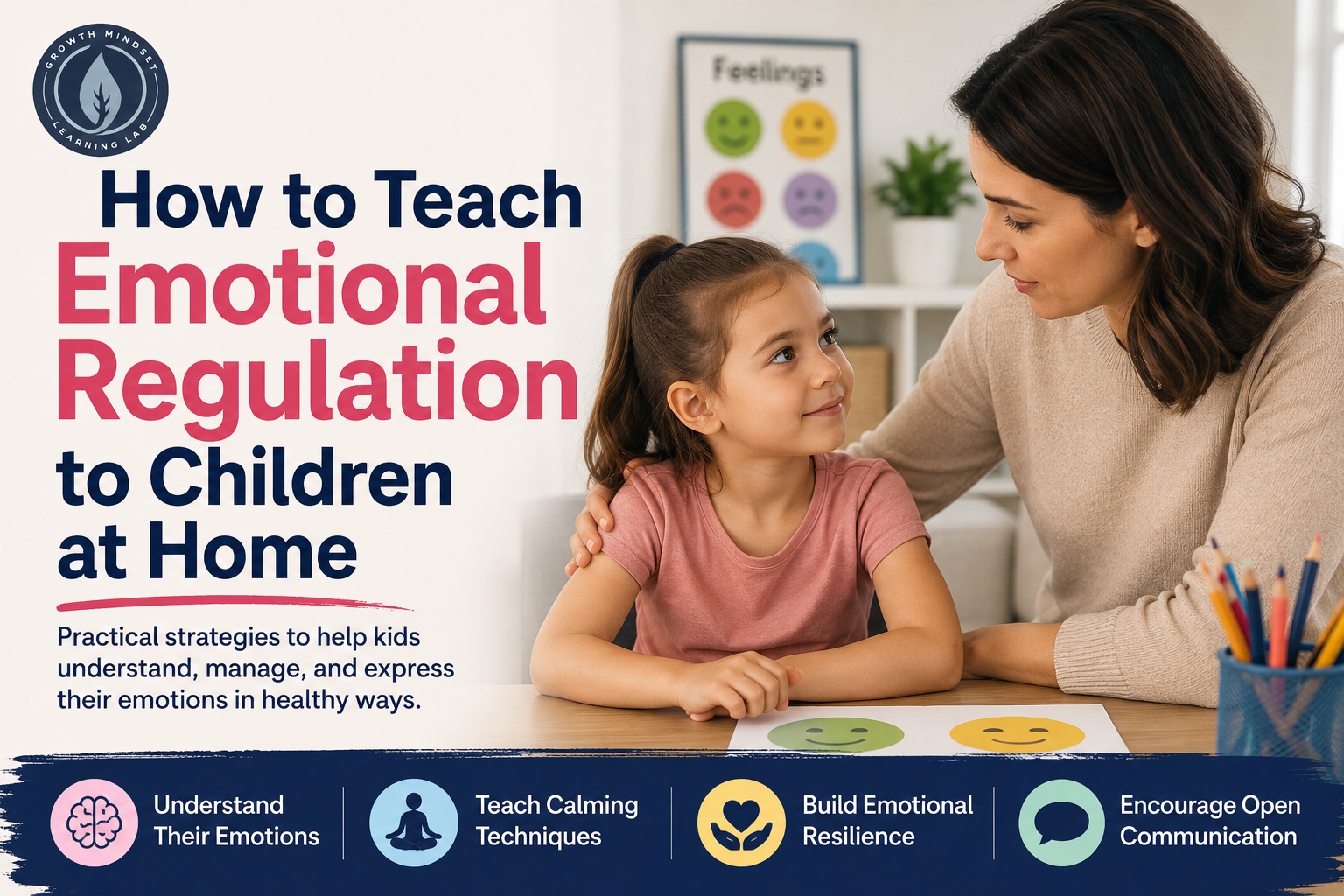
Big emotions can feel overwhelming for children.
One moment, they are calm, and the next, they are crying, yelling, shutting down, or struggling to express what they feel. For many parents, these emotional reactions can be confusing and exhausting, especially when they happen repeatedly.
But emotional regulation is not something children naturally master overnight.
It is a skill that develops gradually through guidance, practice, patience, and emotional support.
Children are not born knowing how to calm themselves in the face of frustration, disappointment, anger, or stress. They learn emotional regulation through everyday experiences and the responses they receive from the adults around them.
The good news is that parents can help children build these emotional skills right at home.
Emotional regulation is the ability to understand, manage, and respond to emotions in healthy ways.
For children, this includes learning how to:
Emotional regulation does not mean suppressing feelings.
Children should not be taught to “stop feeling” emotions. Instead, they should learn how to experience emotions safely without becoming completely overwhelmed by them.
Emotional regulation affects nearly every part of a child’s development.
Children who gradually build emotional regulation skills often experience:
Without emotional regulation skills, children may struggle with frustration, impulsive reactions, anxiety, and social difficulties.
This is why emotional development is just as important as academic learning.
Every child processes emotions differently.
Some children are naturally more emotionally sensitive, while others may become overwhelmed more easily by stress, stimulation, or change.
Factors that can affect emotional regulation include:
Struggling with emotional regulation does not mean a child is “bad” or poorly behaved.
It simply means they still need support learning how to manage emotions effectively.
Children who struggle emotionally may show signs such as:
These behaviors are often signs that a child lacks the tools to process emotions effectively.
Helping children regulate emotions starts with small daily habits and supportive interactions.
Children regulate emotions better when they understand what they are feeling.
Instead of simply saying:
help them name the emotion.
For example:
Teaching emotional vocabulary helps children understand their internal experiences more clearly.
Children should know that all emotions are acceptable, even difficult ones.
Anger, sadness, frustration, nervousness, and disappointment are normal human emotions.
What matters is learning healthy ways to respond to those feelings.
When children feel ashamed of emotions, they often suppress them instead of learning to manage them.
Children learn emotional regulation by observing adults.
If parents respond to stress with yelling, panic, or emotional explosions, children may copy those reactions.
Staying calm during difficult moments teaches children that emotions can be managed safely.
This does not mean parents must be perfect. It means modeling healthy emotional responses consistently over time.
Children need practical tools for emotional regulation.
Helpful calming strategies include:
Practice these skills regularly, not only during emotional crises.
Children often feel emotionally safer when life feels predictable.
Consistent routines help reduce stress and emotional overwhelm.
Important routines include:
Structure creates emotional stability.
Many parents rush immediately into discipline during emotional moments.
However, children calm down faster when they first feel understood.
Validation sounds like:
Validation does not excuse harmful behavior. It simply helps children feel emotionally heard before guidance begins.
Children become emotionally reactive when overwhelmed mentally or physically.
Watch for signs of:
Sometimes reducing stress improves emotional regulation dramatically.
Children should feel safe expressing emotions openly.
Ask open-ended questions such as:
These conversations help children process emotions instead of bottling them up.
Emotional regulation also involves learning how to handle challenges constructively.
Instead of solving every problem immediately for children, guide them through thinking processes.
Ask:
This builds resilience and emotional confidence.
Some parenting responses unintentionally make emotional regulation harder.
Children should never feel punished simply for experiencing emotions.
Instead of teaching emotional suppression, focus on teaching healthy expression.
Statements like:
can damage emotional confidence and self-worth.
Emotional regulation is developmental.
Young children especially need repeated practice and support over time.
Progress happens gradually.
The goal is not to raise children who never feel upset.
The goal is to help children:
These emotional skills support mental health, relationships, confidence, and future success throughout life.
Teaching emotional regulation at home is one of the most valuable things parents can do for their children.
Children who learn how to understand and manage emotions often grow into more confident, resilient, emotionally healthy adults.
This process takes patience, consistency, and empathy.
There will still be difficult days, emotional moments, and setbacks. But every calm conversation, supportive response, and emotionally safe interaction helps children build stronger emotional skills over time.
Small daily emotional lessons can create lifelong emotional strength.
Children begin learning emotional regulation from early childhood, but these skills continue developing throughout adolescence.
Children are still developing the brain systems responsible for emotional control, decision-making, and self-regulation.
Parents can help by modeling calm behavior, validating feelings, teaching coping skills, and creating emotionally safe environments.
Yes. Many behavior challenges are linked to difficulty managing emotions effectively.
Absolutely. With support, practice, consistency, and healthy guidance, children gradually develop stronger emotional regulation skills.