Physical Address
381 Myrtle Avenue, Brooklyn, NY 11205
Physical Address
381 Myrtle Avenue, Brooklyn, NY 11205

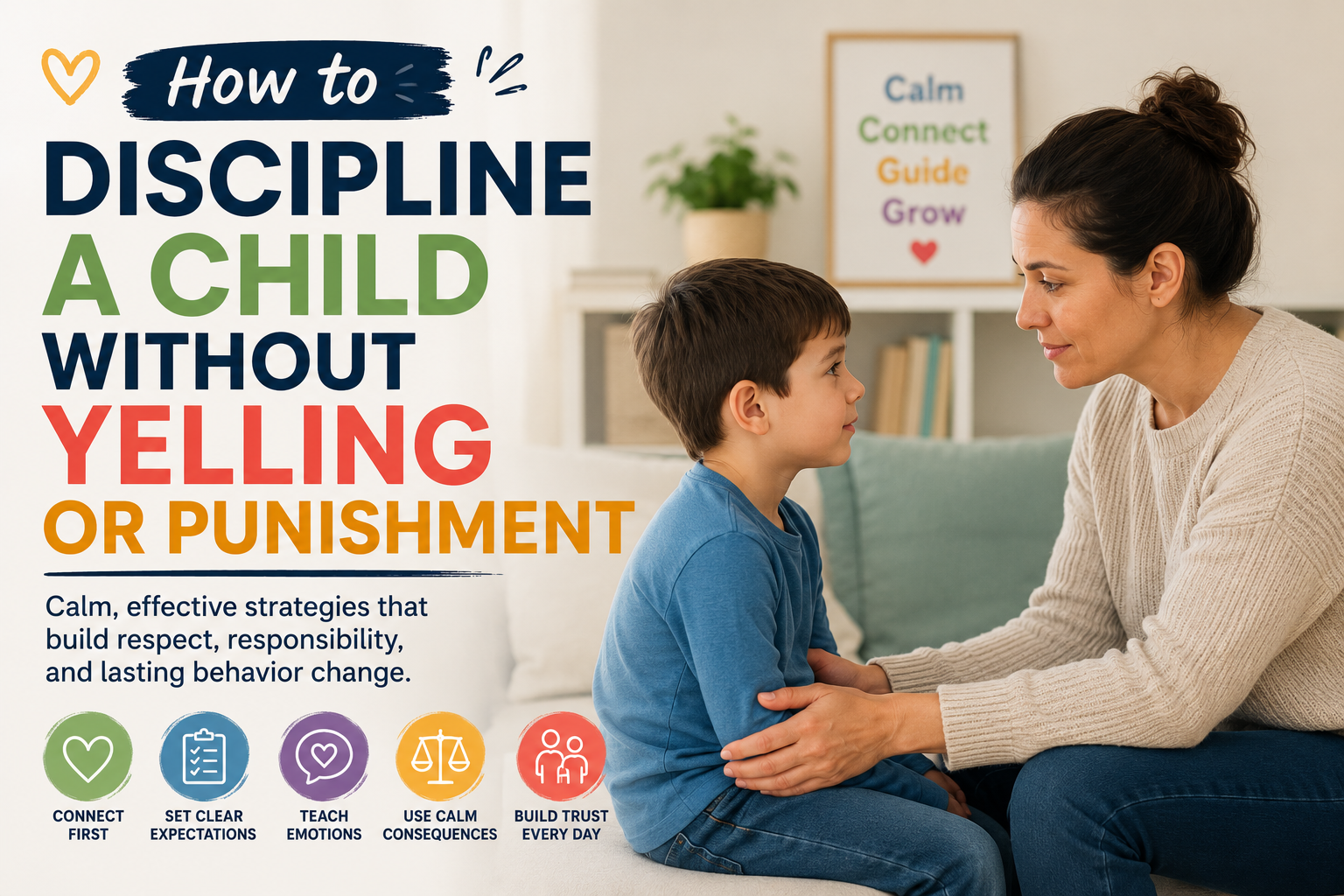
Many parents promise themselves they will stay calm when they become parents.
Then real life happens.
The toys remain scattered across the floor. The instructions are ignored repeatedly. The tantrums continue. Stress builds, patience runs low, and suddenly the yelling begins.
Afterwards, many parents feel guilty, exhausted, and frustrated with themselves.
The truth is that parenting can feel overwhelming, especially during emotionally intense moments. But discipline does not have to rely on shouting, fear, threats, or punishment to be effective.
Children learn best through calm guidance, emotional safety, consistency, and healthy communication.
Understanding how to discipline without yelling can help parents build stronger relationships while still teaching boundaries, responsibility, and respect.
Many people confuse discipline with punishment.
However, they are not the same thing.
Punishment focuses mainly on making children suffer for mistakes.
Discipline focuses on teaching children how to behave, regulate emotions, solve problems, and make healthier choices in the future.
Healthy discipline helps children learn:
The goal is not simply to stop bad behavior temporarily.
The goal is long-term emotional and behavioral growth.
Yelling may sometimes stop behaviour in the moment because children become startled, fearful, or emotionally overwhelmed.
However, frequent yelling often creates bigger problems over time.
Children learn emotional regulation from adults.
When parents regularly respond with shouting, children may copy those same emotional reactions during stressful situations.
Instead of learning calm problem-solving, children may learn:
Children feel safest when adults respond predictably and calmly.
Frequent yelling can create anxiety, emotional distance, or fear within the parent-child relationship.
Some children become more defiant after yelling, while others become withdrawn and emotionally insecure.
Fear may stop behavior temporarily, but it does not necessarily teach children what they should do differently next time.
Children need guidance, emotional coaching, and consistent boundaries to build long-term behavioral skills.
Understanding behavior helps parents respond more effectively.
Many challenging behaviors are connected to:
Children are still learning how to manage emotions and behavior.
This does not excuse harmful behavior, but it helps parents respond with understanding instead of reacting purely from frustration.
Some parents worry that avoiding yelling means becoming too soft.
But calm discipline does not mean:
Healthy discipline still includes:
The difference is that discipline happens calmly and respectfully rather than through fear or humiliation.
Some common parenting responses can unintentionally worsen behavior over time.
Statements like:
often increase emotional tension instead of improving cooperation.
Fear may create temporary compliance, but it rarely builds emotional growth.
Shame damages emotional confidence.
Avoid phrases such as:
Children often internalize repeated negative labels.
Physical punishment may increase fear, aggression, anxiety, and emotional insecurity.
Children learn best through guidance, emotional safety, and healthy communication.
Children who are emotionally overwhelmed struggle to process lessons in the middle of meltdowns.
Calming the child first is usually more effective than lecturing during intense emotional moments.
Children borrow emotional regulation from adults.
When parents stay calm, children are more likely to calm down as well.
This does not mean staying calm is always easy.
It simply means pausing before reacting emotionally.
Even taking a deep breath before responding can change the direction of an interaction.
Children cooperate more when they feel emotionally connected.
Before correcting behavior, try connecting first.
Examples:
Emotional connection helps children feel safe enough to listen and learn.
Long lectures often overwhelm children.
Simple instructions work better.
Instead of:
try:
Clear communication improves understanding.
Consequences should teach responsibility, not create fear.
Examples:
Consistent consequences help children connect actions with outcomes.
Many behavior struggles are emotional regulation struggles.
Children need help learning:
These skills take time and repetition to develop.
Children often behave better when life feels structured and predictable.
Helpful routines include:
Predictability reduces emotional stress and power struggles.
Children respond strongly to positive attention.
Notice and acknowledge healthy behavior regularly.
For example:
Positive reinforcement strengthens healthy habits.
Parenting calmly does not mean parents never feel frustrated.
It means learning how to regulate emotions during stressful situations.
Helpful strategies include:
Parents who are emotionally exhausted often struggle more with yelling.
Supporting your own emotional health matters too.
Children raised with emotionally safe discipline often develop:
Calm discipline teaches children how to behave while also protecting emotional trust within the relationship.
Some behavior challenges are developmentally normal.
However, additional support may help if:
Parents do not have to navigate every challenge alone.
Disciplining children without yelling or punishment is not about becoming a “perfect parent.”
It is about creating a healthier way to guide behavior while protecting emotional connection and trust.
Children learn best when they feel safe, understood, and consistently guided.
There will still be difficult moments, emotional reactions, and parenting challenges. But calm discipline helps children gradually develop the emotional skills they need to manage behavior more effectively over time.
Small changes in communication can create powerful long-term results for both parents and children.
Frequent yelling can increase anxiety, emotional dysregulation, fear, and communication difficulties over time.
Yes. Calm discipline, consistent boundaries, emotional coaching, and natural consequences are often highly effective.
Parents can use calm communication, emotional validation, routines, and consistent consequences to guide behavior.
No. Healthy discipline still includes clear boundaries and accountability while avoiding fear-based parenting methods.
Yelling often increases emotional stress and dysregulation, making it harder for children to process behavior calmly.