Physical Address
381 Myrtle Avenue, Brooklyn, NY 11205
Physical Address
381 Myrtle Avenue, Brooklyn, NY 11205
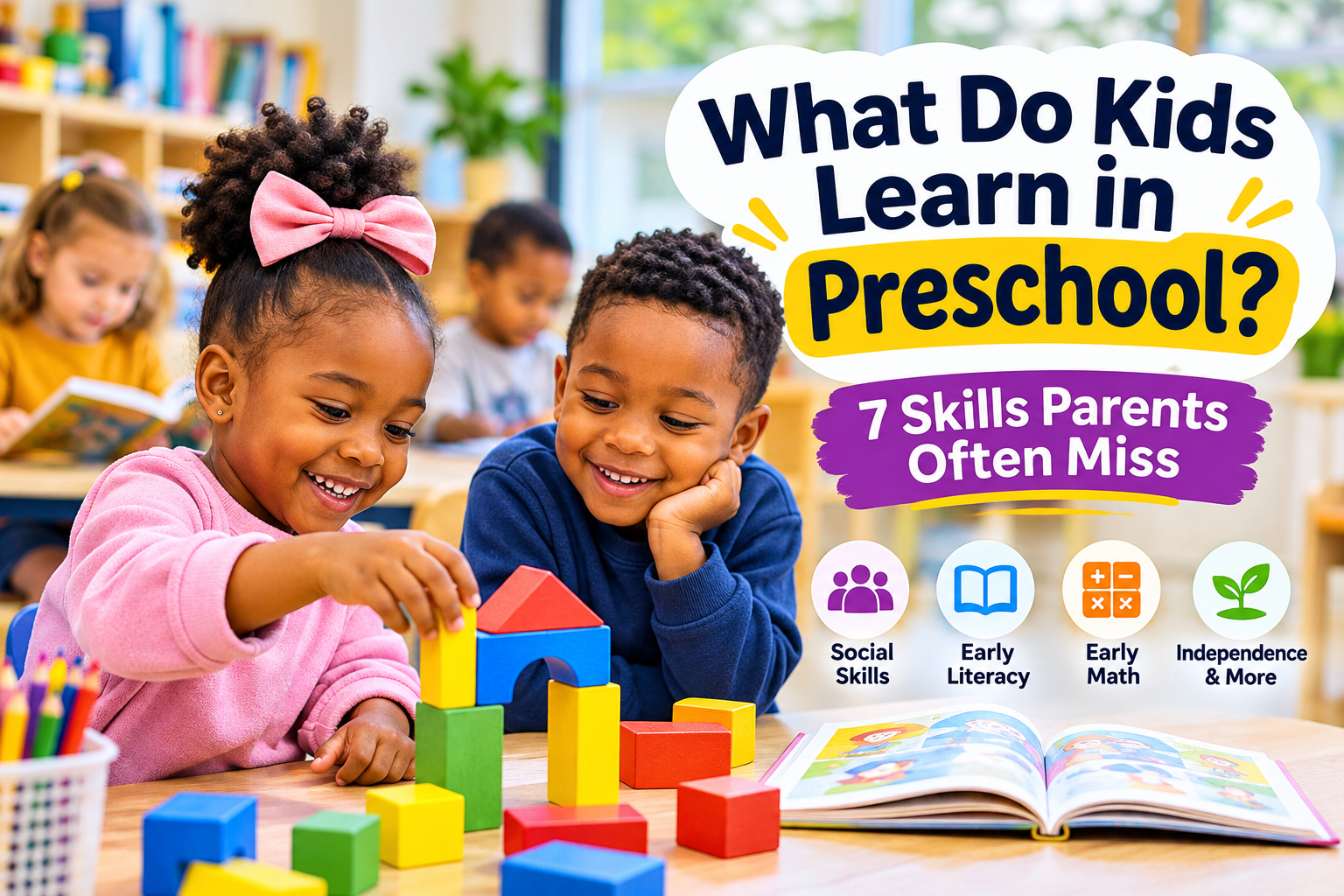
A parent asks, “What did you learn at preschool today?” and gets the familiar answer: “Nothing.”
Then that same child takes off their coat, washes their hands without being reminded, waits while someone else is speaking, and spends twenty minutes turning a cardboard box into a grocery store.
That is the part of preschool learning we sometimes miss.
Children do learn letters, numbers, shapes, colors, and early writing skills in preschool. But they are also learning how to communicate, solve problems, cope with frustration, become more independent, and function as part of a group. Many of those skills are harder to measure, but they matter just as much when children move on to kindergarten.
Preschool gives children daily opportunities to share space, take turns, join games, deal with disagreements, and notice how other children feel.
They will not always get it right. A child may still grab a toy, struggle to wait, or become upset when another child changes the game. Those moments are part of how social skills develop.
If your child regularly comes home saying nobody played with them, no one plays with me preschool can help you understand what may be happening and what to ask their teacher.
Story time, songs, conversations, and pretend play expose children to new words and give them reasons to use language.
When a child explains what they built, tells a teacher what happened, or decides who will be the doctor during a pretend game, they are practising communication without sitting through a formal lesson.
This is one reason dramatic play for preschoolers can be so useful. Pretending to run a restaurant, shop, or doctor’s office naturally encourages children to talk, listen, ask questions, and respond to other people.
Preschoolers may begin recognising their names, noticing letters, hearing rhyming sounds, understanding how books work, and connecting some letters with sounds.
They may also draw, scribble, trace, and attempt parts of their name.
The goal is not for every preschooler to leave reading independently. Early literacy grows through repeated exposure to books, conversations, songs, storytelling, and print.
Counting is only one part of early math.
Children also learn to sort objects, notice patterns, compare which group has more, recognise shapes, measure during play, and work out how objects fit together.
Building blocks, puzzles, snack time, and simple games can all become math experiences without children feeling as though they are doing a lesson.
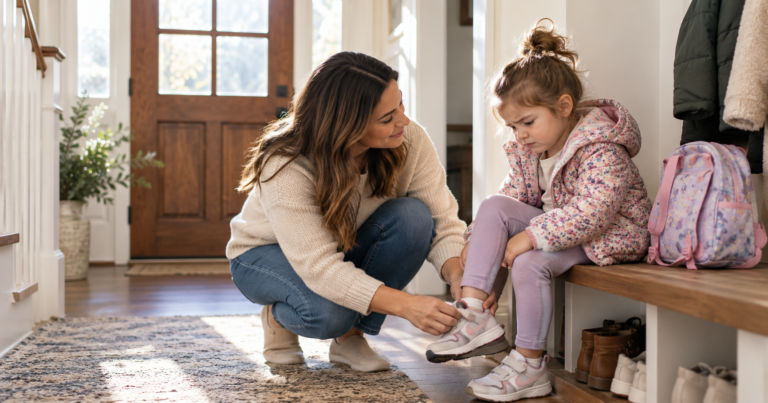
Opening a lunchbox, putting on a coat, washing hands, cleaning up toys, using the bathroom, carrying a backpack, and asking an adult for help may not look academic, but they are important preschool skills.
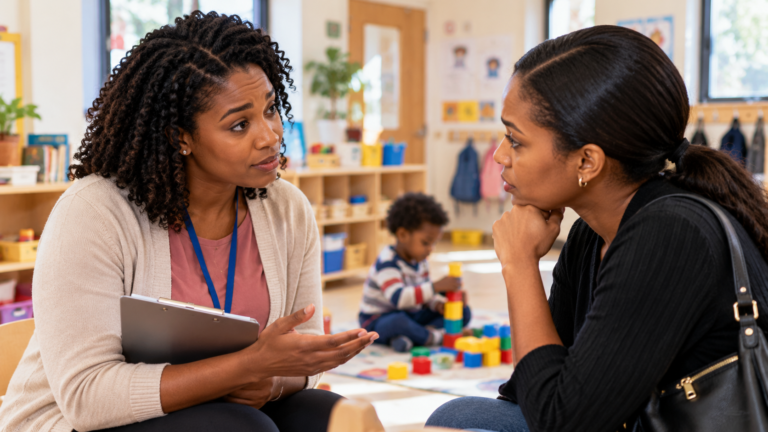
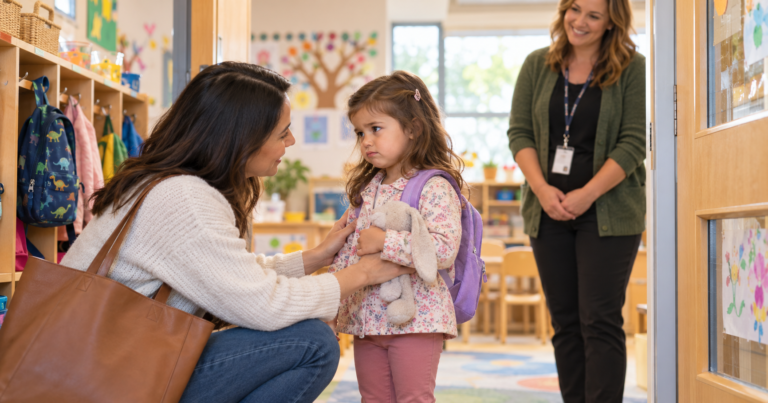
Some children take longer than others to feel comfortable with classroom routines and separating from parents. If mornings are still difficult, preschool drop-off anxiety offers practical ways to make that transition easier.
Preschool gives children plenty of opportunities to wait, hear “not yet,” cope when something does not go their way, and continue after making a mistake.
They will not always manage those moments calmly. Over time, supportive adults help children learn to use words, ask for help, recover from disappointment, and try again.
If a teacher has started raising concerns about repeated hitting, refusing instructions, or difficult classroom behavior, preschool teacher behavior concerns explains what parents can ask before jumping to conclusions.
One of the biggest misconceptions about preschool is that play and learning are separate.
They often happen at exactly the same time.
When children build, pretend, draw, investigate, and play with other children, they are using memory, language, planning, creativity, problem-solving, and social skills together.
So when your preschooler tells you they “just played” today, do not assume very little happened.
Instead of asking only, “What did you learn?”, try asking, “What did you build?”, “Who did you play with?”, or “What was the funniest thing that happened today?”
You may get a much better picture of what your child is actually learning.