Physical Address
381 Myrtle Avenue, Brooklyn, NY 11205
Physical Address
381 Myrtle Avenue, Brooklyn, NY 11205

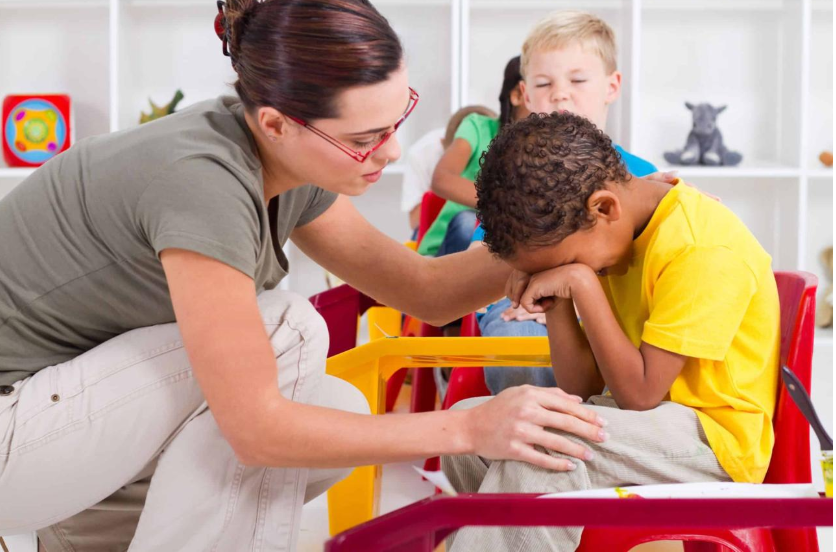
Your preschooler gets into the car after school, buckles in, and says, “Nobody played with me today.”
For a parent, that sentence can change the whole mood of the afternoon. You may immediately picture your child standing alone while everyone else plays, and your instinct may be to message the teacher, arrange a playdate, or start wondering whether your child is struggling socially.
Before you do any of that, find out what “nobody played with me” actually means.
For a three-, four-, or five-year-old, it may mean nobody joined the exact game they wanted to play. It may mean their usual friend played with someone else. It may mean they tried to join a group and did not know how. Sometimes, however, it really does mean a child is regularly feeling left out.
The best response is to listen first, get specific information, and then help your child practise the social skills they may be missing.
Do not immediately respond with, “That’s not true, you have lots of friends.”
Even when you mean well, your child may hear that as, “What you felt today doesn’t matter.”
Instead, acknowledge the feeling and ask one simple question.
You might say, “That sounds like it was hard. What happened when you wanted to play?”
Then listen.
If your child cannot explain clearly, gently narrow it down. Ask what the other children were playing, whether they asked to join, whether someone said no, and what they did afterwards.
The goal is not to interrogate your child. You are trying to understand whether this was one disappointing moment or something that keeps happening.
Not necessarily.
Preschoolers often describe an entire day through the strongest emotion they remember. Your child might have played happily with other children in the morning, then felt rejected during one activity in the afternoon.
That single moment can become “nobody played with me.”
What matters is the pattern. If your child says this occasionally but still talks about classmates, joins activities, and seems comfortable going to preschool, it may simply be part of learning how friendships work.
If they say it repeatedly, seem sad before school, stop talking about classmates, or regularly watch other children without joining, it is worth looking more closely.
Many parents assume children naturally know how to walk into a group and start playing. Some do. Others genuinely do not know what to say.
Imagine three children are building a train track. Your child stands nearby wanting to join. Telling them, “Go play with them,” may not be enough because they still have to work out how to enter a game that is already happening.
Give them phrases they can actually use, such as:
Even better, teach your child to look at the game first.
Instead of walking over and repeatedly asking, “Can I play?”, they can notice what the children need and offer something useful. If the group is pretending to run a shop, your child might ask, “Can I be the customer?” That makes joining easier because they are entering the play rather than interrupting it.
You do not need a formal friendship lesson. Ten minutes of pretend play can be enough.
Use dolls, stuffed animals or action figures. Create a situation where two toys are already playing and a third wants to join.
Ask your child, “What could Teddy say if he wants to play too?”
Then practise different responses.
Sometimes the other child says yes. Sometimes they say, “We already have enough people.” Help your child practise what to do next without treating rejection as a disaster.
They might ask someone else, choose another activity, or try again later.
This is valuable because preschool friendship is not only about learning how to join. It is also about learning that one “no” does not mean “nobody likes me.”
If your child says nobody played with them once, you probably do not need to contact the teacher immediately.
If you hear the same thing several times, ask the teacher what they are observing.
Keep the conversation neutral. Instead of saying, “My child is being excluded,” try:
“My child has mentioned a few times that they feel like nobody wants to play with them. Have you noticed how they are getting on during free play?”
Then ask specific questions. Does your child approach other children? Do classmates approach them? Is there one child they regularly play with? Do they watch games but struggle to join? What happens when they try?
Teachers can often tell the difference between a child who is genuinely isolated and a child who is socially interested but still learning how to enter group play.
If your child is also struggling with confidence around starting preschool, preschool drop-off anxiety may be part of the wider adjustment.
A good teacher can help without making your child feel singled out.
For example, they can invite your child into a smaller activity with one or two children who share similar interests. A child who finds a group of six overwhelming may connect easily with one classmate over dinosaurs, blocks, drawing, or pretend play.
You can ask the teacher, “Is there someone they naturally seem comfortable with?” That gives you useful information without forcing a friendship.
If appropriate, a simple playdate with that child can give them more time to connect away from a busy classroom.
One good friend can be enough.
Parents sometimes worry when their child does not have a large group of friends, but preschool friendship is not a popularity contest. Some children move easily between groups, while others prefer one or two familiar children.
Pay more attention to whether your child can connect, communicate, take turns, and enjoy playing with another child.
Those skills matter more than the number of names they mention after school.
Playing alone is not automatically a warning sign.
Preschoolers often move between solo play, watching others, playing alongside children, and playing cooperatively.
The more important question is whether your child wants to join other children but cannot work out how.
A child happily building alone is different from a child standing beside a group every day, wanting to join but repeatedly walking away upset.
If teachers are also reporting difficulties with peer interaction or behaviour, look at the wider picture. Sometimes pushing, grabbing or hitting happens because a young child does not yet have the language or social strategies they need. Our guide to toddler hitting at daycare explains some of the common reasons.
Take it more seriously when your child repeatedly says they have no friends, regularly becomes upset about preschool, is consistently excluded from play, or wants to connect with other children but seems unable to do so even with support.
Start with the teacher and ask for examples rather than labels.
If you are also concerned about your child’s speech, communication, anxiety, or development in other settings, discuss those observations with your pediatrician or another appropriate child-development professional.
Most preschool friendship problems are not solved by finding your child more children to play with. They are solved by understanding exactly where the difficulty is.
Listen carefully when your child says, “Nobody played with me.” Find out what happened, teach them a few practical ways to join play, and ask the teacher what they are seeing. With the right support, many children simply need time and practice to turn “I don’t know how to join” into “Can I play too?”