Physical Address
304 North Cardinal St.
Dorchester Center, MA 02124
Physical Address
304 North Cardinal St.
Dorchester Center, MA 02124

Starting preschool is a major milestone, not just for children, but for parents too.
Many parents find themselves wondering the same things in the weeks leading up to the first day:
“Can my child follow instructions?”
“What if they cry when I leave?”
“Should they already know their letters and numbers?”
“Are they truly ready?”
These concerns are completely normal. After working with hundreds of families over the years, I’ve learned that preschool readiness is often very different from what most parents expect.
Many parents focus heavily on academics, spending hours practicing the alphabet, counting, and worksheets. While those skills can certainly help, preschool teachers are often looking for something much more important.
Can your child communicate their needs?
Can they manage simple routines?
Can they interact with other children?
Can they cope when things don’t go exactly as planned?
The truth is that successful preschool experiences are built on a foundation of social, emotional, communication, and self-help skills.
The good news is that these skills can be developed naturally through everyday activities at home.
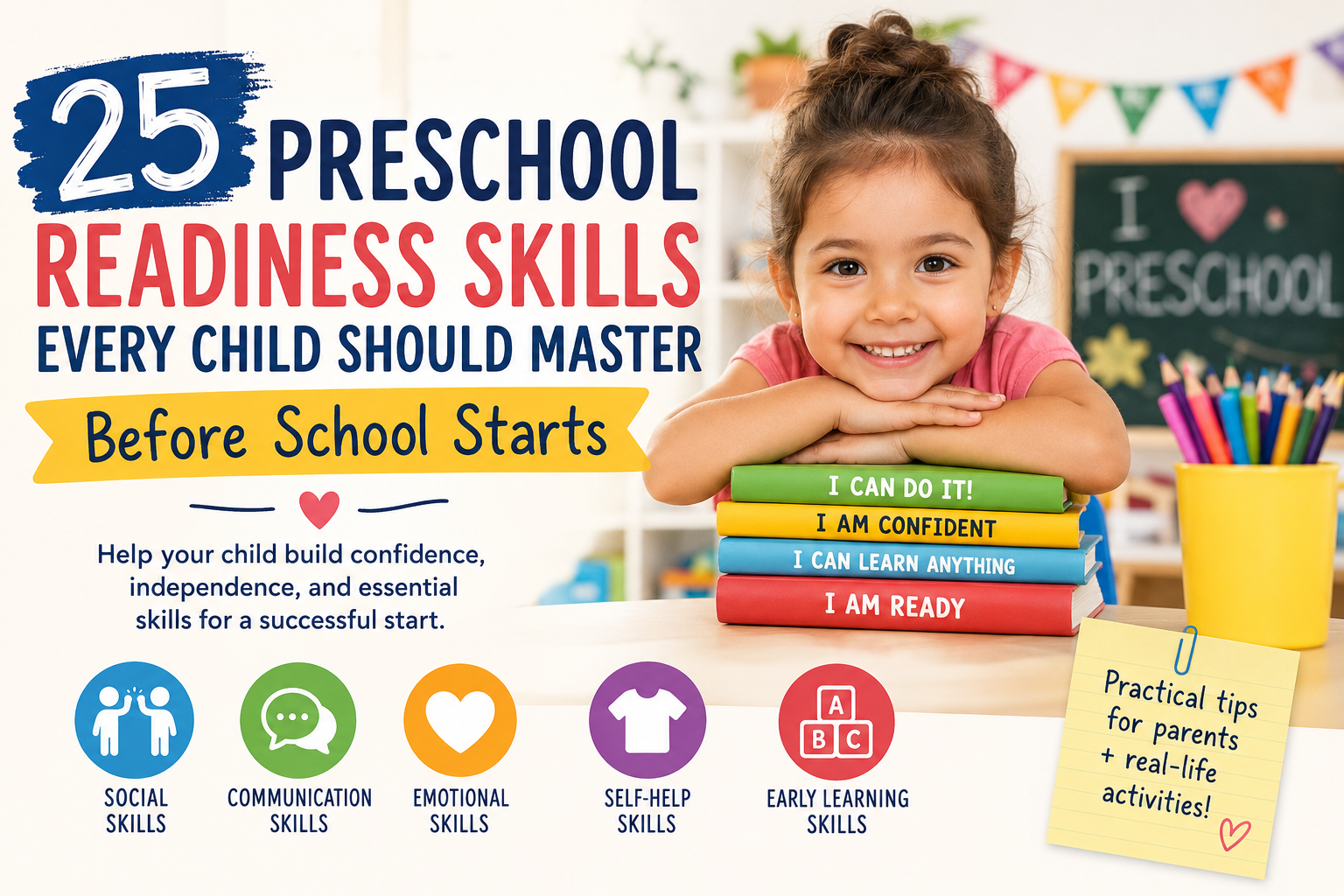
In this guide, you’ll discover the 25 preschool readiness skills that help children walk into the classroom with confidence, independence, and a willingness to learn.
Preschool readiness is not about having a child who can already read, write, or complete worksheets.
Instead, readiness refers to a child’s ability to participate in a classroom environment successfully.
This includes:
Think of preschool readiness as a toolbox.
A child who can ask for help, follow simple directions, manage emotions, and participate in routines often adapts more easily than a child who can recite the alphabet but struggles to interact with others.
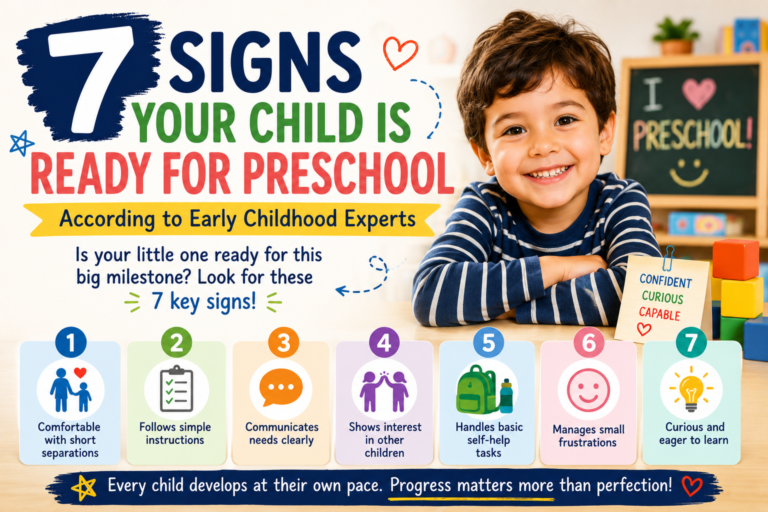
Every child develops at their own pace.
The goal is not perfection. The goal is progress.
Children who enter preschool with foundational readiness skills often experience:
Teachers frequently notice that children who can manage basic daily tasks and communicate effectively settle into routines much faster.
These early experiences can shape how children feel about school for years to come.
Why it matters: Classrooms involve constant sharing of space, toys, and attention.
Example: Waiting for a turn on the playground slide.
Try at home: Play simple board games where everyone waits for their turn.
Why it matters: Preschool activities often involve shared supplies.
Example: Sharing crayons during art time.
Try at home: Practice sharing toys with siblings or friends.
Why it matters: Cooperative play is a big part of preschool.
Example: Building blocks together.
Try at home: Arrange regular playdates.
Why it matters: Teachers give directions throughout the day.
Example: “Put your book away and sit on the carpet.”
Try at home: Use two-step directions during routines.
Why it matters: Children learn boundaries and classroom expectations.
Example: Keeping hands to themselves during circle time.
Try at home: Discuss personal space during family activities.
Why it matters: Preschool includes songs, stories, and group games.
Example: Joining circle time.
Try at home: Read books together and encourage participation.
Why it matters: Teachers cannot help if they don’t know what a child needs.
Example: Saying, “I’m thirsty.”
Try at home: Encourage children to use words instead of gestures.
Why it matters: Classroom discussions require responses.
Example: Answering, “What color is this?”
Try at home: Ask open-ended questions throughout the day.
Why it matters: Listening supports learning and social interaction.
Example: Paying attention during story time.
Try at home: Read books and ask questions afterward.
Why it matters: Preschool routines often involve several steps.
Example: “Wash your hands, get your snack, and sit down.”
Try at home: Practice daily routines with simple instructions.
Why it matters: Clear communication helps reduce frustration.
Example: “Can you help me?”
Try at home: Encourage conversations during meals.
Why it matters: Not everything goes as planned in preschool.
Example: A block tower falls over.
Try at home: Model calm responses to mistakes.
Why it matters: Preschool often requires temporary separation.
Example: Saying goodbye without prolonged distress.
Try at home: Leave children with trusted caregivers for short periods.
Why it matters: Emotional awareness supports self-regulation.
Example: Saying, “I’m sad.”
Try at home: Talk about emotions during storybooks.
Why it matters: Waiting is a daily classroom skill.
Example: Standing in line.
Try at home: Practice short waiting periods before snacks.
Why it matters: Resilience helps children adapt.
Example: Another child chooses the toy they wanted.
Try at home: Discuss alternative solutions.
Why it matters: Schedules sometimes change unexpectedly.
Example: Indoor play instead of outdoor play.
Try at home: Occasionally vary daily routines.
Why it matters: Many preschools expect basic toilet independence.
Example: Using the bathroom without assistance.
Try at home: Practice complete bathroom routines.
Why it matters: Hygiene is essential in group settings.
Example: Washing after bathroom use.
Try at home: Sing a handwashing song together.
Why it matters: Teachers cannot dress every child individually.
Example: Putting on a jacket before recess.
Try at home: Allow extra time for independent dressing.
Why it matters: Mealtimes move quickly.
Example: Opening a lunchbox independently.
Try at home: Practice with actual containers before school starts.
Why it matters: Responsibility is part of classroom culture.
Example: Returning toys to shelves.
Try at home: Create cleanup routines after playtime.
Why it matters: Colors are part of many preschool activities.
Example: Identifying red, blue, and yellow.
Try at home: Point out colors during everyday activities.
Why it matters: Shapes support early math understanding.
Example: Identifying circles and squares.
Try at home: Shape hunts around the house.
Why it matters: Early number awareness and hand strength support future learning.
Example: Counting objects and holding crayons comfortably.
Try at home: Use play dough, crayons, beads, and counting games.
Every child develops differently.
However, some signs may indicate additional preparation could be helpful:
These signs are not reasons to panic.
They simply highlight areas where extra support and practice may help.
Children feel more secure when they know what to expect.
Establish consistent routines for meals, bedtime, cleanup, and getting dressed.
Allow children to attempt tasks on their own.
Even if it takes longer, the learning is valuable.
Young children learn best through play.
Focus on:
Regular interaction with peers helps children develop social confidence.
Consider:
Reading supports language development, listening skills, attention span, and emotional understanding.
Even ten minutes daily can make a significant difference.
Knowing the alphabet is helpful, but social and emotional skills often matter more initially.
Every child develops differently.
Comparisons can create unnecessary anxiety.
Children learn best when learning feels enjoyable.
Avoid turning readiness into a stressful checklist.
Confidence, resilience, and self-regulation are critical preschool skills.
Independence grows through practice.
Allow children opportunities to try tasks themselves.
If you’re wondering whether your child is ready for preschool, remember this:
Readiness is not about perfection.
It’s not about knowing every letter, counting to 100, or sitting still for long periods.
It’s about helping your child build the confidence, communication skills, emotional resilience, and independence needed to thrive in the classroom.
Over the years, I’ve seen children enter preschool with very different strengths and challenges. The children who adjust most successfully are not always the ones with the strongest academic skills. They’re often the children who can ask for help, follow routines, recover from setbacks, and connect with others.
Take small steps.
Practice everyday skills.
Celebrate progress.
And remember that preschool readiness develops gradually, one experience at a time.
Your support, patience, and encouragement are already preparing your child for success.
Most children start preschool between ages 2 and 5, depending on the program and individual development.
No. Most preschools introduce letters as part of the curriculum.
The ability to communicate needs and follow simple directions is often more important than academic knowledge.
Practice short separations, establish goodbye routines, and remain calm and confident.
Many programs prefer toilet independence, but requirements vary.
Shyness is common. Gradual exposure to social settings can build confidence.
Many children adjust within a few weeks, though every child is different.
Yes. Temporary tears are common and often decrease as children become familiar with routines.
Read books together, play listening games, and practice following directions.
Focus on one skill at a time and provide consistent opportunities for practice through everyday activities.