Physical Address
381 Myrtle Avenue, Brooklyn, NY 11205
Physical Address
381 Myrtle Avenue, Brooklyn, NY 11205

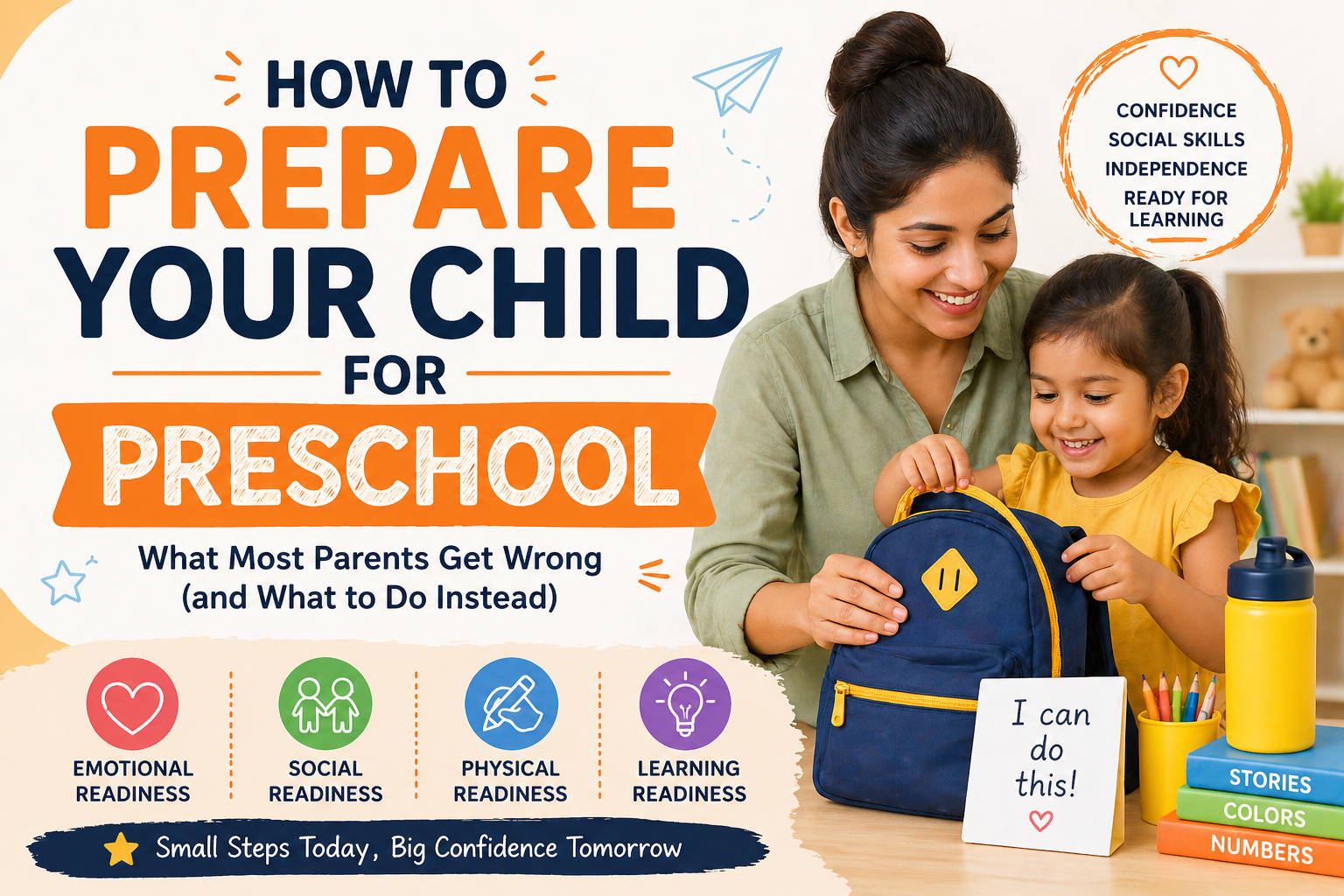
Most parents think preparing a child for preschool means teaching ABCs, numbers, and basic writing.
It doesn’t.
In fact, many children who can already read or count still struggle when they start school.
Why?
Because preschool readiness is not just about academics.
It is about:
And when these are missing, learning becomes harder, not easier.
If you’re preparing your child for preschool, this guide will show you what actually matters and how to do it right.
A preschool-ready child is not the one who knows the most.
It is the child who can:
These skills create the foundation for learning.
Children need to be able to:
Without emotional readiness, even simple classroom activities can feel overwhelming.
This is why developing emotional intelligence early is critical.
You can explore this deeper here:
Preschool is a social environment.
Children need to:
These are not automatic skills. They must be practiced.
Simple activities can help build these abilities early: Read Here
Many parents overlook this completely.
But before a child can:
They need strong hand muscles and coordination.
This is built through activities, not worksheets.
Start here: Fine Motor Skills Activities for Preschoolers: 12 Simple Activities That Prepare Children for Writing
Children learn best through play, not pressure.
A structured but flexible approach allows children to:
This is the foundation of a play-based preschool curriculum.
If you haven’t yet, read this guide
Teaching ABCs early does not guarantee readiness
Children need development before structure
Confidence matters more than memorization
Every child develops at a different pace
Teach your child to:
Start with short periods away to help your child adjust.
Consistent routines help children feel secure.
Let your child interact with other children regularly.
Hands-on learning builds real skills.
You can start with simple ideas like: Playdough Activities
Help your child name and understand feelings.
This builds language and confidence.
Your child may be ready if they can:
Your child may need more time if they:
This is not a problem. It simply means more preparation is needed.
When children are properly prepared:
When they are not:
Preparation sets the tone for the entire learning journey.Frequently Asked Questions
Preparing your child for preschool is not about doing more.
It is about doing the right things.
When you focus on:
You give your child a strong, lasting advantage.