Physical Address
381 Myrtle Avenue, Brooklyn, NY 11205
Physical Address
381 Myrtle Avenue, Brooklyn, NY 11205

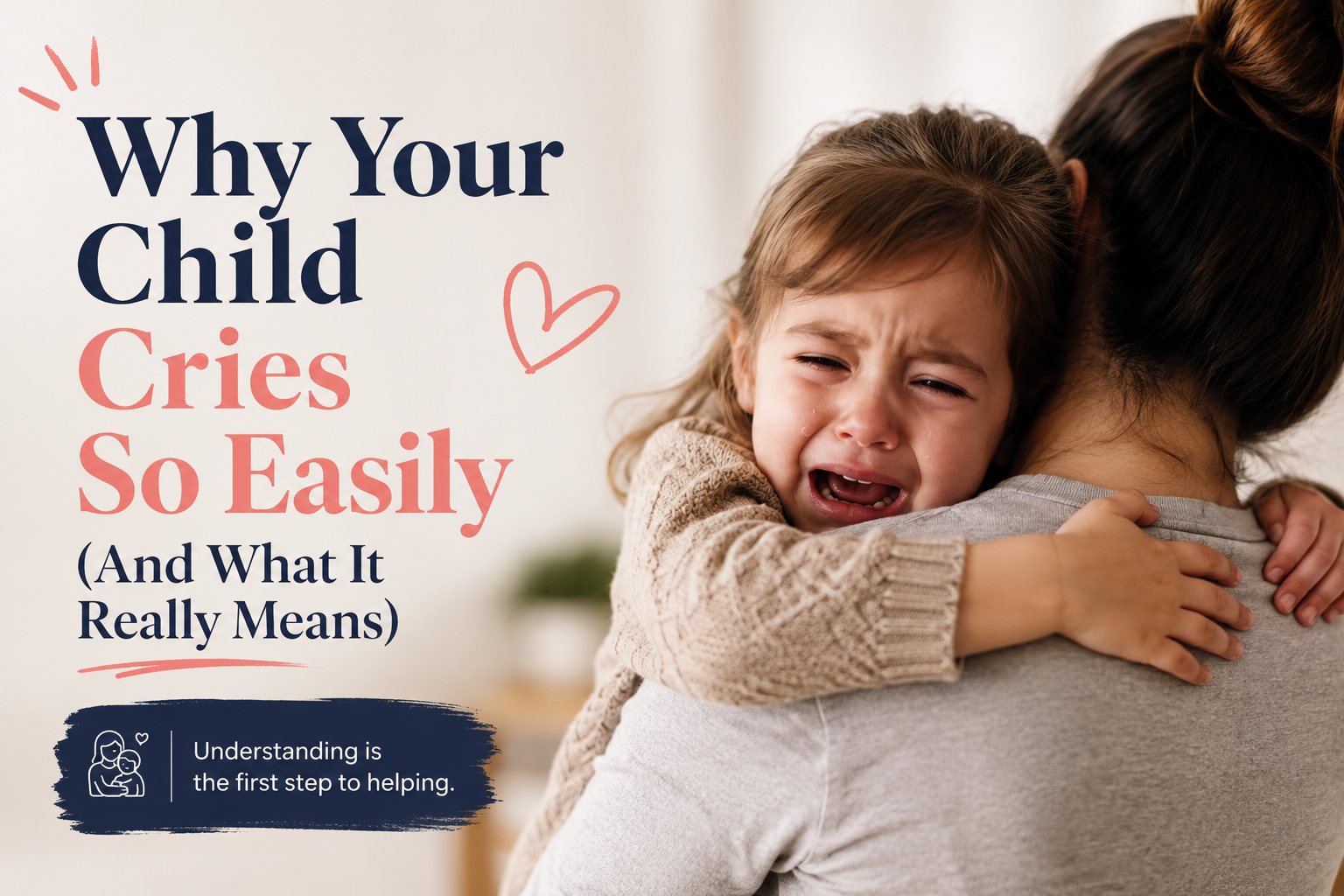
Few things worry parents more than seeing their child cry frequently.
Maybe your child cries when plans change unexpectedly.
Maybe they become upset over small disappointments.
Perhaps they cry during transitions, after school, or whenever they feel frustrated.
Over time, many parents start asking themselves:
“Why does my child cry so easily?”
“Is something wrong?”
“Am I being too soft?”
“Should I be concerned?”
The truth is that children who cry easily are not necessarily weak, spoiled, dramatic, or overly emotional.
In many cases, frequent crying is simply a child’s way of communicating emotions they do not yet know how to manage, understand, or express differently.
Understanding what is happening beneath the tears can help parents respond with greater confidence, empathy, and effectiveness.
Children experience emotions differently than adults.
Their brains are still developing important skills such as:
Because these skills are still developing, emotions can often feel bigger, stronger, and harder to manage.
What may seem like a small problem to an adult can feel overwhelming to a child.
For many children, crying is simply the body’s natural emotional release system.
There is rarely one single explanation.
Several factors may contribute to emotional sensitivity and frequent tears.
Some children naturally experience emotions more intensely than others.
These children often:
Being emotionally sensitive is not a flaw.
In fact, many emotionally sensitive children grow into compassionate, thoughtful, and emotionally intelligent adults.
Young children are still learning how to handle big feelings.
When emotions become overwhelming, crying may feel like the only available outlet.
Children are not born knowing how to:
These skills must be taught gradually over time.
Children today experience more stimulation than ever before.
School demands, social interactions, extracurricular activities, screens, noise, and busy schedules can overwhelm a child’s nervous system.
When emotional reserves become depleted, children may cry more easily than usual.
This is especially common after school or during busy periods.
Tired children often struggle to manage emotions effectively.
A child who is exhausted may:
Sometimes the tears are not about the situation itself.
Sometimes they are simply a sign that the child needs rest.
Some children carry worries they struggle to express.
They may worry about:
Anxiety often shows up through emotional reactions rather than direct conversations.
Frequent crying can sometimes be a signal that a child is feeling emotionally overwhelmed by worry.
Children often feel emotions before they fully understand them.
When children lack the words to explain what they are experiencing, crying becomes their communication tool.
The tears are often saying:
Some signs include:
These traits often reflect emotional sensitivity rather than behavioral problems.
How adults respond to tears can significantly affect emotional development.
Although often said with good intentions, phrases like:
can make children feel misunderstood.
The emotion feels real to them, even if the situation seems small to adults.
Labels such as:
can affect a child’s self-esteem and emotional confidence.
Children often begin believing the labels they hear repeatedly.
Every child processes emotions differently.
Comparisons such as:
can create shame instead of emotional growth.
Parents naturally want to remove discomfort.
However, resilience develops when children learn that difficult feelings can be managed and survived.
Children benefit from support, not rescue from every challenge.
Validation does not mean agreeing with behavior.
It simply means acknowledging emotions.
Try saying:
Validation helps children feel emotionally safe.
Children regulate emotions more effectively when they can identify them.
Teach words such as:
Naming emotions helps reduce confusion and builds emotional awareness.
Children need tools for handling big emotions.
Helpful coping strategies include:
These tools help children gradually build emotional regulation skills.
Children should feel safe expressing emotions without fear of shame or rejection.
When children know they can share difficult feelings openly, emotional resilience often improves.
Pay attention to when tears happen most often.
Ask yourself:
Patterns often reveal important clues.
Occasional crying is completely normal.
However, parents may want to seek additional support if:
Professional support can help identify underlying challenges and provide helpful strategies.
Many children who cry easily also possess incredible strengths.
They often become:
The goal is not to eliminate sensitivity.
The goal is helping children learn how to manage emotions while embracing the strengths that come with emotional awareness.
Related Article: Why Does My Toddler Cry After Daycare?
If your child cries easily, it does not automatically mean something is wrong.
In many cases, tears are simply a child’s way of communicating emotions that feel too big to handle alone.
Children who cry frequently often need understanding, emotional coaching, healthy coping skills, and reassurance rather than criticism or shame.
With patience, guidance, and emotional support, children can learn how to navigate big feelings while developing resilience, confidence, and emotional strength.
The tears you see today may actually be part of the emotional intelligence they are building for tomorrow.
Children often experience emotions more intensely than adults. What seems small to adults may feel overwhelming to a child.
Sensitivity is not a weakness. Many sensitive children grow into compassionate, empathetic, and emotionally intelligent adults.
Consider seeking additional support if crying becomes excessive, persistent, or begins affecting school, relationships, or daily functioning.
Yes. Teaching emotional regulation skills can help children manage emotions more effectively over time.
Focus on emotional validation, coping skills, emotional safety, and helping your child understand and express feelings in healthy ways.