Physical Address
381 Myrtle Avenue, Brooklyn, NY 11205
Physical Address
381 Myrtle Avenue, Brooklyn, NY 11205

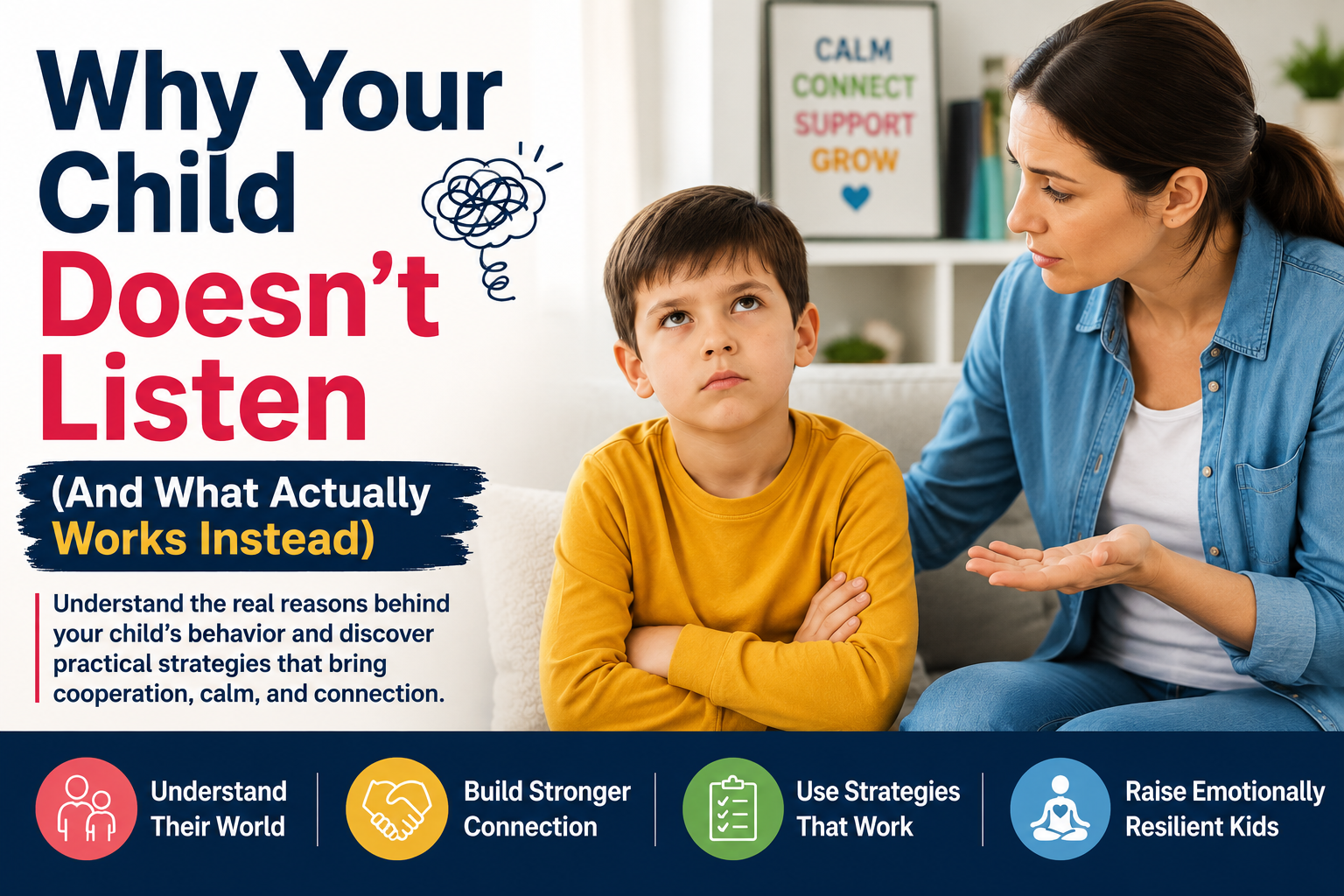
Few parenting frustrations feel as exhausting as having to repeat the same instruction over and over while your child completely ignores you.
You ask them to put on their shoes. Nothing happens.
You remind them to clean up their toys. They continue playing.
You repeat yourself several times until the situation turns into frustration, yelling, or a power struggle.
Many parents begin to wonder:
“Why doesn’t my child listen to me?”
The truth is that children often do not ignore instructions simply because they are “bad” or intentionally disrespectful.
In many cases, listening difficulties are connected to emotional regulation, communication patterns, overstimulation, developmental stages, or unmet emotional needs.
Understanding the real reasons behind these behaviors can help parents respond more effectively and improve communication over time.
Children are still developing important life skills such as:
What looks like “not listening” is often a child struggling with one or more of these areas.
This does not mean boundaries should disappear. It means parents can approach behavior with understanding while still maintaining healthy expectations.
This distinction is extremely important.
Some children intentionally test boundaries occasionally. That is a normal part of development.
However, many listening struggles are not true defiance.
A child who is emotionally overwhelmed, overstimulated, exhausted, anxious, or dysregulated may genuinely struggle to process instructions effectively in that moment.
For example:
Understanding emotional dysregulation helps parents respond with more patience and clarity.
There is rarely one single reason.
Usually, several factors contribute to listening challenges.
Children can become overwhelmed when they receive multiple commands quickly.
For example:
Too much information at once makes it harder for children to process and respond effectively.
Simple and clear instructions work better.
Children respond better when they feel emotionally connected.
If interactions become mostly corrections, criticism, or commands, some children begin tuning parents out emotionally.
Connection improves cooperation.
Small moments of attention, conversation, play, and emotional warmth often strengthen listening over time.
Modern environments are highly stimulating.
Screens, noise, toys, conversations, and activity can make it difficult for children to focus fully on instructions.
Sometimes children genuinely do not register what parents are saying because their attention is elsewhere.
Emotionally overwhelmed children often struggle to process instructions calmly.
Stress from:
can all reduce listening capacity.
This is especially common after long school days or emotionally difficult situations.
Children learn through repetition and consistency.
If expectations constantly change, children may become confused about which instructions are truly important.
Consistent routines and calm follow-through help improve cooperation over time.
Young children naturally have shorter attention spans and less impulse control.
Sometimes parents expect emotional maturity that children have not fully developed yet.
Understanding developmental stages helps set realistic expectations.
Some listening struggles may actually be signs of emotional overload.
Watch for behaviors such as:
These behaviors often signal emotional stress rather than simple disobedience.
Certain parenting responses can unintentionally worsen listening struggles.
When parents repeat instructions too many times without follow-through, children may begin tuning out directions automatically.
Clear communication with calm consistency works better than endless repetition.
Yelling may stop behavior temporarily through fear or shock, but it usually does not build healthy long-term communication.
Frequent yelling can also increase emotional dysregulation in children.
Turning every situation into a battle often creates more resistance.
Children respond better when parents stay calm, regulated, and emotionally steady.
Statements like:
can affect a child’s self-esteem and emotional security.
Children often internalize repeated labels.
Improving communication usually starts with changing how interactions happen at home.
Instead of giving instructions from across the room, move closer and make eye contact.
This increases the likelihood that the child fully processes the instruction.
Sometimes simple physical presence improves listening dramatically.
Long explanations often overwhelm children.
Clear, calm, direct instructions work better.
For example:
Simple language improves understanding.
Children often mirror adult emotional energy.
When parents remain calm, children are more likely to regulate themselves more effectively.
Calm communication creates emotional safety.
Children cooperate better when they feel emotionally connected.
Small daily moments matter:
Connection strengthens trust and responsiveness.
Routines reduce resistance because children know what to expect.
Helpful routines include:
Predictability reduces stress and improves cooperation.
Children calm down faster when they feel understood.
Try phrases like:
Validation helps children feel emotionally safe while still learning boundaries.
Healthy communication develops gradually over time.
Parents can strengthen listening by:
The goal is not perfect obedience.
The goal is helping children develop healthy communication, emotional awareness, and cooperation skills that benefit them throughout life.
Some listening struggles are completely normal during childhood.
However, parents may consider additional support if:
Sometimes deeper emotional, developmental, or learning challenges may contribute to persistent struggles.
When children struggle to listen, the issue is often deeper than simple disobedience.
Emotional overload, overstimulation, stress, developmental stages, and communication patterns all play important roles in how children respond to instructions.
Parents do not need to choose between empathy and boundaries.
Children benefit most when parents combine emotional understanding with calm, consistent guidance.
Over time, emotionally safe communication helps children build stronger listening skills, emotional regulation, confidence, and healthier relationships.
Children may ignore instructions due to distraction, emotional overload, overstimulation, fatigue, or difficulty processing information in the moment.
Sometimes children test boundaries, but many listening struggles are connected to emotional regulation and developmental factors rather than intentional defiance.
Calm communication, eye contact, routines, emotional connection, and clear expectations often improve listening more effectively than yelling.
Children often feel emotionally safest at home, which can lead to more emotional release and behavioral challenges with parents.
Listening skills gradually improve as children develop emotional regulation, attention, impulse control, and communication abilities.