Physical Address
381 Myrtle Avenue, Brooklyn, NY 11205
Physical Address
381 Myrtle Avenue, Brooklyn, NY 11205

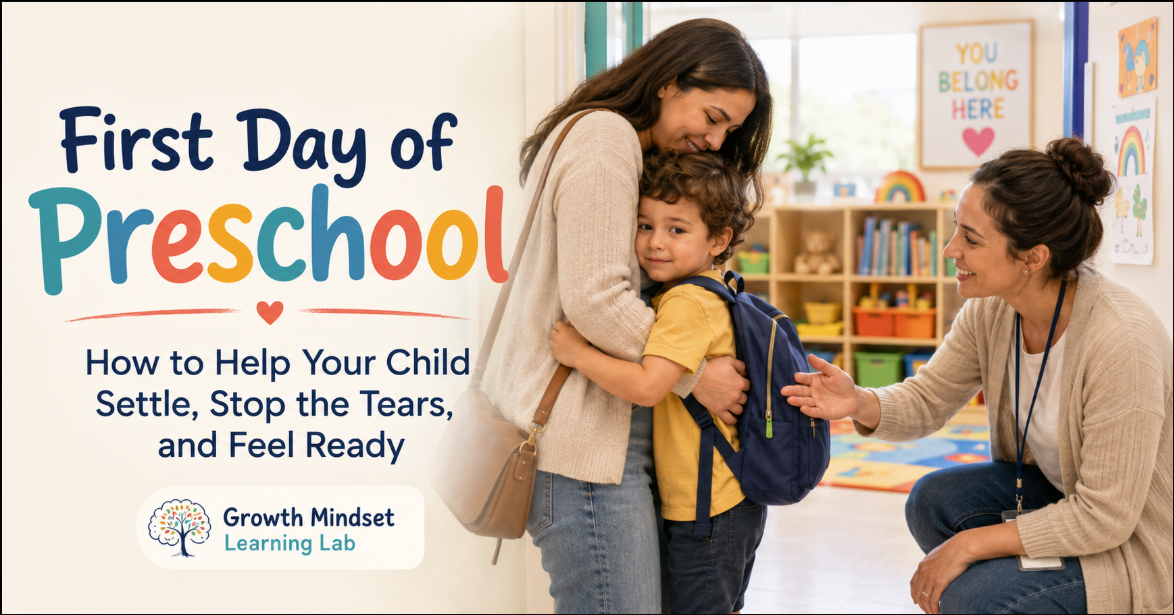
Most parents prepare for the first day of preschool by thinking about the obvious things: the backpack, the lunchbox, the spare clothes, the water bottle with the name label that somehow still manages to disappear by Friday.
But the part that catches many parents off guard is not the packing.
It is the moment at the classroom door.
Your child may have been excited all morning. They may have worn their new shoes proudly, talked about the playground, and told everyone they were going to “big school.” Then suddenly, as soon as they see the classroom, everything changes. Their hand tightens around yours. Their face drops. They hide behind your leg. Or they cry in a way that makes you question every decision you made that morning.
That moment can shake even the most confident parent.
You start wondering whether your child is ready. Whether the preschool is right. Whether you should stay a bit longer. Whether walking away makes you cruel. Whether every other parent somehow knows what they are doing while you are quietly falling apart inside.
Here is the truth many parents need to hear before the first day arrives: a hard drop-off does not mean your child is not ready for preschool. It does not mean they will hate school. It does not mean you have made the wrong choice. Often, it simply means your child is standing at the edge of something new, and new things can feel big when you are three, four, or five years old.
Preschool is not just a place where children learn letters, numbers, colours, songs, and routines. It is one of the first places where they learn how to separate from home, trust another adult, share space with other children, follow a group rhythm, and discover who they are when their parent is not sitting beside them.
That is a huge emotional step.
So instead of trying to create a perfect first day, the better goal is to create a supported first day. A day where your child feels prepared, where you feel calmer, and where the goodbye is loving without becoming confusing.
This guide will walk you through what to expect on the first day of preschool, how to prepare your child before school starts, what to say if they cry at drop-off, what to pack, what teachers wish parents understood, and how to know whether your child is settling well.
The first day of preschool is rarely as neat as the pictures on school websites.
There may be children crying near the door. There may be parents trying to smile while clearly holding back tears. There may be teachers gently taking bags, wiping faces, remembering names, calming nerves, and helping children find something familiar in a room that still feels strange.
Some children walk straight in and start playing. Some need a teacher to hold their hand. Some cry for two minutes and then forget they were upset as soon as they see blocks, paint, or a toy kitchen. Others stay quiet for a while, watching the room before joining in.
All of these reactions can be normal.
Parents often judge the whole preschool experience by the first ten minutes of drop-off, but that is usually the most emotional part of the day. What happens after you leave often gives a more accurate picture.
A child may cry when you go, then settle into story time. A child may refuse to speak at drop-off, then spend the morning building towers. A child may look unsure on day one, then slowly attach to one teacher and begin to feel safe.
The first day is not a test your child passes or fails. It is the start of a transition.
When a child cries at preschool drop-off, many parents immediately assume something is wrong. Sometimes, though, the crying is less about preschool itself and more about the size of the change.
Your child is being asked to move from a familiar world into a new one. At home, they know where things are. They know your voice, your routines, your moods, your kitchen, your sofa, your little habits. At preschool, everything is different. The room smells different. The noise is different. The adults are different. The rules are different. Even the bathroom may feel unfamiliar.
For a young child, that is a lot to process.
Some children cry because they do not fully understand when you are coming back. Some cry because they understand you are coming back, but they still do not want you to leave. Some cry because other children are crying. Some cry because they are tired, hungry, overstimulated, or simply overwhelmed by the morning rush.
Crying does not always mean fear. Sometimes it means, “This is new, and I need help moving through it.”
That is why the adult response matters so much. When parents and teachers stay calm, warm, and predictable, the child slowly learns that preschool is not a threat. It is just a new place that takes time to understand.
Preparation helps, but too much preparation can accidentally create pressure.
Some parents talk about preschool constantly for weeks because they are trying to build excitement. They say things like, “You’re going to have so much fun! You’ll make so many friends! You won’t cry, will you?” The intention is good, but for some children, that level of focus can make preschool feel like a huge performance.
Keep preparation simple, honest, and repeated.
You can say:
“You’re going to preschool soon. You will play, eat snack, listen to stories, and I will come back to pick you up.”
That kind of language works because it gives your child a clear picture of the day without overloading them. Young children do better with concrete details than vague promises. “I’ll come back after lunch” is often easier to understand than “I’ll come back later.”
Before the first day, talk about the routine in small pieces. Show them the bag they will carry. Practise opening the lunchbox. Let them try their shoes. Drive or walk past the preschool if you can. If the school offers a visit or tour, take it. Familiarity makes the first day less shocking.
You can also role-play preschool at home. Pretend to hang up a bag, greet the teacher, sit for story time, wash hands, eat snack, and say goodbye. Children learn through play, so this can be more helpful than a long serious conversation.
The goal is not to convince your child that preschool will be perfect. The goal is to help preschool feel less unknown.
A calm first day usually starts the night before. When everything is packed and ready, the morning feels less rushed, and children can sense that calmness.
Here is what to prepare:
Label everything, even items you think are obvious. Preschool classrooms are full of similar jackets, bottles, shoes, bags, and lunchboxes. A clear name label saves teachers time and helps children feel more confident about recognising their own belongings.
Choose comfort over style. This is not the day for complicated outfits, stiff shoes, or clothing that makes toileting difficult. Your child should be able to move, play, sit, paint, climb, eat, and use the bathroom as easily as possible.
The way the morning begins can shape the drop-off.
Try not to make the first day feel dramatic. Children often pick up the emotional temperature of the room. If everyone is rushing, taking too many photos, repeating instructions, and saying “Are you excited?” every five minutes, your child may begin to feel that something unusually big is happening.
Keep the morning warm but ordinary.
You might say:
“Today is your first day of preschool. We’ll have breakfast, get dressed, take your bag, and go to your classroom. I’ll give you a hug, your teacher will help you, and I’ll come back after lunch.”
That gives your child a map. Young children feel safer when they know what comes next.
Avoid asking too many emotional questions, such as:
“Are you nervous?”
“Are you going to miss me?”
“Will you be okay without me?”
These questions may seem caring, but they can plant worries your child was not focused on. Instead, speak with calm confidence.
You are not pretending preschool is easy. You are showing your child that it is manageable.
Drop-off is where many parents accidentally make things harder, usually because they are trying to be kind.
The best preschool goodbyes are warm, short, and predictable. Your child should know exactly what happens each morning: you arrive, help with the bag, greet the teacher, give a hug, say your goodbye phrase, and leave.
A simple goodbye might sound like this:
“I love you. You are safe here. I will come back after lunch. Have a lovely day with your teacher.”
Then leave.
That last part is difficult, but it matters.
When parents return for one more hug, one more explanation, one more wave through the window, and one more “Are you okay?” the child can become more unsettled. The goodbye stops feeling clear. They may begin to think, “Maybe my parent is not sure I am safe here.”
A confident goodbye does not mean you are cold. It means you are helping your child borrow your certainty until they build their own.
If your child cries, try not to sneak away while they are distracted. It may avoid tears in the moment, but it can make some children feel less secure later. They may start watching you more closely because they are afraid you might disappear without warning.
Also try not to shame the crying.
Avoid phrases like:
“Big boys don’t cry.”
“You’re fine.”
“Don’t be silly.”
“You’re making mummy sad.”
“Everyone is looking at you.”
Those words may stop the crying temporarily, but they do not help your child understand the feeling. They can also make the child feel embarrassed about needing comfort.
A stronger response is:
“I know goodbye feels hard. Your teacher will help you, and I will come back after lunch.”
That sentence does three things. It names the feeling, points to support, and reminds the child that you return.
The aim is not to talk your child out of the emotion. The aim is to help them move through it safely.
Some children settle within a few days. Some take two to four weeks. Some need longer, especially if this is their first time in group care, if they are naturally cautious, or if there are other changes happening at home.
What you want to look for is not instant happiness. You want to look for gradual progress.
Progress may look like your child crying for a shorter time. It may look like them allowing a teacher to comfort them. It may look like eating snack after refusing it on day one. It may look like standing near other children before actually playing with them. It may look like mentioning one teacher’s name at home.
These signs matter because settling is not always loud and obvious.
It is also normal for progress to wobble. A child may do well for three days, struggle again after the weekend, then improve again. This does not mean the process is failing. It means your child is still learning the rhythm.
Instead of asking only, “Was my child okay?” ask questions that give you a clearer picture.
Try asking:
These questions help you understand the full day, not just the emotional goodbye.
A child who cries for five minutes but then plays, eats, listens to stories, and explores the room is having a very different experience from a child who remains distressed for most of the day. Teachers can help you see that difference.
Do not be surprised if your child behaves differently after the first few days of preschool.
Some children become extra clingy at home. Some ask for more cuddles. Some have bigger tantrums. Some fall asleep earlier. Some refuse to talk about school at all. Some suddenly want to be carried again, even if they had grown out of it.
This can happen because preschool uses a lot of emotional energy.
Your child is learning to follow routines, wait for turns, listen to unfamiliar adults, share toys, manage noise, use words, ask for help, and cope without you nearby. Even if they enjoy the day, that is still a lot for a young child.
When they get home, they may release all the feelings they held in during the day.
This is why the after-school routine matters. Try not to fill the first week with too many errands, lessons, visits, or long outings. Give your child space to decompress. A snack, quiet play, a short walk, a bath, or time beside you may help more than a full conversation about the day.
Connection before questions is often the better approach.
Many children say this at some point, especially during the first week.
It can be hard to hear, but it does not always mean something serious is wrong. Sometimes “I don’t want to go” means “I don’t like saying goodbye.” Sometimes it means “I’m tired.” Sometimes it means “I don’t know how to talk about this new experience yet.”
Respond calmly.
You might say:
“I hear you. Starting something new can feel hard. Your teacher will help you, and I will come back after preschool.”
Do not turn it into a long debate each morning. Preschool should not become a daily negotiation. Children feel safer when the adult boundary is kind but clear.
However, you should still listen carefully over time. If your child is consistently distressed, fearful, withdrawn, not eating, not sleeping well, or saying specific things that worry you, speak with the teacher and ask for details.
There is a balance between staying consistent and staying observant.
Most children need time to settle, but some signs deserve closer attention.
Speak with your child’s teacher, school leader, pediatrician, or a child development professional if your child:
These signs do not automatically mean the preschool is bad or that something serious has happened. But they do mean the adults should slow down, ask better questions, and work together to understand what the child needs.
Trust your instincts, but also gather facts. The teacher’s observations, your child’s behaviour at home, and the pattern over several days will give you a clearer picture.
Some children do not rush into new environments, and that is not a weakness.
A slow-to-warm-up child may need to watch before joining. They may prefer one familiar adult before engaging with the whole group. They may not speak much at first, even if they talk constantly at home. They may need the same arrival routine every morning before they begin to relax.
Do not push too hard with phrases like, “Go and make friends,” or “Say hello properly,” or “Why are you being shy?”
Instead, give them small bridges into the classroom.
You can help them choose one toy to look for when they arrive. You can ask the teacher to welcome them with a quiet activity rather than a loud group moment. You can arrange for them to enter a few minutes earlier if the school allows it, before the room gets too busy.
Confidence grows differently in different children. Some children bloom slowly, and that is still blooming.
A confident child can still struggle on the first day of preschool.
Sometimes parents are shocked because their child is usually bold, talkative, and independent. Then preschool starts, and suddenly the same child is crying at the door or refusing to let go.
This does not mean their confidence was fake. It means confidence at home does not automatically transfer to a new environment.
A child can be outgoing in familiar places and cautious in unfamiliar ones. They can love people and still find separation hard. They can be ready for preschool and still need support adjusting to it.
Treat the tears with patience, not surprise.
Say something like:
“You were excited, and now it feels hard to say goodbye. That can happen. Your teacher will help you, and I will come back.”
This helps the child understand that mixed feelings are normal.
Preschool teachers know that drop-off can feel painful for parents. They also know that the child you see at the door may not be the child they see ten minutes later.
Many children cry during goodbye and then settle into play. Many children stay quiet at first and later become lively. Many children take time to trust the room before they show their personality.
Teachers are usually not expecting your child to arrive perfectly independent. Preschool is where children practise independence. It is where they learn to ask for help, wait for turns, tidy up, listen in a group, manage disappointment, and build early friendships.
What helps teachers most is consistency between home and school.
If the parent says goodbye one way on Monday, stays for fifteen minutes on Tuesday, sneaks out on Wednesday, and negotiates at the door on Thursday, the child receives mixed signals. When parents and teachers agree on a simple routine and repeat it, the child has something stable to hold onto.
The first week is not about forcing bravery. It is about building trust.
Here is a practical plan you can follow during the first week.
Prepare the bag the night before. Keep breakfast simple. At drop-off, use one short goodbye phrase and leave after your routine.
Even if day one was emotional, do not completely change the plan. Children need repetition to feel secure.
Find out whether your child responded to a toy, a teacher, a book, outdoor play, music, or quiet time.
Progress may be faster settling, eating more, accepting comfort, joining one activity, or mentioning something from school at home.
Do not only celebrate “no crying.” Celebrate trying, returning, listening, sharing, asking for help, or being brave even while feeling unsure.
You might say:
“You went to preschool this week. Some parts were hard, but you kept trying. I’m proud of you.”
That kind of praise builds confidence without making your child feel they failed if they cried.
If you are still choosing a preschool, do not only look at the classroom design, toys, or photos online. Those things matter, but the emotional culture of the school matters more.
Ask questions like:
The answers will tell you a lot. A good preschool should not make parents feel silly for asking these questions. They should understand that starting school is a family transition, not just a child transition.
If you remember nothing else, remember these:
Prepare the night before so the morning does not feel rushed.
Use simple language your child can understand.
Practise small independence skills at home.
Keep drop-off warm, short, and predictable.
Do not sneak away.
Do not shame your child for crying.
Ask the teacher what happens after you leave.
Expect tiredness or clinginess after school.
Look for progress, not perfection.
Give the transition time.
The first day of preschool is not about proving your child is fearless. It is about helping them discover that they can feel unsure, receive support, and still be okay.
That is a powerful lesson.
Choosing the right preschool can make a big difference in how your child experiences their first days away from home.
At Growth Mindset Learning Lab, we understand that early learning is not just about academics. Children need warmth, routine, emotional safety, play, encouragement, and teachers who know how to support each child’s unique pace.
If your child is getting ready for preschool, we would love to welcome you, answer your questions, and show you how our learning environment helps children settle, grow, and thrive.
Book a tour at Growth Mindset Learning Lab today and take the first step toward a calmer, more confident preschool start for your child.