Physical Address
381 Myrtle Avenue, Brooklyn, NY 11205
Physical Address
381 Myrtle Avenue, Brooklyn, NY 11205

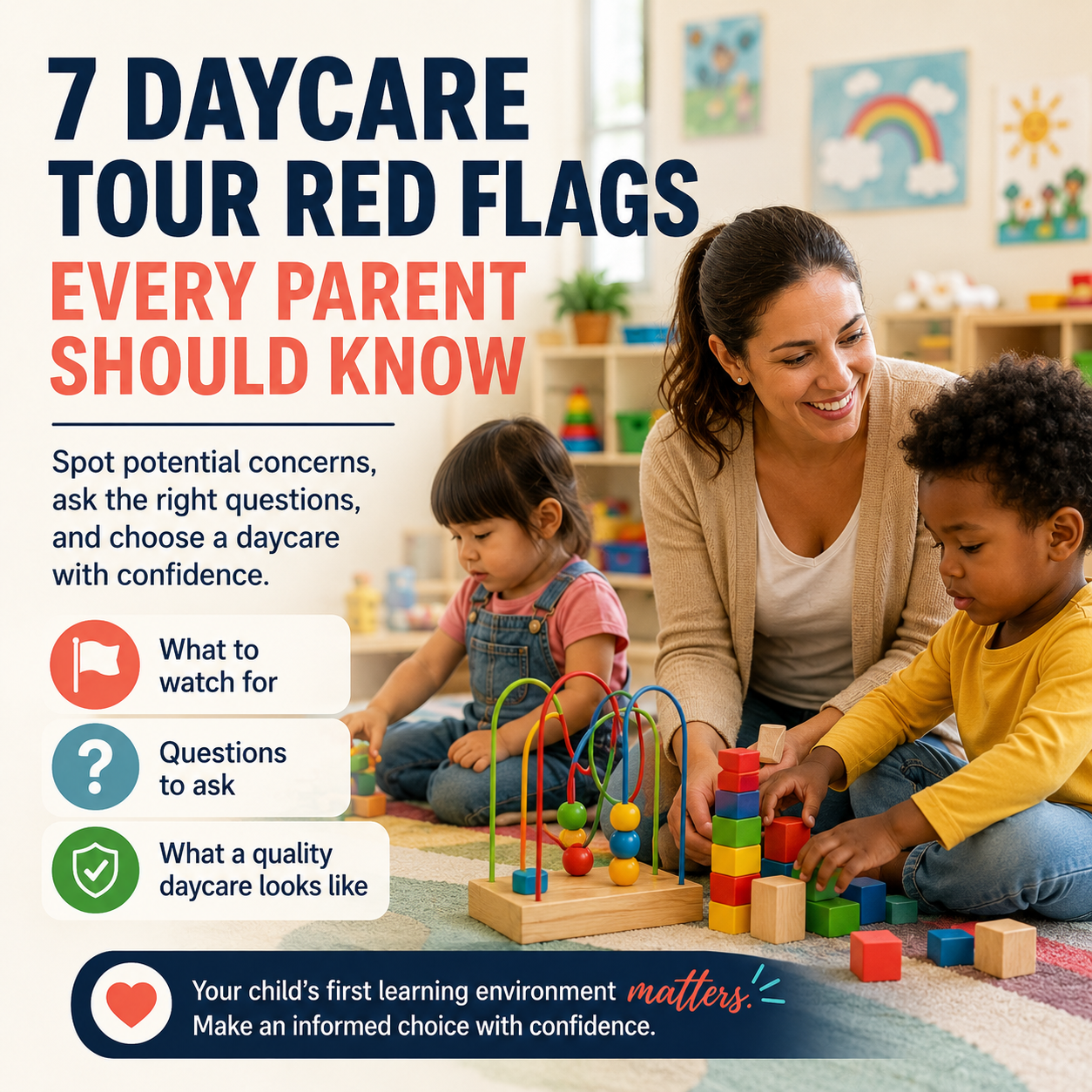
Don’t let a beautiful classroom distract you from the signs that matter most. Here’s how to spot potential concerns, ask the right questions, and choose a daycare with confidence.
Walking into a daycare for the first time can feel overwhelming.
You might notice the colorful classrooms, cheerful wall decorations, or shelves filled with toys. While these first impressions matter, they don’t tell the whole story.
The most important things to look for aren’t always obvious.
How do the teachers respond when a child is upset? Are children actively engaged, or simply being supervised? Does the staff welcome your questions, or do they seem uncomfortable answering them?
These details often reveal far more about the quality of a daycare than the building itself.
Before we begin, here’s something every parent should remember:
One imperfect moment does not automatically mean a daycare is a poor choice.
Children cry. Toys end up on the floor. Teachers manage unexpected situations. These are normal parts of a busy early childhood classroom.
Instead of judging a daycare based on a single moment, look for patterns. Are children consistently treated with kindness? Is the environment safe and well-managed? Do teachers appear attentive and genuinely interested in the children?
This guide will help you identify seven meaningful red flags that deserve a closer look—without creating unnecessary fear or second-guessing.
If you’re still in the early stages of your search, you may also find our complete guide to choosing the right daycare helpful. It walks you through everything from comparing programs and understanding licensing requirements to evaluating teachers and preparing your child for a successful transition.
As you visit different daycare centers, keep these seven warning signs in mind:
Remember, these are signals to investigate—not automatic reasons to walk away. Throughout this article, we’ll explain why each one matters, what a healthy alternative looks like, and the questions you should ask before making your decision.
What you might notice:
One of the clearest signs of a high-quality daycare is how teachers interact with children.
As you observe the classroom, ask yourself:
Children thrive when they have warm, responsive relationships with caring adults. If teachers seem distracted, emotionally distant, or more focused on administrative tasks than the children, it may affect the quality of care your child receives.
Young children learn through relationships.
Research has consistently shown that responsive interactions with trusted adults support language development, emotional regulation, confidence, and social skills. A teacher who notices when a child is struggling, celebrates their successes, or simply gets down to their eye level can make a lasting difference in their daily experience.
On the other hand, if teachers appear disengaged for most of the tour, children may miss out on the encouragement and emotional support they need to feel secure.
In a nurturing classroom, you’ll often see teachers:
The classroom should feel welcoming, not rushed.
You should get the sense that the teachers genuinely enjoy spending time with the children.
If you’re unsure, consider asking:
Their answers—and the confidence with which they answer—can tell you a great deal about the program’s approach to emotional support.
Remember: Every teacher has busy moments. A staff member stepping away briefly to prepare an activity or speak with a colleague isn’t necessarily a concern. The real question is whether warm, attentive interactions are the norm throughout the classroom.
What you might notice:
A safe daycare isn’t one where teachers simply watch children from across the room—it’s one where they are actively engaged and aware of what’s happening at all times.
As you observe the classroom, ask yourself:
Young children are naturally curious. They explore, climb, run, and test boundaries. That’s why active supervision is one of the most important responsibilities of any early childhood educator.
Accidents can happen in any childcare setting, even in excellent programs.
The difference is often how quickly teachers notice potential risks and respond.
Active supervision helps prevent injuries, supports positive behavior, and ensures children receive help when they need it.
It also creates a calmer learning environment because children know adults are present, attentive, and available.
In a well-managed classroom, you’ll usually notice that teachers:
Rather than reacting only when something goes wrong, they are actively involved in creating a safe environment throughout the day.
If you have concerns, ask questions such as:
A confident daycare should be able to explain its supervision procedures clearly and consistently.
Remember: A busy classroom isn’t necessarily an unsafe classroom. Children laughing, talking, and moving around is a normal part of early learning. The real concern is when adults appear unaware of what’s happening, children repeatedly go unnoticed, or supervision seems inconsistent.
What you might notice:
How teachers respond to challenging behavior says a lot about a daycare’s philosophy.
During your tour, pay attention to how educators speak to children when they’re upset, frustrated, or not following directions.
Be concerned if you notice:
Young children are still learning how to manage their emotions and behavior. They need guidance, patience, and consistent boundaries—not fear.
A daycare that relies on harsh discipline may stop a behavior temporarily, but it doesn’t teach children the skills they need to make better choices in the future.
Quality programs use positive guidance strategies such as:
The goal is to teach, not punish.
If you want to better understand the daycare’s approach, ask:
A trustworthy daycare should have a clear, age-appropriate approach that focuses on helping children grow rather than making them feel ashamed.
Tip: If positive discipline is important to you, read our guide on How to Discipline a Child Without Yelling to better understand what respectful guidance looks like at home and in the classroom.
What you might notice:
A daycare doesn’t have to be spotless every minute of the day—after all, children learn through play, and a little mess is expected.
However, some issues should never be overlooked.
Watch for signs such as:
A safe environment helps protect children from preventable injuries and illnesses while giving parents peace of mind.
More importantly, it shows that the daycare takes children’s well-being seriously.
Look for a daycare that has:
If you notice anything concerning, ask:
A quality daycare will answer these questions openly and confidently.
Remember: Finger paint on a table or blocks scattered across the floor usually mean children are actively learning and playing. The real concern is poor hygiene, unsafe conditions, or safety practices that put children at risk.
What you might notice:
It’s normal for teachers to move on from time to time, but if a daycare is constantly replacing staff, it’s worth asking why.
During your tour, pay attention to comments like:
You can also ask how long the teachers have worked at the daycare.
Young children build trust through consistent relationships.
When teachers change frequently, children may struggle to form secure attachments, especially during their first few months at daycare.
High staff turnover can also affect the consistency of routines, communication, and the overall classroom environment.
A strong daycare typically has:
Don’t be afraid to ask:
A transparent daycare will answer these questions honestly and explain how they maintain consistency for children.
Remember: One new teacher isn’t necessarily a red flag. The concern is a pattern of frequent staff changes or vague answers that make it difficult to understand why employees keep leaving.
What you might notice:
A quality daycare understands that parents have questions and welcomes them.
Be cautious if the director or staff:
Transparency builds trust. If a daycare has nothing to hide, it should be happy to explain how it operates.
Choosing a daycare is a major decision, and you deserve clear, honest information.
When a program avoids reasonable questions, it can make it difficult to understand how your child will be cared for or how concerns will be handled if they arise.
A trustworthy daycare will:
Try asking:
A confident director should welcome these questions and answer them clearly.
Remember: It’s perfectly reasonable for a daycare to have security rules about where visitors can go. The concern isn’t having policies—it’s avoiding honest conversations or making parents feel uncomfortable for asking important questions.
What you might notice:
As you tour the daycare, don’t just observe the teachers—watch the children too.
Ask yourself:
It’s perfectly normal to see one child crying, having a difficult morning, or needing extra reassurance. That alone is not a red flag.
The concern is when many children appear withdrawn, bored, distressed, or are repeatedly ignored.
Children thrive in environments where they feel safe, supported, and encouraged to explore.
If several children seem disengaged or emotionally unsupported, it may indicate that the classroom isn’t meeting their developmental or emotional needs.
In a quality daycare, you’ll typically see children:
The classroom should feel active, welcoming, and emotionally supportive—not silent, chaotic, or disconnected.
If you’re unsure, ask:
Their answers should reflect patience, understanding, and a commitment to supporting each child’s individual needs.
Remember: One child having a difficult moment doesn’t define a daycare. Instead, look at the overall atmosphere. Do the children seem happy, engaged, and well cared for? More importantly, do the adults respond with warmth and compassion when children need them?
By now, you may be wondering:
“If I notice one of these red flags, should I immediately rule out that daycare?”
Not necessarily.
Even the best daycare centers have busy mornings, unexpected challenges, and children who are having difficult days.
The key is to look for patterns, not isolated moments.
If something concerns you, follow these four simple steps before making your decision:
Watch what happens over several minutes instead of reacting to a single incident.
Ask yourself:
Give the daycare an opportunity to explain.
For example:
A quality daycare should answer calmly and confidently.
If you’re still unsure, ask to see:
Reliable programs are transparent and happy to share this information.
After you’ve observed, asked questions, and reviewed the facts, ask yourself:
“Would I feel comfortable leaving my child here every day?”
If the answer is no—and your concerns remain unresolved—it’s okay to continue your search.
Choosing a daycare is too important to ignore persistent doubts.
Before you leave your next daycare tour, see if you can confidently answer yes to these questions:
✔ The teachers were warm and attentive.
✔ Children appeared safe and engaged.
✔ The environment was clean and secure.
✔ Staff answered my questions openly.
✔ I understand their discipline and communication policies.
✔ I can picture my child feeling comfortable here.
If you answered “no” to several of these, it may be worth exploring other options before making your decision.
Knowing what to avoid is only one part of choosing a great daycare.
To make a confident decision, you’ll also want to know what to look for in a high-quality program.
Read our complete guide:
How to Choose the Right Daycare: A Parent’s Complete Decision Guide
It walks you through everything from licensing and safety to evaluating teachers, comparing daycare centers, and preparing your child for a successful transition.
If you’re looking for a nurturing daycare in Brooklyn, we’d love to welcome you to Growth Mindset Learning Lab. Schedule a tour, meet our educators, and see firsthand how we create a safe, engaging, and supportive environment where children can learn, grow, and thrive.