Physical Address
381 Myrtle Avenue, Brooklyn, NY 11205
Physical Address
381 Myrtle Avenue, Brooklyn, NY 11205

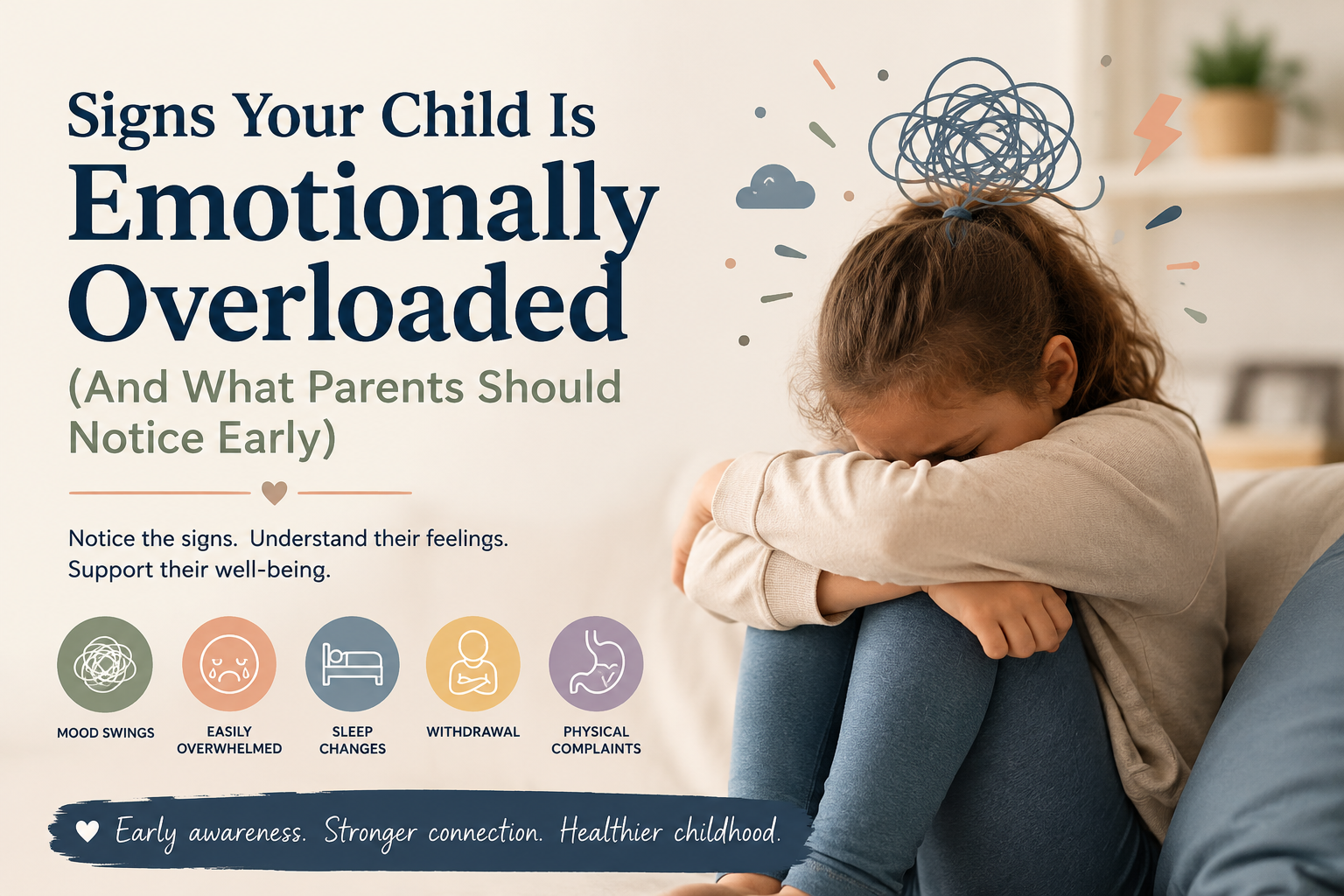
Sometimes children struggle emotionally long before adults realize something is wrong.
Instead of saying “I’m overwhelmed,” children often communicate stress through behavior changes, emotional reactions, withdrawal, irritability, or sudden meltdowns.
Many parents mistake these signs for stubbornness, attitude problems, or bad behavior when the child may actually be emotionally overloaded.
Recognizing emotional overload early can help parents respond with understanding and support before stress develops into bigger emotional struggles.
Read Also: How to Prepare Your Toddler for Preschool: Emotional, Social, and Practical Tips
Emotional overload happens when a child experiences more stress, stimulation, pressure, or emotional demands than they can comfortably process.
Children are still developing emotional regulation skills. Unlike adults, they often do not have the vocabulary or coping mechanisms to explain what they are feeling.
When emotions build up without healthy release, children may begin to show behavioral and emotional warning signs.
This overload can come from:
Understanding these triggers can help parents support children more effectively.
Many emotionally overwhelmed children still appear “fine” on the surface.
Some continue attending school normally, completing homework, and participating in daily activities while quietly struggling internally.
Others may become labeled as:
In reality, many children are simply carrying more emotional pressure than they can manage.
This is why emotional awareness is so important for parents.
Every child responds differently to stress, but some common patterns appear repeatedly.
A child who suddenly cries, yells, or shuts down over minor situations may already be emotionally overwhelmed.
For example:
Often, the reaction is not about the immediate situation. It is accumulated emotional stress finally spilling over.
Emotionally overloaded children often become easily frustrated.
They may:
When children are mentally exhausted, their ability to regulate emotions becomes weaker.
Not all overwhelmed children become loud or aggressive.
Some quietly withdraw.
They may:
Parents sometimes mistake this for independence when it may actually be emotional exhaustion.
Emotional stress often affects sleep patterns.
Children experiencing emotional overload may:
An overstimulated nervous system makes rest more difficult.
Children under emotional pressure often become more emotionally reactive.
They may cry more easily or become deeply affected by situations that previously felt manageable.
Simple disappointments can suddenly feel overwhelming.
Emotional overload affects focus and learning.
You may notice:
When the brain is overwhelmed emotionally, mental processing becomes harder.
Sometimes emotional stress appears physically.
Children may complain about:
These symptoms are real and can be connected to emotional strain.
Some children externalize stress through behavior.
This can include:
While behavior still requires guidance, parents should also consider the emotional root behind the reactions.
Emotionally overwhelmed children may become more clingy or anxious.
They may repeatedly ask:
This often signals emotional insecurity or internal stress.
There is rarely one single cause.
Usually, emotional overload develops gradually through accumulated stress.
Children process experiences differently than adults. Situations that seem small to adults may feel emotionally huge to children.
Parents often respond with correction before understanding the emotional root of the behavior.
Some responses can unintentionally worsen emotional overload.
Statements like:
can make children feel emotionally unsafe.
Validation helps children feel understood.
Avoid labels such as:
Children often internalize repeated labels and begin to believe them about themselves.
Children experiencing emotional overload are usually already struggling internally.
Excessive criticism may increase shame, anxiety, or emotional shutdown.
Children open up more when they feel safe from judgment.
Let them know:
Emotional safety builds trust and resilience.
Sometimes children simply need less noise, pressure, and stimulation.
Helpful adjustments may include:
Small environmental changes can make a big difference.
Many children struggle because they cannot identify what they are experiencing.
Teach emotional vocabulary such as:
Naming emotions helps children regulate them more effectively.
Consistent sleep, healthy meals, and predictable routines help regulate emotions.
Children feel more secure when life feels stable and manageable.
Children borrow emotional regulation from adults.
When parents remain calm during difficult moments, children gradually learn emotional control through observation.
Helping children manage emotions is not about eliminating all stress.
It is about teaching children healthy coping skills while providing emotional support.
Over time, children develop resilience when they learn:
These emotional skills are just as important as academic success.
Some emotional struggles are normal, especially during stressful seasons.
However, parents may consider professional guidance if:
Early support can make a major difference.
Children often show emotional overload through behavior before they ever express it with words.
Meltdowns, irritability, withdrawal, defiance, and sensitivity are sometimes signs that a child is emotionally overwhelmed rather than intentionally difficult.
When parents learn to recognize these warning signs early, they can respond with greater patience, empathy, and support.
Over time, emotionally supported children are more likely to develop confidence, emotional resilience, and healthier coping skills that benefit them throughout life.
It can appear as meltdowns, irritability, withdrawal, aggression, sleep struggles, anxiety, or sudden behavioral changes.
Children often become more emotional when stress, exhaustion, overstimulation, or emotional pressure builds up over time.
Yes. Academic pressure, social interaction, sensory stimulation, and emotional masking at school can contribute significantly.
Focus on emotional safety, calm routines, validation, healthy communication, rest, and reducing overstimulation.
Yes, many children experience emotional overwhelm occasionally. Persistent or severe symptoms may require additional support