Physical Address
381 Myrtle Avenue, Brooklyn, NY 11205
Physical Address
381 Myrtle Avenue, Brooklyn, NY 11205
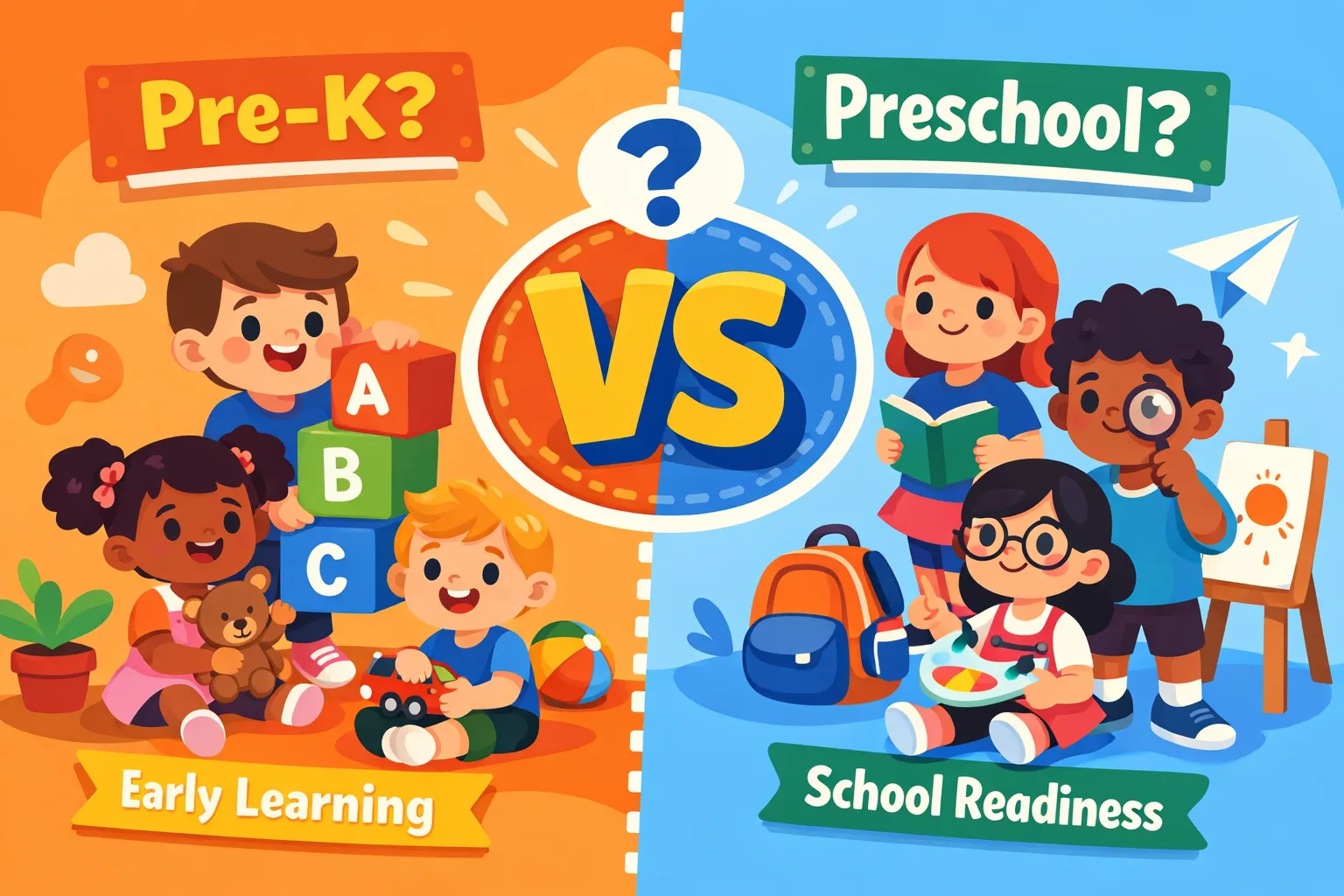
Pre-kindergarten vs Preschool: If you’re weighing options for your child, focus on age range, schedule, and classroom goals. Preschool typically serves 2- to 4-year-olds and uses play-based learning to build social skills and independence. Prekindergarten (pre-K) usually targets four-year-olds and emphasizes specific kindergarten-readiness skills like early literacy and classroom routines.
Preschools often offer flexible half-day or full-day schedules and a child-directed rhythm that lets play guide the day. Pre-K programs typically follow a school-day structure so children practice predictable classroom patterns and group lessons. That difference affects daily logistics, learning focus, and how quickly a child adapts to kindergarten routines.
Here are the basics to keep in mind when you compare programs. Use these quick points to focus your search and prepare for tours.
That split helps you prioritize what matters on a daily level: play and gradual social growth, or repeated practice with letters, numbers, and classroom habits.
Across the United States two common windows appear: preschools tend to enroll younger children, roughly ages 2 to 4, while pre-K focuses on the four-year-old year before kindergarten. Age ranges are guidelines rather than strict measures, and many programs treat development as equally important. Admissions often consider readiness cues such as following two-step directions, interest in letters and numbers, and basic self-care like dressing and toileting.
Cutoffs and priorities vary widely by state and district. For example, California commonly uses a December 1 cutoff and prioritizes four-year-olds for state preschool; New York City and Oklahoma offer universal pre-K for four-year-olds, and some Texas programs prioritize income or risk factors. Check your district’s early learning pages for exact dates and required documents, and if your child sits near a cutoff, call the program to ask how placements and waitlists are handled so you can plan next steps. For a succinct guide to typical enrollment ages, see what age is pre-K.
Curriculum and daily structure are the clearest practical differences between pre kindergarten vs preschool. Preschools emphasize social-emotional development, exploration, and self-help skills delivered through play and child-led projects. Pre-K typically uses more intentional lessons on early literacy and math plus classroom routines that prepare children for kindergarten expectations.
On tours and in program materials, look for specific kindergarten-readiness targets rather than general labels. Key areas to watch for include early literacy, early math, social-emotional skills, self-care and routines, and classroom habits.
Cost and program type will shape the day-to-day experience when comparing pre kindergarten vs preschool. Private preschool tuition commonly ranges from about $4,000 to $28,000 annually, with lower-cost options in suburbs and higher costs in dense urban areas or specialty programs. Higher tuition often reflects longer hours, lower teacher-to-child ratios, extended care, or specialized curricula such as language immersion or Montessori approaches rather than a fundamentally different educational philosophy.
Head Start and state-funded pre-K are distinct funding models to consider. Head Start is federally funded and primarily serves low-income families, providing priority spots and supports such as health and developmental screenings, meals, and family services. State-funded pre-K programs vary: some are universal for four-year-olds, while others restrict enrollment based on income, risk factors, or district budgets.
Sliding scales, vouchers, and local subsidy programs can reduce or cover costs. Start by checking your school district’s early childhood page, your state’s early learning office, and the Head Start eligibility requirements for nearby programs. Apply early and ask about waitlists and subsidy application assistance to improve your chances of securing a spot.
Evidence from multiple studies shows measurable kindergarten-entry gains in language and math for children who attend high-quality early childhood programs. Effect sizes often range from about a third to a full year of learning at kindergarten entry, with the strongest gains tied to higher program quality and focused instruction. Programs that intentionally build social skills also support early self-regulation and peer cooperation, which helps children on day one of school — a phenomenon discussed in the APA press release on the preschool advantage.
Those early academic gains often shrink by third or fourth grade unless children continue in aligned, high-quality K-3 instruction or receive ongoing supports at home and school. Factors that extend impact include strong classroom quality, qualified teachers, and active family engagement; together these elements help sustain early advantages. Longitudinal research also links early participation to lower grade retention, fewer special education placements, and better long-term outcomes when quality and continuity are present, as highlighted in the New America “Pre-K Is Win-Win” report.
Quality and follow-through matter most: an excellent pre-K experience combined with aligned early elementary practices and family partnerships produces the largest returns. Use research findings as a guide when you evaluate programs and prioritize consistent routines, trained adults, and classroom quality over labels alone.
Bring a short set of tour questions and use a compact checklist on your phone to compare programs objectively. Ask about the daily routine, how progress is measured and shared with families, teacher qualifications and ratios, and how transitions and discipline are handled. Watching a classroom in action gives you clues about daily rhythms, teacher-child interactions, materials availability, and whether children look engaged and supported.
Use a simple scoring system to rank options quickly: score items 1 to 5 and total the results so you can compare programs without relying solely on a gut feeling. Key checklist items include age fit, schedule alignment, curriculum emphasis, teacher credentials, ratios, licensing and health policies, cost and subsidy options, and available transportation. Enrollment typically requires a birth certificate, proof of residency, and immunization records, and many districts open registration in the spring, so mark deadlines early.
Preschool vs Pre-K: Key Differences Every Parent Should Know can be a helpful reference as you compare features and priorities. If you want extra support for visits, look for resources on preparing child for preschool and best practices for preschool transitions to make tours and trial days more useful.
Understanding pre kindergarten vs preschool helps you match your child with the right environment and support a smoother transition to kindergarten. Preschool usually serves younger children with play-based routines and mixed-age classrooms, while pre-K focuses on the final academic and routine skills that prepare a child for kindergarten. Because program names and rules vary by state, local research matters as much as labels.
Practical next steps: check your state’s age cutoff and funding rules, write down three things your child does well, and try a short at-home routine tonight to observe how your child responds to simple literacy, math, and routine-building activities.