Physical Address
381 Myrtle Avenue, Brooklyn, NY 11205
Physical Address
381 Myrtle Avenue, Brooklyn, NY 11205
If you’ve ever wondered whether children should be learning through worksheets or through play, the answer might surprise you.
A play-based preschool curriculum is not just “letting children play.” It is a structured, research-backed approach where learning happens naturally through exploration, creativity, and hands-on experiences.
According to research highlighted by the Australian Institute of Early Childhood Studies, play-based learning supports cognitive development, social skills, emotional growth, and even early literacy and numeracy skills.
In this guide, you’ll learn:
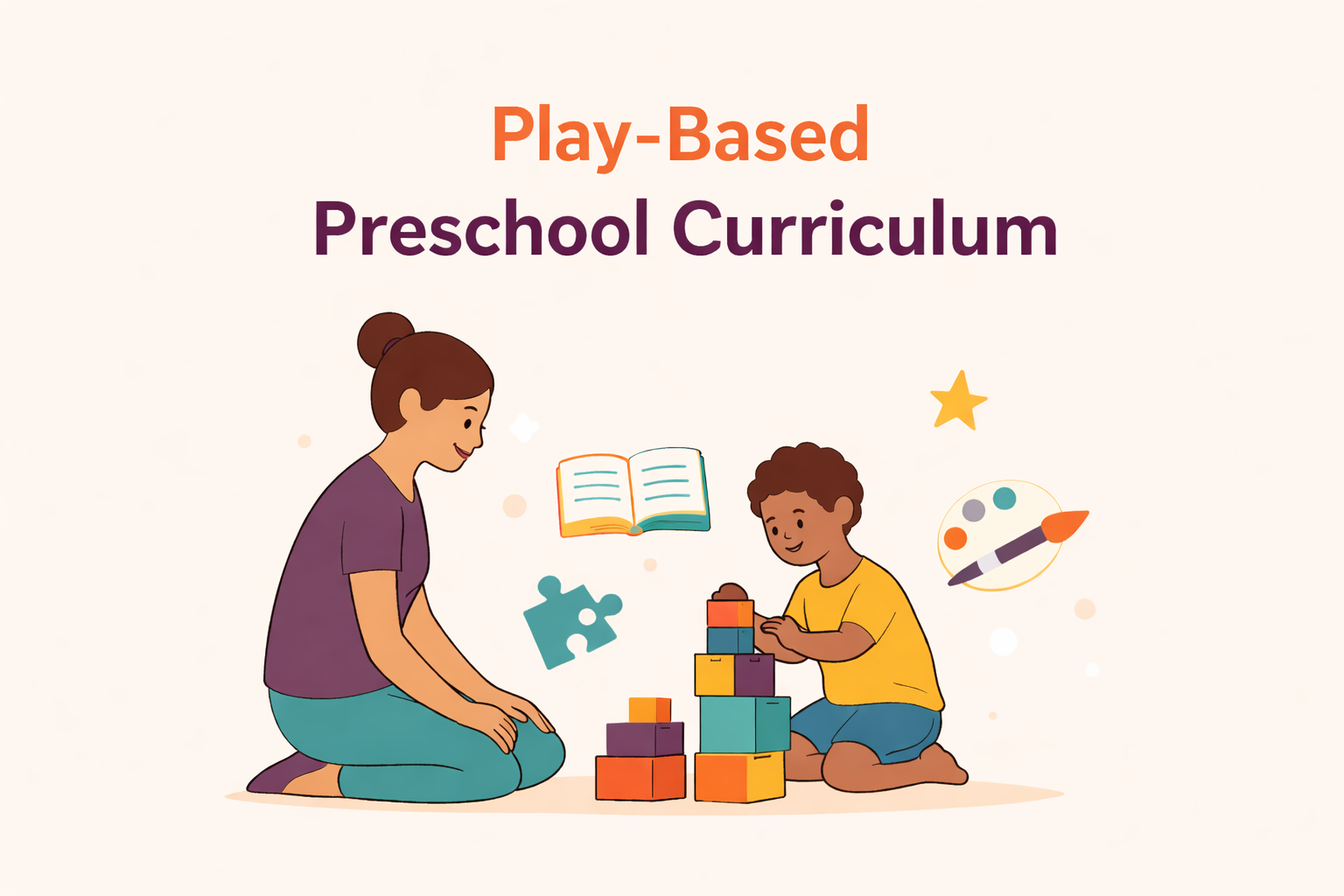
A play-based preschool curriculum is a child-centered learning approach where children learn through activities they naturally enjoy, such as building, role-playing, drawing, and exploring.
Instead of memorizing facts or sitting through long lessons, children learn by asking questions, exploring their environment, and engaging in hands-on play.
This approach allows children to follow their curiosity while teachers guide learning outcomes in the background, as explained in this early childhood resource.
Through play, children:
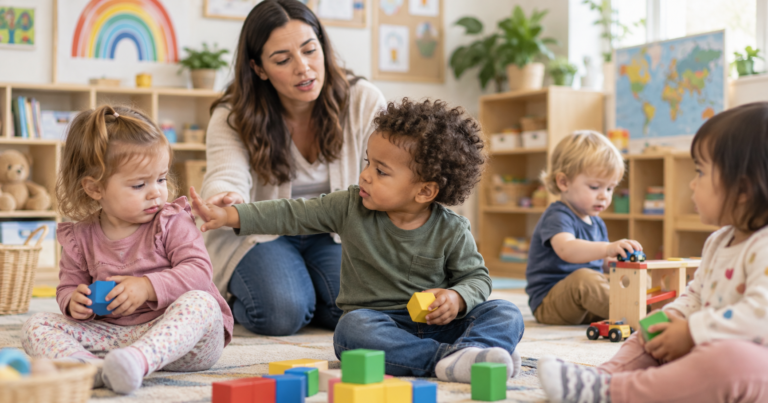
For example, building blocks helps children develop spatial awareness and critical thinking.
Play teaches children how to:
Group activities naturally encourage teamwork and cooperation.
Children learn:
Pretend play (like playing “house” or “teacher”) helps children understand emotions and relationships.
Activities like:
Help develop both fine and gross motor skills.
Children who learn through play:
And that makes a huge difference long-term.
A strong play-based preschool program includes:
Children choose activities based on interest.
Teachers guide learning through questions and observation.
No “right or wrong” answers.
Classrooms are divided into areas like:
Here’s what a typical day looks like:
Morning Circle Time
Free Play Time
Guided Activity
Outdoor Play
Creative Time
Closing Reflection
Develops problem-solving and creativity
For example, building blocks helps children develop spatial awareness and critical thinking.
You can explore more structured play ideas for early learners here.
Improves communication and emotional skills
Enhances motor skills and exploration
Boosts memory and critical thinking
Builds language and imagination
Encourages creativity and self-expression
Supports physical development
Improves coordination and rhythm
Teaches rules, patience, and teamwork
Encourages curiosity and discovery
| Feature | Play-Based Curriculum | Traditional Curriculum |
|---|---|---|
| Learning Style | Child-led | Teacher-led |
| Engagement | High | Moderate |
| Creativity | Strong | Limited |
| Focus | Whole-child development | Academic skills |
| Long-term Impact | Higher | Lower |
Research shows that play-based learning leads to better long-term outcomes, including stronger creativity and social skills.
You don’t need a fancy school setup.
Here’s how to start:
The goal is simple: let children learn naturally through play.
Wrong. Children are developing critical skills through play.
They actually learn faster because they enjoy the process.
Good play-based programs are intentionally designed.
A play-based preschool curriculum is not a trend. It is a proven approach that helps children grow intellectually, socially, emotionally, and physically.
Instead of forcing learning, it allows children to discover, explore, and enjoy the process.
And that is what truly builds a strong foundation for life.