Physical Address
381 Myrtle Avenue, Brooklyn, NY 11205
Physical Address
381 Myrtle Avenue, Brooklyn, NY 11205

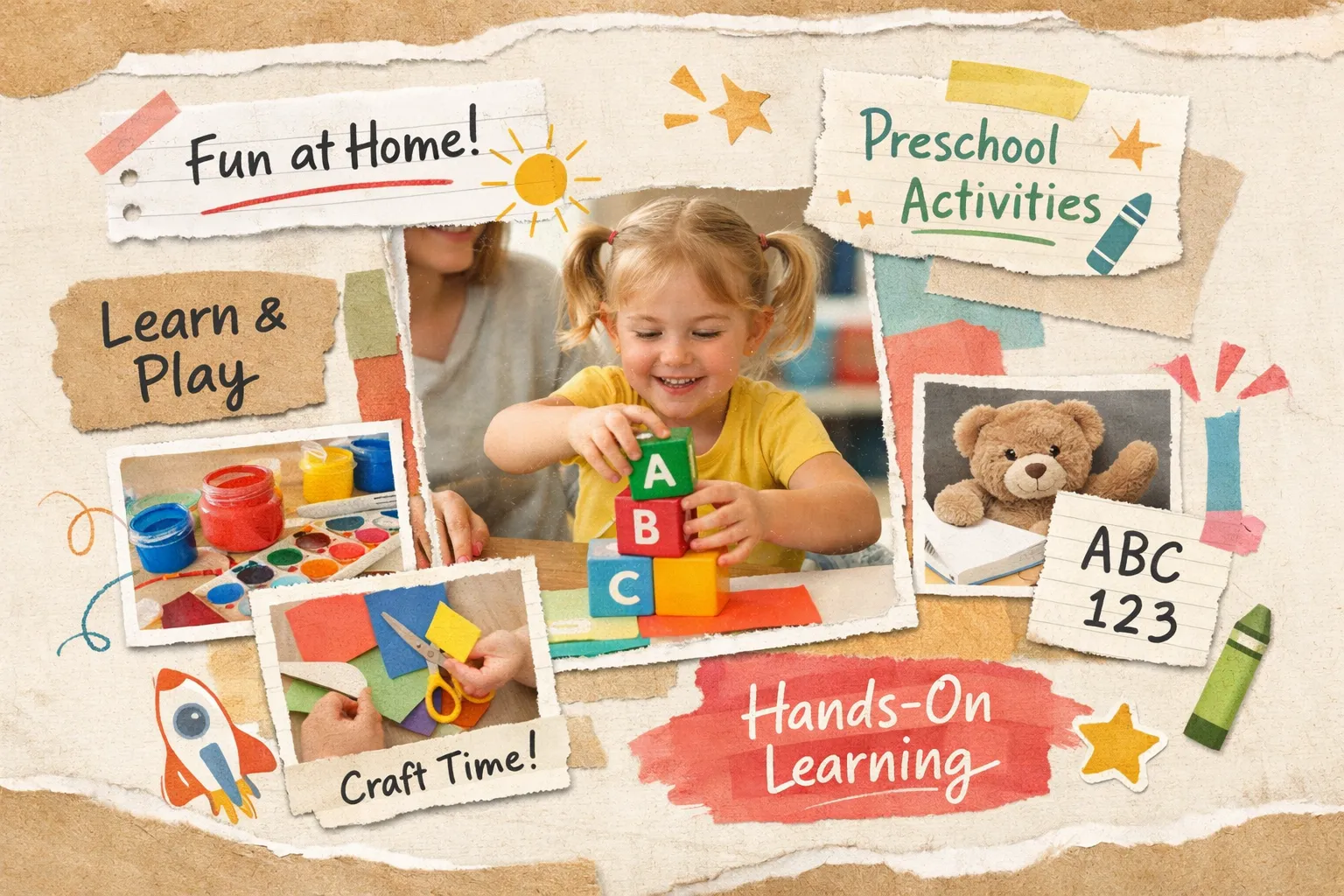
Short, focused play sessions can build meaningful skills for 3- to 5-year-olds. These 10 preschool home activities are quick to set up and fit into busy mornings or calm afternoons, with a short materials list, simple steps, a suggested duration, and a safety note for each idea. Use them as no-prep options or brief, scaffolded practice to support vocabulary, counting, and fine motor development.
Each activity targets early literacy, numeracy, fine motor control, or gross motor strength. Try sensory treasure bins, playdough letter mats, pom-pom sorting, recyclable crafts, and homemade shakers to mix play-based learning with simple routines. Aim for one short activity a day to build vocabulary, counting, motor control, and storytelling in manageable steps.
Here are five practical tips to make preschool home activities work for your family. Use them to keep sessions short, lower prep time, and match each activity to a specific learning goal. Small, consistent routines help children make steady gains without overwhelming caregivers.
Pick a short, varied set of preschool home activities that fit your morning rush or quiet afternoons. Each idea below lists simple materials, a quick plan, and a learning goal so you can jump in fast. Aim for 10 to 15 minutes of focused practice and repeat or extend if your child stays engaged.
1. Sensory treasure bin: Fill a shallow bin with rice, dried beans, or water beads and add scoops, cups, and a few small toys. Let your child explore textures while you name sensations like heavy, gritty, and smooth to build vocabulary. Use simple prompts such as “Find three red things” to add focus.
Learning goals: sensory exploration, vocabulary growth, and fine motor practice. Suggested duration: 10 to 15 minutes. Safety note: supervise small parts and swap materials for younger children; for older kids add measuring cups or a timed scavenger hunt. For setup tips and safety reminders, see sensory bin basics.
2. Playdough sculpting and letter mats: Mix a quick dough from flour, salt, and water or use store-bought playdough and lay out simple letter mats. Start with free shaping, then model pressing dough into letter outlines to practice prewriting strokes and letter recognition. Prompt your child to form a letter that starts a friend’s name or to build a short word.
Learning goals: fine motor strength and early literacy through playful repetition. Suggested duration: about 10 minutes, with the option to extend. Safety note: supervise if your child mouths materials and avoid ingredients that cause allergies.
3. Pom-pom transfer and color sorting: Offer tongs, a muffin tin, and large pom-poms for sorting and transferring practice. Begin with color sorting into muffin cups, then add a 30-second transfer challenge to introduce counting under time. For a no-prep version, use fingers instead of tongs.
Learning goals: pincer grasp practice and one-to-one correspondence. Suggested duration: 8 to 12 minutes. Safety note: choose large pom-poms only and supervise if your child still mouths objects.
4. Recyclable crafts and storytelling: Gather cardboard tubes, boxes, markers, and tape to make simple props for dramatic play. Encourage your child to build an object and then use it to tell a short story. Keep the activity playful and open-ended so narration comes naturally.
Learning goals: fine motor practice and narrative language. Suggested duration: 10 to 15 minutes. Tidy-up tip: keep a prop bin and use a small prompt pack of characters, places, and problems to spark ideas; supervise scissors and small fastenings.
5. DIY shakers and music parade: Fill empty bottles with rice or pasta, tape lids closed, and add scarves for movement. Practice steady beats by marching with start-and-stop cues, then shake instruments to different rhythms. Encourage listening skills by changing speed or volume.
Learning goals: rhythm, coordination, and following directions. Suggested duration: 10 minutes. Safety note: tape lids securely and use large containers to avoid choking hazards.
6. Picture-book dramatization: Pick a short picture book and act out the story using simple props or gestures. Assign roles, model actions, and pause to ask predictive or descriptive questions that invite expressive answers. Keep movements soft and safe for active play.
Learning goals: vocabulary growth and social-emotional understanding. Suggested duration: 10 to 15 minutes. Safety note: choose soft props and clear a safe space for movement.
7. Pattern bead stringing: Offer large beads and a shoelace or pipe cleaner to create AB patterns and practice fine motor control. Model a pattern, then ask your child to continue or build a new sequence while you count beads together. Use larger beads for younger children to reduce frustration.
Learning goals: early math thinking and pincer grip development. Suggested duration: 8 to 12 minutes. Safety note: supervise small parts and trade smaller beads in as fine motor skills improve.
8. Obstacle course: Arrange cushions, boxes, and tape on the floor to make a short course that builds balance and sequencing. Demonstrate the route, then practice one step at a time and add a three-action sequence like jump, crawl, balance. Change the course daily to keep it interesting.
Learning goals: gross motor strength, coordination, and following directions. Suggested duration: 10 to 15 minutes. Safety note: anchor loose pieces and remove sharp edges.
9. Emotion charades: Use emotion cards or a mirror to name and act out feelings, then ask follow-ups like “Show me a face for proud.” Model for younger children and invite older ones to link emotions to stories. Keep responses short and supportive.
Learning goals: emotional vocabulary, empathy, and verbal reflection. Suggested duration: 8 to 12 minutes. Safety note: be sensitive to triggers and offer a calming strategy if emotions become intense.
10. Shape hunt: Send your child on a hunt for circles, squares, and triangles around the house, then sort found items into shape piles. Turn it into a counting game by asking “How many circles did you find?” and compare piles. Encourage descriptive language by asking where or how a shape appears.
Learning goals: shape recognition, sorting, and counting. Suggested duration: 8 to 12 minutes. Safety note: avoid tiny objects and supervise exploration.
Rotate activities to balance movement, creativity, and thinking skills. Below are four easy additions: block-building challenges, a weather chart, tracing and freeze-dance, and one flexible emotion routine. Each idea fits into short time slots and grows with your child. The NAEYC overview of playful learning is a helpful read if you want research-based support for mixing play with learning.
Block-building challenge: Lay out blocks and printable pattern cards and invite your child to copy or extend a pattern. Start with two-shape patterns, then move to three-shape sequences and mirror images to practice symmetry. Turn the same task into a counting game by totaling blocks used or counting layers as you build.
Weather chart: Make a low-prep chart with paper, markers, and stickers for daily observation. Each morning your child chooses a sticker for sunny, rainy, cloudy, or windy while you mark the calendar. By week’s end use the chart to count days per weather type and introduce words like forecast and observe.
Tracing and freeze-dance: Turn a picture frame or laminated sheet into a dry-erase tracing surface for quick letter routines. Trace a letter, say its sound, and write a simple word that begins with it, then close with a freeze-dance obstacle to practice self-control. Use short calming transitions—deep breaths or a five-count—before moving on.
Keep a tiny printable kit and a small supply bin so you can set up learning in under a minute. Swap expensive items for kitchen finds and recycled materials to keep costs low and flexible. Below are suggested staples to keep on hand.
Repurpose glass jars for sensory cups, turn cereal boxes into puzzles, and substitute cooked pasta for rice when allergies are a concern. Follow safety rules: supervise sensory bins, keep small parts out of reach, and choose washable, AP-certified non-toxic paints. For guidance on selecting safe, age-appropriate items, check Seattle Children’s resource on toys and play for 3- to 5-year-olds. Match materials to your child’s age: use larger pieces for 3-year-olds and smaller sorting items for older preschoolers, and always check choking risks and list ingredients for sensory mixes when managing allergies.
Shrink activities into 5-minute or 2-minute wins to keep momentum between errands. Try a three-count pom-pom toss for counting and coordination, a one-minute story starter where you say a sentence and your child finishes it, or a two-minute clothespin transfer to boost pincher strength. Use the same start cue and a tidy-up song to turn short bursts into predictable routines that reinforce habits.
Link each preschool home activity to a clear learning goal before you start. Short prompts and one extension help you measure progress and keep play purposeful without turning it into formal testing. Below are ways to track vocabulary, patterns, and motor milestones while keeping activities playful.
Storytelling, craft narration, and dramatization build vocabulary and sequencing because children use words to describe actions. Use prompts like “Tell me three words that describe this character” or “What happened first, next, last?” to encourage order and description. Track progress by noting new target words each week and improvements in two-step story sequencing. Visit our preschool skills archive for more targeted practice ideas.
Pattern building, a weather chart, and sorting games make early numeracy concrete through comparisons and counting. Give a casual assessment by asking your child to copy a three-item pattern, count sunny days on the chart, or sort toys by size while you note accuracy and independence. Turn matching games into counting challenges—for example, request “four blue cars”—and log results with a weekly tally. If you’re tracking overall development, this guide to developmental milestones for ages 3–5 can help you see typical progress areas to watch.
Fine motor control improves with cutting, playdough work, and threading while gross motor strength grows through obstacle courses and active games. Scaffold cooperative play by assigning clear roles, modeling wait-time, and using cue phrases like “Your turn in three” to teach sharing and turn-taking. After play, ask your child to name one thing they did well and one next step to encourage reflection and steady progress.
Use a simple, predictable schedule to make practice repeatable and low-stress. The sample five-day plan below covers movement, fine motor work, sensory or literacy, a short group game, and a calm story. Keep each slot short so meals and naps stay consistent.
Start each morning with 10 to 20 minutes of movement to wake bodies and focus minds, follow with 10 to 15 minutes of fine motor work mid-morning, then 10 to 20 minutes of sensory or literacy before lunch. Reserve a short 10-minute group game in the afternoon and a calm 10-minute story at bedtime. Short, predictable slots keep nap and meal windows consistent and flexible.
Rotate the ten activities so repetition builds skill without boredom. For example, Monday could include an obstacle course, playdough, a picture walk, freeze dance, and a bedtime story; Tuesday might feature throwing targets, lacing cards, an alphabet hunt, a mirror game, and song time. Wednesday can focus on balance beam work, cutting practice, a sensory bin, a simple board game, and a story.
Thursday might add hopping relays, bead stringing, rhyme matching, a parade, and a calming read, while Friday could include ball toss, sticker art, letter tracing, emotion charades, and a family story. These rotations cover gross motor, fine motor, literacy, and social-emotional goals. Use the plan as a template and swap activities to match your child’s interests and energy levels.
Download the Mindset Moment printable activity cards from our preschool resource page and print two sets: a full-sheet for table prompts and a half-sheet to tuck into a pocket schedule. Use cards as choice cards on a tray, as an activity mat during circle time, or as quick lesson prompts when you have five spare minutes. For durability, print on heavyweight paper and laminate the cards or hole-punch a set for a key ring when you’re on the go.
Scale each activity by adjusting challenge and language: offer simpler grips and shorter steps for younger children, and add counting or story prompts for older preschoolers. Pack small kits for park or daycare swaps and keep a quick list for missing items like a container, scoops, crayons, sticky notes, yarn, and small balls. These short, repeatable routines fit real life and make preschool home activities manageable for busy families.
Consistent timing and clear signals make transitions easier and reduce resistance. Below are quick scripts and a cleanup routine that turn small tasks into predictable habits. Use them to keep play focused and tidy without extra stress.
For 3-year-olds aim for 8 to 12 minutes of focused play; for 4- to 5-year-olds use 12 to 20 minutes. A 10- to 12-minute spot often works well for mixed-age groups and helps limit pushback. Use a simple transition script: a two-minute warning, one-minute ready, and a final pack-up cue to build time awareness and ease changeovers.
Turn cleanup into a motor game so responsibility feels like play. Try the Clean-Up Parade: sing a two-line tidy song, march toys to their homes, then do a quick inspection and high-five to finish. Give three clear roles so everyone helps.
This predictable end-of-activity signal lowers arousal and gives closure before the next task. The physical routine helps regulation, and the final breath or five-count provides a calm reset. These small steps also keep materials ready for repeat play and make it easier to start the next activity.
Short, intentional moments of play add up when they follow a consistent routine. Use quick games, one open-ended challenge like block building, and safe materials you already have to keep learning light and effective. Small steps every day prepare children for preschool readiness while fitting into real family life; consider using a preschool readiness checklist to guide which skills to emphasize.
You don’t need a perfect plan to start—choose two activities and a 10-minute window today. Gather materials quickly and try one activity during snack time or before a nap to see how it goes. After the session, note one win and one small tweak to make the routine easier next time. For more ideas on everyday activities that support child development, see activities for child development from the Red Cross.
Pick two activities now and try one with your child this afternoon. Watch for small gains in vocabulary, counting, and confidence as you repeat the routine over a week.