Physical Address
381 Myrtle Avenue, Brooklyn, NY 11205
Physical Address
381 Myrtle Avenue, Brooklyn, NY 11205


Quality after school care gives children time to recharge, connect, and grow. See what a supportive, play-based program should provide daily for families.
The final school bell can bring a big shift in a child’s day. They may tumble through the door hungry, eager to talk, tired from concentrating, or still carrying the worry of a tricky moment on the playground. After school care should make room for all of that. It is not simply the time between school and pickup. It is an opportunity for children to reset, feel known, and keep building confidence in a place that understands how they learn.
For working parents and guardians, dependable care matters deeply. But the right program offers more than reliable supervision. It gives children a warm community where they can rest, play, create, solve problems, and practice the social skills that help them thrive at school and beyond.
Elementary-age children need a different kind of support than they did in preschool. They are becoming more independent, forming stronger friendships, and developing opinions about what they enjoy. At the same time, they still need caring adults who notice when a day has been difficult, help them regulate big feelings, and celebrate the effort behind each new skill.
A strong after school care program balances structure with choice. Children benefit from knowing what comes next: a safe arrival, a chance to have a snack, time to talk about their day, homework support when needed, and opportunities for play. Predictable routines create security, especially after the fast pace and many expectations of a school day.
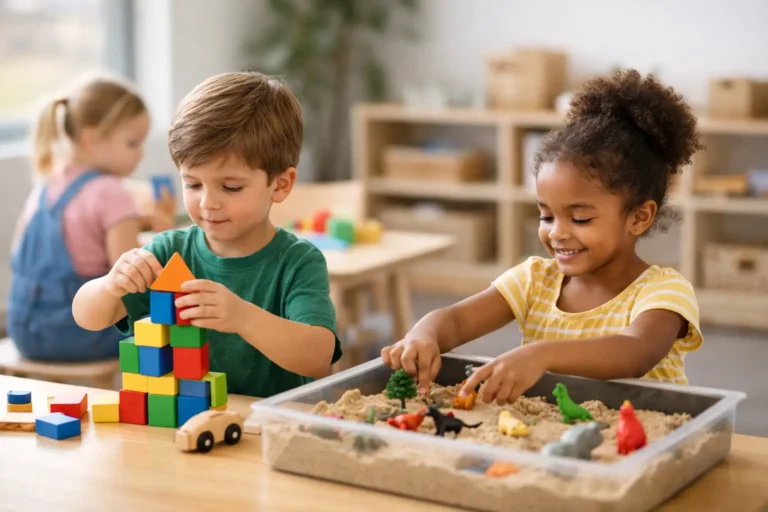
Choice matters just as much. One child may need quiet time with a book or a drawing project. Another may need to move their body, build an elaborate block creation, or gather friends for an imaginative game. When children can choose from meaningful activities within a caring routine, they practice independence without being left to figure everything out alone.
The best programs also recognize that learning continues after the school day ends, even when it does not look like a worksheet. Board games strengthen turn-taking and flexible thinking. A science experiment encourages questions. Collaborative art projects invite children to share materials, explain ideas, and see a project through. Play is not a break from growth. For children, it is one of the ways growth happens.
Children spend much of the school day being asked to perform, follow directions, and meet academic goals. After school, they deserve an environment where they can breathe and where mistakes are treated as part of learning.
A growth-minded program helps children move from “I can’t do this” to “I can’t do this yet.” That shift is meaningful whether a child is working through homework, learning to join a game, or trying again after a tower falls down. Adults can model calm problem-solving by asking questions such as, “What could you try next?” or “Would you like help getting started?” instead of rushing in with the answer.
This approach does not mean pretending every challenge is easy. It means honoring effort and offering the right amount of support. Some children feel ready to tackle homework independently with an adult nearby. Others need a quiet space, encouragement, or help breaking a larger task into manageable steps. Homework support should reduce stress, not turn the afternoon into another long school day.
Social growth deserves the same thoughtful attention. Friendships at this age can be joyful and complicated, sometimes within the same hour. Responsive educators help children use words for frustration, listen to another perspective, and repair a conflict when possible. These moments build empathy, self-advocacy, and resilience.
Small groups can make this kind of care more personal. Educators have more opportunities to notice who has been unusually quiet, who is proud of a new accomplishment, and who may need an extra check-in. Children are not expected to develop at the same pace or enjoy the same activities. Their individual interests and milestones are worth celebrating.
A tour or conversation with a program director can reveal far more than a schedule on paper. Start by asking what happens when children arrive. A program that plans for snack, transitions, and emotional decompression understands that children often need time before they are ready to focus on an activity or assignment.
Ask how staff members support homework and what happens when a child does not have homework. Quality care should not make free time feel like a waiting room. Children without assignments still deserve engaging choices that support creativity, movement, friendship, and curiosity.
It is also helpful to ask about communication. Parents need to know who is caring for their child, how pickup procedures work, and how the program shares updates about the child’s day. Consistent, respectful communication creates trust and helps families and educators work together when a child needs additional support.
Consider asking how the program responds to behavior and conflict. Look for an approach rooted in guidance rather than shame. Children need clear boundaries, but they also need adults who are curious about what behavior may be communicating. A child who is melting down after school may be overtired, overwhelmed, hungry, or struggling with a challenge they cannot yet explain.
For families of children with varied developmental needs, ask how individualized support is provided. An inclusive setting welcomes children as they are and works in partnership with families. Programs that can collaborate with outside professionals, including speech or occupational therapists when appropriate, may offer an added layer of continuity for a child’s growth.
Finally, ask about coverage for early-dismissal days, school breaks, and changing family schedules. These details can make a real difference. Care that is dependable on an ordinary Tuesday is valuable. Care that can also support a family through an unexpected schedule change offers a different kind of peace of mind.
There is a common temptation to fill every afternoon with enrichment. Activities can be wonderful, but children also need unhurried time. After a full day of listening, learning, and navigating social expectations, a little freedom can be restorative.
That does not mean unstructured time without adult attention. It means creating an inviting environment with materials that inspire children to choose, explore, and connect. A child might spend twenty minutes designing a paper airplane, then ask a friend to test it outside. Another may begin a puzzle, switch to dramatic play, and return later with new focus. These choices reveal interests, build executive-function skills, and give children ownership over part of their day.
Movement is especially valuable. Outdoor play, active games, and simple opportunities to stretch and run can help children release energy and return to a calmer state. If weather or space limits outdoor time, indoor movement activities can still provide a needed reset. The goal is not to keep children busy every minute. It is to help them feel regulated, engaged, and cared for.
Parents should not have to choose between dependable logistics and meaningful experiences for their children. The right program respects both needs. It provides safe, consistent pickup routines and age-appropriate supervision while also creating a place where children are excited to return.
At Growth Mindset Learning Lab, after-school time is approached as a meaningful part of a child’s developmental day. Children are encouraged to explore their interests, build friendships, practice persistence, and receive the individualized support that helps them feel capable. Families can feel reassured knowing their child is spending the afternoon in a judgment-free community that sees more than a school schedule.
When you visit a program, notice how the children are welcomed, how educators speak with them, and whether the spaces invite both calm and curiosity. A child who feels safe enough to be themselves after a long school day has room to grow in all the ways that matter.