Physical Address
381 Myrtle Avenue, Brooklyn, NY 11205
Physical Address
381 Myrtle Avenue, Brooklyn, NY 11205

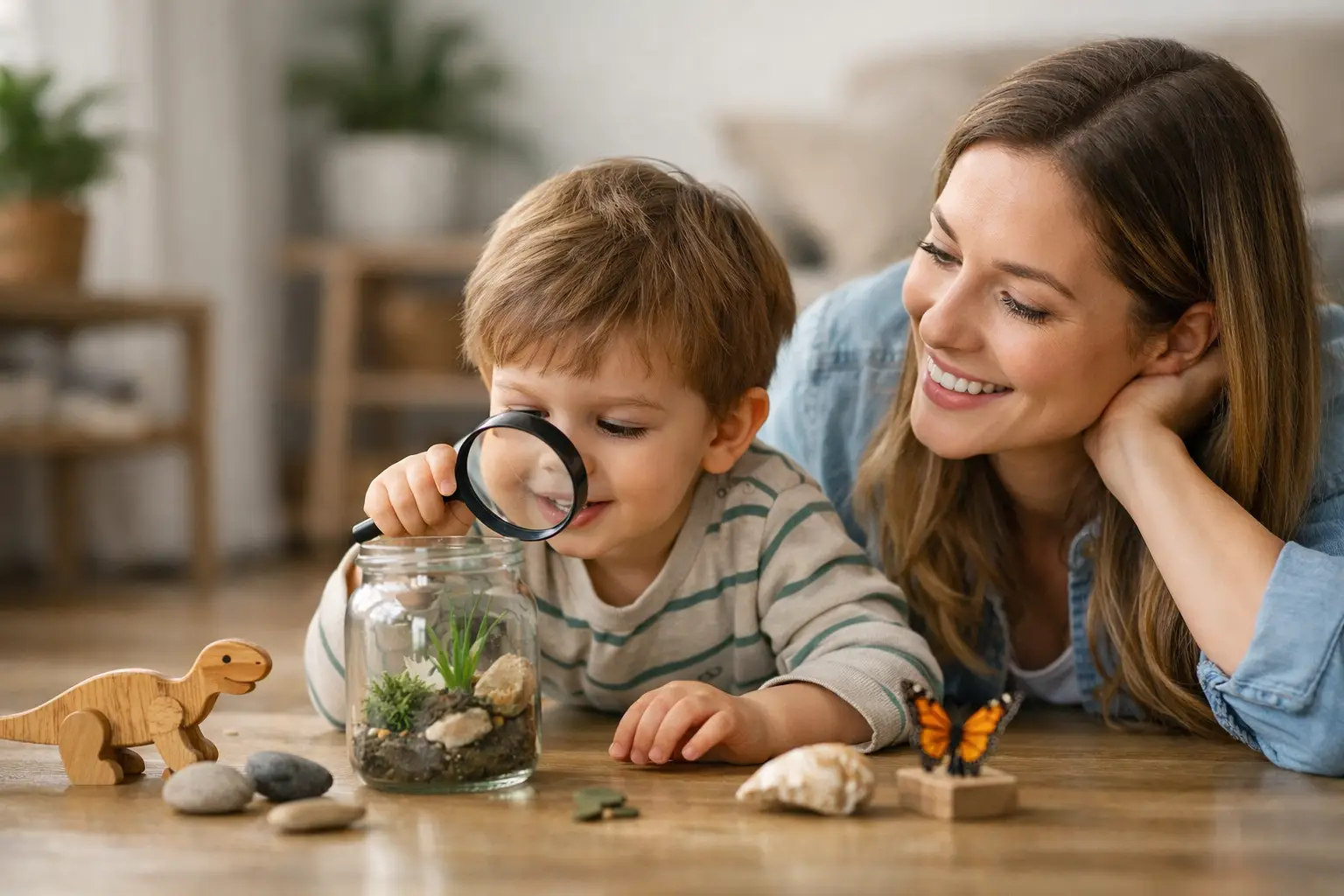
Learn how to encourage toddler curiosity through playful routines, thoughtful questions, and a supportive space where every small discovery truly counts.
A toddler who stops to inspect a crack in the sidewalk, repeatedly drops a spoon from the high chair, or asks “why?” before you have finished your coffee is not trying to slow down the day. They are doing the work of early learning. Knowing how to encourage toddler curiosity means seeing those small moments as meaningful opportunities, while still providing the routines, limits, and safety young children need.
Curiosity is not a skill that needs to be rushed or tested. It grows when children feel secure enough to notice, touch, try, repeat, and make sense of what happens next. For toddlers, learning often looks messy, noisy, and wonderfully ordinary.
Toddlers learn through their whole bodies. They are building language when they point to a bird, early science skills when they watch ice melt, problem-solving abilities when a block tower falls, and confidence when they try again. Their questions may be short, their attention may shift quickly, and their experiments may involve more repetition than adults expect. All of it matters.
A curious child does not need to know the right answer immediately. In fact, curiosity is strengthened when children learn that it is safe not to know yet. A growth mindset gives toddlers room to say, in their own ways, “I wonder,” “Let me try,” and “Again.” The goal is not to create a child who performs on command. It is to help them become a child who feels capable of learning.
The most effective invitations to learn are often already part of your family’s day. You do not need a packed schedule, expensive toys, or a perfect playroom. A few responsive habits can make everyday routines rich with discovery.
When your toddler becomes interested in something, pause before redirecting or explaining. Watch what they are trying to do. A child turning a toy car upside down may be studying its wheels. A child pouring water back and forth may be exploring volume and control. Joining their interest communicates, “What you are noticing matters.”
You can add simple language without taking over: “You found the wheels.” “The cup is full.” “You are working hard to fit that piece.” These observations build vocabulary and help children connect their actions to ideas.
Following a toddler’s lead does not mean saying yes to everything. It means looking for the learning underneath the behavior. If they want to throw food, calmly set the limit: “Food stays on the table. You can throw this soft ball outside.” Then offer a safe way to explore the same big idea.
Toddlers do not need to be quizzed. Questions such as “What color is this?” can be fun sometimes, but a constant stream of right-or-wrong questions can make learning feel like a test. Open-ended comments and simple wondering invite more exploration.
Try saying, “What do you notice?” “Where do you think the ladybug is going?” or “What could we try next?” If your child does not answer with words, that is okay. They may point, move, smile, or continue experimenting. Give them time. A quiet pause can be more supportive than quickly supplying the answer.
It also helps to be honest when you do not know. “I’m not sure why that leaf has spots. Let’s look closely.” This models that adults are learners, too.
Toddlers are drawn to real materials because real life is full of interesting textures, sounds, and cause-and-effect. A bowl, wooden spoon, cardboard box, pinecone, measuring cup, and washable paint can hold more learning than a toy that only works one way.
Offer a few materials at a time so your child is not overwhelmed. Put items within reach, then allow them to use the materials in ways you may not have predicted. A box can be a garage, a drum, or a place to hide stuffed animals. There is no need to correct imaginative play into a more adult-approved version.
Sensory play is especially valuable, but it should fit your child’s comfort level. Some toddlers love squishing dough or digging in sand. Others may pull away from sticky, wet, or loud experiences. Start small, offer tools such as scoops or paintbrushes, and never force participation. Curiosity grows through emotional safety, not pressure.
Watching a toddler do the same thing 20 times can test any parent’s patience. Yet repetition is one of the ways young children learn. Each attempt gives them new information: how hard to push, what happens when they use a different hand, whether the outcome changes.
Instead of saying, “You already did that,” try, “You want to see it again.” If a task is safe, let your child repeat it. When they are ready, you can add a gentle variation: a different-sized cup in the bath, a new ramp for the toy car, or blocks on a rug instead of a smooth floor.
Toddlers benefit from activities, family outings, and social experiences, but they also need stretches of open-ended play. Constant adult direction can leave little room for a child’s own ideas to emerge. Even 10 or 15 minutes of protected play can be meaningful when your child has access to safe materials and your nearby attention.
You do not have to entertain every moment. Sit nearby, fold laundry, or prepare a meal while staying emotionally available. Notice their work when they seek you out. Your calm presence gives them a secure base from which to explore.
Daily care routines are full of learning opportunities. At breakfast, let your toddler help rinse berries, stir batter, or choose between two cups. During a walk, pause for a noisy truck, a puddle, or a changing sky. At bedtime, invite your child to turn pages, point to familiar pictures, or tell part of the story in their own words.
These moments do not need a lesson plan. They need shared attention. Describe what is happening, listen to your child’s response, and let the pace be a little slower when possible.
Giving toddlers manageable responsibilities also supports curiosity and confidence. They may carry a diaper to the changing area, match socks, water a plant, or help put books in a basket. The task may take longer than doing it yourself, and that trade-off is real on busy mornings. When there is time, however, participation tells children that their efforts have value.
A toddler’s curiosity can shrink when every struggle is solved immediately for them. If a puzzle piece will not fit or a zipper is frustrating, offer support without taking over. You might say, “That is tricky. You are turning it and trying again,” or “Would you like a hint, or do you want another try?”
The right amount of challenge depends on the child. Too little challenge can become boring; too much can lead to frustration. Watch for cues. A child who is focused and trying may need a little extra time. A child who is overwhelmed may need a simpler version, a break, or your calm help.
Praise the process with specific words. Rather than only saying “Good job,” name what you saw: “You kept trying even when the tower fell,” “You noticed the bigger lid did not fit,” or “You asked for help.” This helps children understand that effort, strategy, and persistence are part of learning.
Toddlers learn differently, and curiosity will not look identical in every child. One child may eagerly narrate every discovery. Another may watch quietly before joining in. Some children need more movement, more time to process language, or more predictable transitions before they feel ready to explore.
A responsive early learning environment honors these differences. Small-group play, caring educator relationships, and clear communication between home and school can help adults recognize a child’s interests and developmental needs. When families have concerns about speech, sensory needs, motor skills, or social development, supportive partnerships with qualified professionals can provide helpful guidance without judgment.
At Growth Mindset Learning Lab, we believe children thrive when they are known as individuals and celebrated for their progress. Curiosity is not measured by how early a child can recite facts. It is visible in the determined toddler who tries one more time, the thoughtful observer who finally joins the group, and the child whose question leads everyone to look closer.
The next time your toddler pauses to examine a bug, asks for the same book again, or turns a simple household object into an experiment, resist the urge to hurry past it. Get low, notice with them, and make room for one more question. That small moment of shared wonder tells your child that learning is a place where they belong.