Physical Address
381 Myrtle Avenue, Brooklyn, NY 11205
Physical Address
381 Myrtle Avenue, Brooklyn, NY 11205


Practical, gentle strategies for helping toddlers with separation anxiety build trust at drop-off, with support for parents and caregivers every day.
A toddler may cling tightly at the classroom door, cry when you reach for your keys, or suddenly insist that only one parent can pour their cereal. Helping toddlers with separation anxiety can feel especially hard when you need to get to work, care for other children, or simply leave the room. Still, those big feelings are not a sign that your child is doing anything wrong. They often show that your child has formed a meaningful attachment and is still learning one of childhood’s most challenging ideas: the people they love can leave and come back.
At this age, confidence grows through many small, repeated experiences. A child does not need to be rushed past their feelings. They need caring adults who can make goodbyes predictable, offer comfort, and show them through experience that they are safe, capable, and remembered.
Toddlers are becoming more independent in exciting ways. They want to choose their shoes, carry their own cup, and explore the room without holding your hand. At the same time, they are still developing the ability to understand time, manage strong emotions, and trust what they cannot see. “I’ll be back after snack” may be reassuring over time, but a young toddler may not yet understand how long that is.
Separation anxiety commonly appears between about 8 months and 3 years, though every child follows a different developmental path. It may become stronger during a new child care transition, after an illness or family change, when routines shift, or during a period of rapid development. Even a child who once walked happily into class may need extra reassurance later.
The goal is not to eliminate every tear. Crying can be a child’s honest way of saying, “This is hard for me.” The goal is to help them practice being apart while staying connected to trusted adults.
A consistent goodbye routine is one of the most effective tools families can use. It gives your child a familiar sequence to hold onto when the rest of the morning feels uncertain. Keep it brief, warm, and repeatable: hang up the backpack, share a hug, say the same goodbye words, and let a trusted educator guide your child toward an activity.
Long, hesitant goodbyes can sometimes make the moment harder. When a parent returns for one more hug, then another, a toddler may understandably wonder whether leaving is safe. This does not mean you need to sound cheerful when you feel worried. It means offering calm confidence, even while you acknowledge the feeling.
You might say, “You really want me to stay. It is hard to say goodbye. Ms. Ana is here with you, and I will come back after rest time.” Use language your child can understand and make sure your promise is one you can keep.
Avoid slipping away without saying goodbye. Although it may prevent tears in the moment, it can make a child more watchful and less trusting at future separations. A clear goodbye teaches a more powerful lesson: you leave, your child is cared for, and you return.
A special ritual can help, but it does not need to be elaborate. A kiss on each hand, a high-five at the door, or a short phrase such as “See you after nap” is enough. If your family’s mornings are often rushed, choose a routine you can maintain on the busiest day, not just the calmest one.
Some toddlers also benefit from a small comfort item, if their program allows it. A family photo tucked into a cubby, a familiar lovey for rest time, or a small note with a heart drawn on it can offer a tangible reminder of connection. The item should support the transition, not become something your child must have in every situation.
Children build confidence by doing hard things with support. If being apart is new or particularly challenging, start with short, predictable separations outside of school. Let your toddler play with a familiar grandparent while you step outside for a few minutes. Have another trusted caregiver lead bedtime once in a while. Practice leaving and returning exactly when you said you would.
When you return, name what happened: “You played with Grandpa while I went to the store. You missed me, and you were safe. I came back.” This helps your child connect the experience with words and gradually understand the pattern.
It can be tempting to avoid all separations because your child becomes upset. Sometimes a slower transition is appropriate, especially when a child is new to care or facing other stressors. But avoiding every goodbye can accidentally tell a child that separation is too scary to handle. Gentle practice says something different: “This feels hard, and you can do hard things with caring help.”
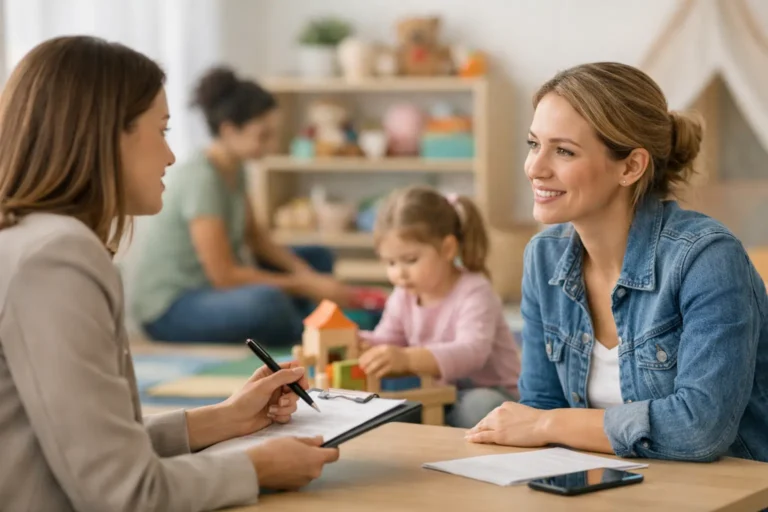
A responsive child care team can make a meaningful difference during transitions. Share what helps at home, including your child’s favorite song, comfort phrase, interests, sleep changes, or recent family events. In return, ask how your child settles after you leave. Many parents are relieved to learn that a child who cries at the door begins building blocks, joining a song, or accepting a teacher’s comfort just a few minutes later.
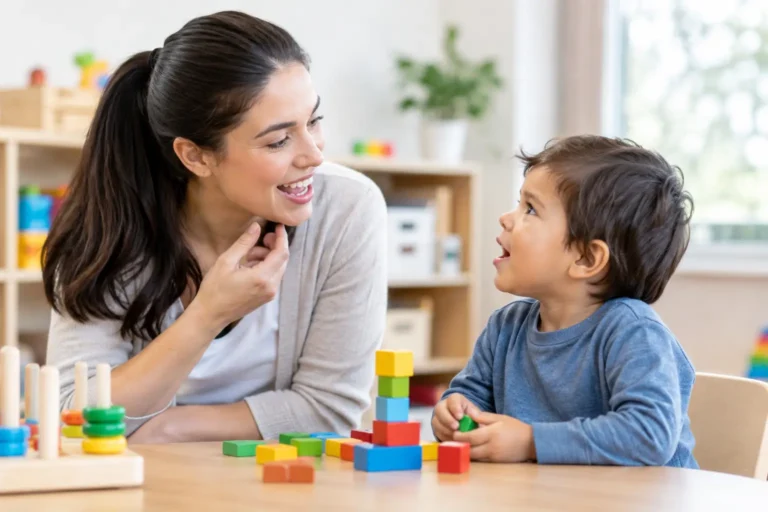
At Growth Mindset Learning Lab, we view those early moments of trust as developmental milestones. An educator may invite a toddler to help feed a classroom toy, choose a book, carry a basket, or join a familiar sensory activity. These are not distractions from feelings. They are warm invitations back into connection, play, and capability.
Consistency between home and school matters. If your educator uses a certain goodbye phrase or transition activity, using similar language at home can make the experience feel more predictable. Small-group care and ongoing parent communication also allow adults to notice patterns. Perhaps Mondays are harder, a certain drop-off parent creates a different response, or hunger and tiredness are adding to the stress.
A child who held it together at school may release big emotions when they see you again. This is common. Instead of treating it as a setback, offer reconnection. Put away your phone if possible, get down to their level, and allow a few unhurried minutes for a hug, a snack, or quiet play.
You do not need to turn pickup into an interview. Broad questions such as “How was your day?” can be difficult for toddlers to answer. Try a gentle observation instead: “I see paint on your sleeve. Did you make art today?” Or let your child lead with silence, movement, or a story that comes later in the evening.
At home, name emotions without trying to immediately fix them. “You felt sad when I left this morning. You wanted me close. Then your teacher helped you, and I came back.” Repeating this story strengthens your child’s emotional vocabulary and their trust in the routine.
Most separation anxiety eases with time, consistency, and responsive care. Still, it is worth checking in with your child’s pediatrician or a qualified developmental professional if distress is intense, lasts for a long time after separation, interferes with sleep or daily routines, or comes with significant changes in eating, play, communication, or behavior.
Support is not a label or a failure. Some children need additional strategies because of temperament, sensory needs, developmental differences, recent stress, or past experiences. A collaborative team may include family members, educators, a pediatrician, and, when appropriate, speech, occupational, or mental health professionals. Early support can help everyone better understand what your child is communicating.
Your calm presence matters, even when your toddler protests the goodbye. Each predictable departure and loving return gives them another piece of evidence that they can be safe away from you. With time, play, and patient support, the child who once clung at the door can grow into the child who waves, takes a deep breath, and heads inside to see what they can do today.