Physical Address
381 Myrtle Avenue, Brooklyn, NY 11205
Physical Address
381 Myrtle Avenue, Brooklyn, NY 11205

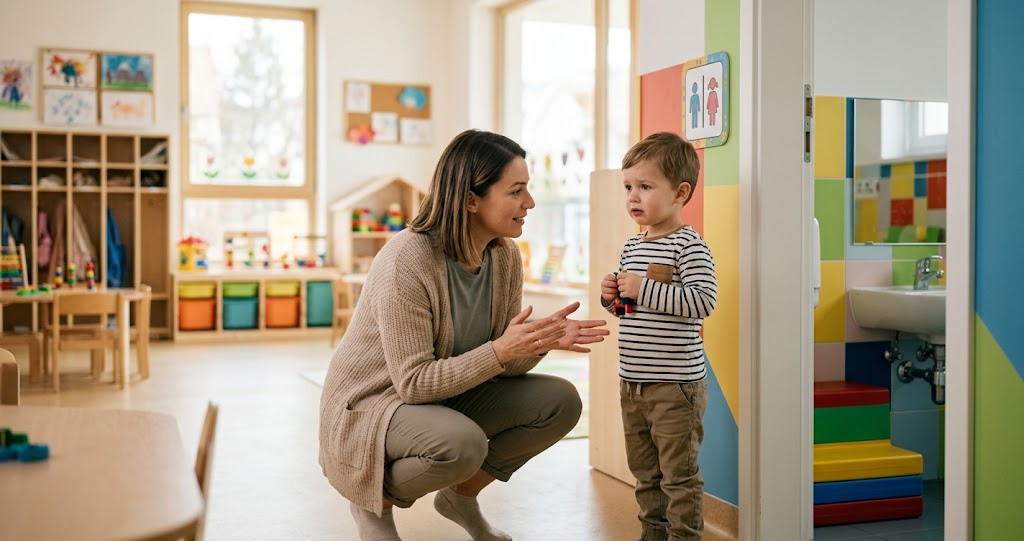
Your child uses the toilet normally at home, but the moment preschool enters the picture, everything changes. They hold their poop all day, refuse to use the school toilet, come home desperate to go, or start having accidents even though potty training seemed to be going well.
For parents, this can be confusing and exhausting. You may wonder whether your child is being stubborn, whether something happened at school, or whether constipation is starting.
In many cases, the problem is something called toilet withholding. Your child feels the urge to poop but deliberately holds it because using the toilet at preschool feels unfamiliar, uncomfortable, embarrassing, or frightening.
The good news is that pressure usually is not the answer. What helps most is finding out what your child is worried about, making the bathroom feel safer, and working with the teacher so your child is not trying to solve the problem alone.
Home is familiar. Your child knows the bathroom, knows who will help them, and can usually go when they feel ready.
Preschool is different. The toilet may look different, the room may be noisy, other children may be nearby, or your child may have to ask a teacher before leaving an activity.
A young child may decide that holding it until they get home feels easier.
This does not necessarily mean they dislike preschool. It can simply mean they have not yet become comfortable using the toilet there.
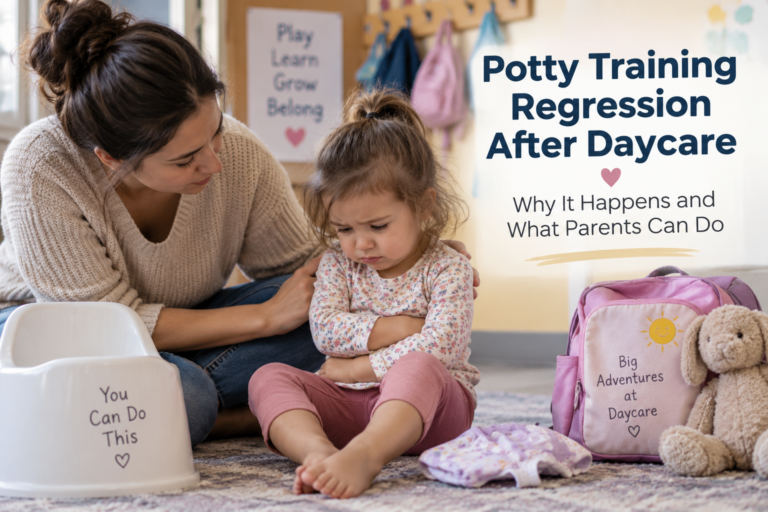
If your child is also having more general accidents since starting childcare, potty training regression after daycare may help you understand the wider adjustment.
Toilet withholding happens when a child repeatedly avoids having a bowel movement even though they need to go.
You may notice your child stiffen their body, cross their legs, hide, stand on tiptoe, squeeze their bottom, or suddenly become very still when they feel the urge.
Parents sometimes think the child is trying to poop when they are actually trying very hard not to.
When this happens repeatedly, stool can become harder and more uncomfortable to pass. That can create a cycle: pooping hurts, so the child holds it, and holding it makes the next bowel movement even harder.
That is why it is worth addressing early without turning toileting into a battle.
There is not always one obvious reason. For some children, it is several small things together.
A child may be completely comfortable with the toilet at home but nervous about a different seat, flush, bathroom layout, or smell at preschool.
Automatic flushing toilets can be especially unsettling because the child does not know when they will flush.
Hand dryers, flushing toilets, echoes, and other children talking can feel very loud to a young child.
If your child often covers their ears or becomes uncomfortable in noisy environments, the sound of the bathroom may be part of the problem.
Some preschool bathrooms are designed so teachers can supervise children easily. That is important for safety, but a child who prefers privacy may feel uncomfortable pooping around other people.
A child may know they need the toilet but feel shy about saying it.
They may worry about interrupting the teacher, leaving an activity, or asking in front of other children.
This is especially common in children who are still settling into a new classroom.
Sometimes there is no fear at all. Your child simply does not want to stop playing.
They keep delaying the toilet until the urge becomes uncomfortable, and eventually holding becomes part of the routine.
One painful poop can be enough for some children to become cautious about going again.
If your child has recently had hard stools or constipation, they may associate pooping with pain and try to avoid it wherever they are.
The most obvious clue is a child who does not poop at preschool but goes shortly after arriving home.
You may also notice:
The pattern matters more than one unusual day.
A child who skips one bowel movement because they were busy is different from a child who regularly spends the school day trying not to go.
Try not to begin with, “Why won’t you poop at school?”
That can make a child feel as though they are in trouble.
Instead, keep the conversation curious.
You might ask, “What is the bathroom at preschool like?” or “Is there anything you don’t like about it?”
You can also ask whether it is loud, whether other children are there, or whether they know how to tell their teacher they need to go.
Young children may not give you a perfect explanation, but even one small detail can be useful.
A child who says, “The dryer is scary,” needs a very different solution from a child who says, “I don’t want to stop playing.”
The teacher may see things you cannot.
Ask whether your child goes into the bathroom willingly, whether they seem uncomfortable, whether they tell staff when they need to go, and whether there is a particular time of day when the problem is worse.
You can also ask how toileting works in the classroom. Some preschools have scheduled bathroom breaks, while others expect children to ask when they need to go.
If your child is too shy to speak up, agree on a simple plan. The teacher might quietly remind them before lunch, nap, outdoor play, or another predictable part of the day.
The goal is not to make the entire class focus on your child’s toilet habits. It is to give them enough support to succeed privately.
Some children feel more confident when they know exactly what they are supposed to do.
You can role-play the preschool routine at home. Pretend you are the teacher and let your child practise saying, “I need to use the bathroom.”
If noise is the problem, talk about what happens when a toilet flushes or when a hand dryer starts. If the school allows it, ask whether your child can use paper towels instead of a loud dryer while they become more comfortable.
Keep the practice light. The aim is familiarity, not another potty-training lesson.
When you know your child has been holding all day, it is tempting to keep asking whether they need to go.
That pressure can make some children resist even more.
Avoid repeatedly saying things like, “You have to poop before bed” or “You can’t keep holding it.”
Instead, provide regular, relaxed toilet opportunities and let your child know you are available to help.
The calmer the adults are, the easier it is for the child to stop seeing pooping as a stressful event.
Children often find it easier to have a bowel movement when their feet are supported rather than dangling.
At home, a child-sized toilet seat or footstool may help them feel secure. Ask the preschool whether they already use child-sized toilets or foot support.
Comfort matters because a child who feels unstable on the toilet may naturally tense their body instead of relaxing.
Also choose clothing that is easy to remove quickly. Tight trousers, belts, or difficult buttons can make a child even more reluctant to use an unfamiliar bathroom.
Related Article: Potty Training Tantrums in Toddlers: Why It Happens and How First-Time Parents Can Respond Calmly
That pattern strongly suggests your child feels safer or more comfortable using the toilet at home.
You do not need to force them to poop at school immediately. The first goal is helping them become comfortable enough to use the preschool bathroom when they genuinely need it.
Ask the teacher whether your child can visit the bathroom during a quiet moment when they do not urgently need to go. They can wash their hands, look around, and become familiar with the space without pressure.
For some children, removing the expectation to perform makes the bathroom less frightening.
Accidents do not always mean your child cannot recognise when they need to go.
A child who has been holding stool may eventually be unable to hold it any longer. In some cases, stool can also leak around harder stool when constipation develops.
Teachers and parents should respond calmly. Embarrassing or punishing a child can make them even more determined to avoid pooping at school.
If accidents began after your child had already been toilet trained, potty training regression after daycare may also help you understand whether broader adjustment is contributing.
Yes, and the two problems can feed each other.
A child may initially hold their poop because they dislike the school bathroom. After repeated withholding, the stool becomes harder. Then pooping hurts, so they become even more afraid to go.
Watch for hard or painful stools, tummy pain, very large bowel movements, stool accidents, or a child regularly going several days without a bowel movement.
If you suspect constipation, speak with your child’s pediatrician or healthcare provider rather than relying only on behaviour strategies.
Contact your child’s healthcare provider if withholding is persistent, bowel movements are painful, your child has blood in their stool, significant tummy pain, vomiting, repeated stool accidents, or constipation that does not improve.
You should also seek advice if your child seems genuinely afraid to poop because of pain.
A preschool toilet problem can begin as anxiety, but once physical discomfort becomes part of the cycle, children may need medical support as well as reassurance.
Yes.
The teacher does not need every private detail, but they do need enough information to support your child.
You might simply explain that your child is comfortable using the toilet at home but is holding bowel movements at preschool. Ask the teacher whether they have noticed anything and whether your child can receive quiet reminders or extra time in the bathroom.
A calm partnership between home and school is usually much more effective than each side trying different strategies.
There is no fixed timeline.
Some children begin using the school toilet within days once they understand the routine. Others need several weeks to feel comfortable enough to poop there.
Look for gradual progress rather than expecting an immediate change.
Your child may first agree to enter the bathroom, then sit on the toilet, then eventually use it. Those smaller steps still matter.
If there is no progress or the problem is becoming more stressful, speak with the teacher and your child’s healthcare provider.
Some young children strongly prefer the familiarity and privacy of their home bathroom. It becomes more concerning when they regularly hold stool for long periods, become constipated, experience pain, or have frequent accidents.
The toilet may feel unfamiliar, noisy, less private, or difficult to access. Your child may also be nervous about asking the teacher or may remember a painful bowel movement.
You can offer a relaxed toilet opportunity as part of the morning routine, but forcing a child to sit or poop can increase resistance. Focus on predictable opportunities rather than pressure.
This is quite common because having a bowel movement usually takes longer and may feel more private to a child. Ask what makes the school bathroom uncomfortable and work gradually on familiarity.
Anxiety or discomfort around an unfamiliar bathroom can contribute to withholding. Repeated withholding can then lead to constipation, which is why it is useful to address both emotional and physical factors.
Occasionally waiting until home may not be a problem. Regularly holding for long periods, experiencing pain, developing hard stools, or having accidents deserves closer attention.
A child who refuses to poop at preschool is usually not trying to make life difficult for you or their teacher. They may simply be protecting themselves from a bathroom situation that does not yet feel safe or comfortable.
Find out what is bothering them, remove as much pressure as possible, and work with the teacher on small, practical changes. If withholding begins causing pain or constipation, involve your child’s healthcare provider early so the problem does not become harder to break.