Physical Address
381 Myrtle Avenue, Brooklyn, NY 11205
Physical Address
381 Myrtle Avenue, Brooklyn, NY 11205

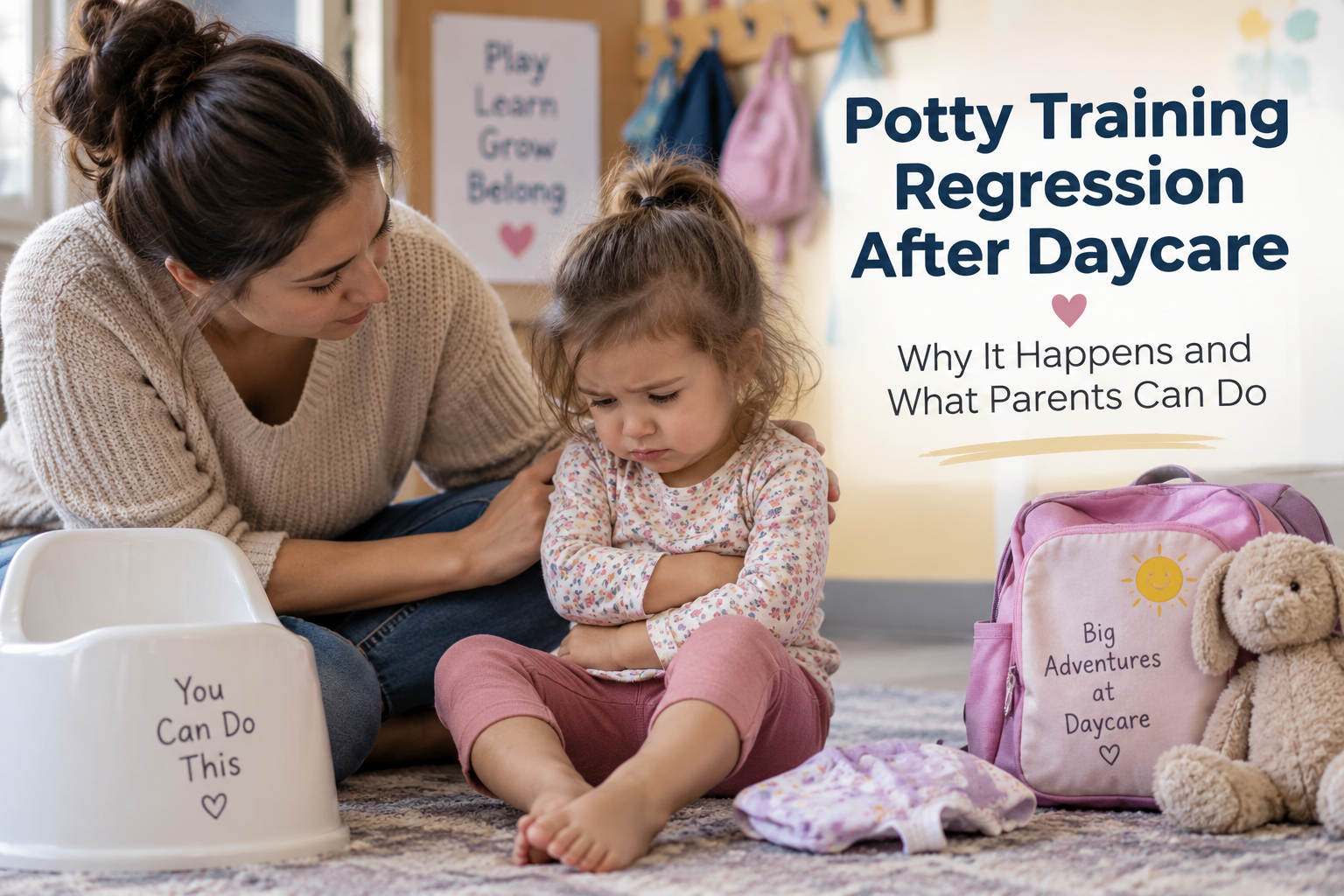
Your child was using the toilet well at home, and then daycare started. Now wet clothes are coming home in the bag, accidents are happening again, or your child is suddenly asking for a diaper after weeks of doing fine.
That can feel frustrating, especially when you thought potty training was finally behind you. But a setback after starting daycare does not usually mean your child has forgotten how to use the toilet. More often, they are learning how to use the same skill in a completely different environment.
At daycare, the toilet is different, the routine is different, and your child may be too busy playing or unsure how to ask a teacher for help. If other behaviours have also changed since starting childcare, why toddlers regress after starting daycare can help explain the wider adjustment.
Start by looking at where the accidents happen. If your child stays dry at home but regularly has accidents at daycare, something about the daycare routine may be making toileting harder.
Common reasons include being too distracted by play, feeling uncomfortable with the bathroom, not wanting to interrupt a teacher, struggling with clothing, or simply not recognising the urge until it is too late. Recently potty-trained children may still need some reminders, even if they seemed fully independent at home.
A bathroom that seems completely normal to an adult can feel strange to a toddler. The toilet may be a different size, the flush may be loud, other children may be nearby, or a noisy hand dryer may make your child uncomfortable.
Ask simple questions rather than assuming they are refusing on purpose. You might ask what the bathroom looks like, whether anything in there is loud, or whether they want a teacher to go with them.
Sometimes one small fear is behind several accidents.
This is especially common in preschool.
Your child is building something, playing outside, or enjoying an activity with friends. They notice they need the toilet but decide to wait because they do not want to stop.
Toddlers are not very good at judging how much longer they can hold it. If accidents tend to happen during free play or before outdoor activities, ask the teacher whether a gentle toilet reminder before those periods might help.
Using the toilet at home is easy because your child knows exactly what to say and who to ask. At daycare, they may be shy or unsure whether they are allowed to leave an activity.
Practise the words at home. A simple “I need the toilet, please” can give your child confidence when they need to speak to a teacher.
This is particularly helpful during the first weeks, when children are still learning the classroom routine.
Notice whether accidents happen before nap time, outdoor play, lunch, pickup, or another change in activity. Some toddlers become so focused on what is happening next that they ignore their body’s signals.
If your child generally finds these moments difficult, why toddlers struggle with daycare transitions may help you understand why toileting becomes harder at the same time.
Sometimes the problem is practical rather than emotional.
Your child may reach the toilet on time but struggle with tight trousers, buttons, belts, or overalls. For a while, choose clothes they can pull down quickly and independently.
Elastic-waist trousers or leggings can make a surprisingly big difference.
If accidents happen mostly later in the day, your child may simply be exhausted. After hours of playing, listening, sharing, eating, and moving through a busy daycare routine, they may notice toilet signals later than usual.
The same tiredness can also show up as after-daycare meltdowns, clinginess, or irritability once they get home.
Some children refuse to poop at daycare because they do not feel comfortable using the bathroom there. They hold it until they get home, which can eventually make bowel movements harder or painful.
If your child has hard stools, tummy pain, painful bowel movements, or regularly avoids pooping, speak with their healthcare provider. Not every toileting setback is simply behavioural.
The most useful thing you can do is work out the pattern with the teacher. Ask when accidents usually happen, whether your child asks to use the toilet, whether they seem uncomfortable in the bathroom, and whether they need help with clothes.
At home, keep accidents low-key. Avoid saying things such as “You were already potty trained” or “You’re too big for this.” Those comments can make a child feel embarrassed and more anxious about toileting.
A calmer response works better: “You had an accident. Let’s get changed. Next time, tell your teacher as soon as you need to go.”
Keep your home routine predictable too. Offer the toilet at natural times, such as before leaving home or before bedtime, without constantly asking your child whether they need to go.
Read Also: Potty Training Tantrums in Toddlers: Why It Happens and How First-Time Parents Can Respond Calmly
Not automatically.
If your child still uses the toilet successfully at home or at other times, they probably still have the skill. The difficulty may be using it in the daycare environment.
Before going back to diapers, try to identify the real problem. If your child is afraid of the school bathroom, needs reminders, or cannot manage their clothes quickly enough, solving that issue is more useful than starting potty training all over again.
Teachers can help by reminding children before busy transitions, making it clear that they can ask to use the bathroom at any time, helping with clothing when needed, and responding calmly to accidents.
Parents and teachers should also try to use similar words for toileting. Young children can become confused if home says “potty” while daycare uses completely different language.
Most importantly, accidents should be handled privately. A child should never feel embarrassed in front of classmates for needing help.
A wider regression can happen when a child is adjusting to a major change. Stay calm and return to simple routines rather than treating it as a failure.
If toileting is only one of several changes you have noticed, such as clinginess, sleep problems, or wanting more help than usual, why toddlers regress after starting daycare may give you more context.
There is no exact timeline. Some children adjust within a few days, while others need several weeks to feel comfortable using the daycare bathroom.
Look for gradual improvement rather than perfection. Fewer accidents, asking the teacher more often, using the school toilet without fear, or becoming more independent with clothing are all signs that things are moving in the right direction.
Talk with your child’s healthcare provider if accidents are accompanied by pain when urinating, fever, significant constipation, unusual thirst, very frequent urination, blood in urine or stool, or another symptom that worries you.
You should also seek advice if a child who had been reliably dry for a long time suddenly begins having persistent accidents without an obvious change in routine.
Your child may be distracted by play, uncomfortable with the daycare bathroom, nervous about asking a teacher, adjusting to a different routine, or struggling to manage clothing quickly enough.
Home is familiar. At daycare, your child has to recognise the urge, stop what they are doing, ask another adult, and use a different bathroom.
Recently potty-trained children may still benefit from gentle reminders, especially before nap time, outdoor play, or other busy transitions.
No. Punishment or embarrassment can make toileting more stressful. Calmly help your child change and focus on what they can do next time.
It varies. What matters is whether accidents gradually reduce as your child becomes more comfortable with the daycare routine.
A few accidents after starting daycare do not mean potty training has failed. Your child may simply be learning how to use an existing skill in a new place, with new people and a new routine.
Work with the teacher, keep your response calm, and look for the specific obstacle. Often, a small change such as easier clothing, better reminders, or helping your child feel comfortable with the daycare bathroom is enough to get things moving in the right direction.