Physical Address
381 Myrtle Avenue, Brooklyn, NY 11205
Physical Address
381 Myrtle Avenue, Brooklyn, NY 11205


Learn how to encourage curiosity in children with playful, pressure-free routines that build confidence, questions, persistence, and joy in learning daily.
A child notices that a puddle is smaller after lunch and asks where the water went. Another takes apart a block tower three times before deciding it needs a wider base. These moments can look small, but they are meaningful learning in action. When parents ask how to encourage curiosity in children, the answer is rarely about buying more educational toys or having all the right answers. It starts with making room for children to notice, wonder, try, and try again.
Curiosity is not a skill that children either have or do not have. It grows when children feel safe enough to ask questions, make mistakes, and follow an idea wherever it leads. A growth mindset helps support that process: effort, application, and persistence matter just as much as getting to the right answer.
Curiosity supports school readiness, but its value reaches much further. A curious child practices problem-solving, communication, creativity, and flexible thinking. They learn that confusion is not a stop sign. It is often the beginning of discovery.
For young children especially, play is serious learning. Filling and emptying containers in the bathtub explores volume. Mixing colors reveals cause and effect. Pretending to run a restaurant builds language, cooperation, and planning. Older children may investigate how a video game works, ask why a character made a certain choice in a book, or test different ways to solve a math problem.
The goal is not to turn every family moment into a lesson. Children need unhurried time to play for its own sake. But when adults respond with interest rather than pressure, everyday experiences become rich opportunities for learning.
A child who is worried about being wrong is less likely to take an intellectual risk. That is why the way adults respond matters so much. Instead of quickly correcting an answer, pause and learn more about the child’s thinking.
If your child says that plants eat dirt, you might say, “That is an interesting idea. What makes you think that?” Their answer gives you a window into what they have observed. From there, you can explore together: “What else do plants need?” You do not need to pretend that every idea is correct. You can offer accurate information while still honoring the thought behind the question.
Open-ended questions are especially helpful because they invite more than one answer. Try asking, “What do you notice?” “What do you think might happen next?” or “How could we find out?” These questions communicate that your child’s ideas have value.
There is a trade-off, of course. Constant questioning can make play feel like a test. If your child is deeply focused on building, drawing, or pretending, simply watching and offering a warm comment may be the better choice. “You worked hard to balance those blocks” can be enough. Follow their cues.
Children learn from what they hear adults say. Let them catch you wondering out loud: “I wonder why the moon looks different tonight,” or “I am not sure how this tool works. Let’s look closely.” This shows that adults are learners, too.
When something does not work, use language that keeps the door open. “That did not work yet” is more encouraging than “You can’t do it.” The word “yet” does not erase frustration, and it should not be used to rush a child past it. It simply reminds them that growth can take time.
If a toddler cannot fit a puzzle piece into place, you might say, “You are turning it and checking different sides. What do you notice?” If an elementary-age child is stuck on homework, try, “Which part makes sense so far?” Helping them identify the next small step builds confidence without taking over.
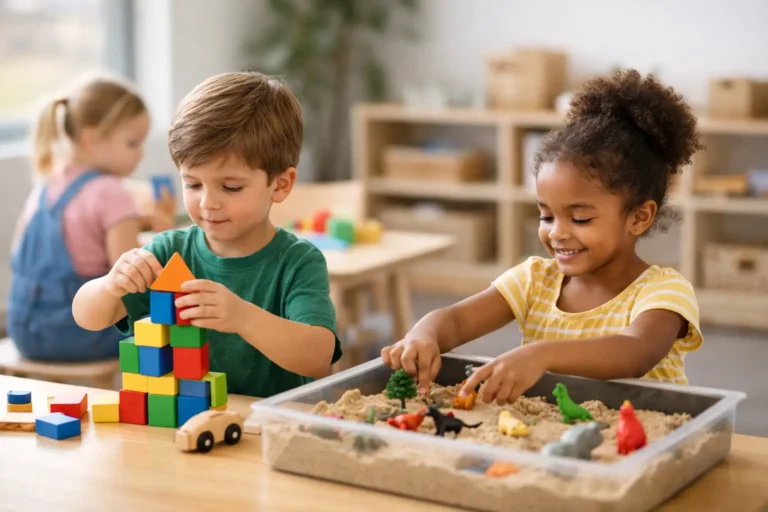
Children are naturally drawn to materials they can touch, move, combine, and transform. The best exploration spaces do not need to be picture-perfect or expensive. A basket with crayons, paper, tape, child-safe scissors, and recycled boxes can inspire hours of creating. A few measuring cups in the kitchen, magnifying glasses near a window, or leaves collected on a walk can prompt questions and experiments.
Offer a manageable number of materials rather than placing everything out at once. Too many choices can feel overwhelming, particularly for younger children. Rotate materials based on your child’s interests. If they are fascinated by bugs, add toy insects, books, paper for drawing observations, and a container for looking closely at a fallen leaf or feather.
Mess is often part of learning. Paint, water, mud, and loose parts help children test ideas with their hands. Boundaries still matter: a washable tablecloth, a tray for sensory materials, or a clear rule about where water play happens can protect your space while preserving the experience.
Children are more engaged when learning begins with something that already matters to them. A child who loves trucks may be ready to compare wheel sizes, make ramps, count vehicles, or invent a delivery route. A child interested in dinosaurs may enjoy measuring footprints, sorting animal figures, or imagining what a paleontologist does.
Following a child’s lead does not mean allowing every activity to continue indefinitely or buying every item connected to a new interest. It means paying attention to patterns. What do they return to? What stories do they tell? What questions keep coming up?
Then offer one gentle extension. If your preschooler is lining up rocks by size, add a ruler or ask whether there is another way to sort them. If your fourth grader is curious about baking, invite them to read the recipe, estimate how many cookies it will make, and notice what changes in the oven. One additional idea is usually more useful than turning a simple interest into a big project.
A full schedule can make family life run smoothly, but children also need pockets of time when no adult has planned the next activity. Boredom can be uncomfortable at first. It can also be the space where children begin inventing games, making connections, and deciding what they want to explore.
You do not need to leave young children unsupervised to give them independence. Set up a safe play area, stay nearby, and resist the urge to direct every moment. A toddler may repeat the same action many times because repetition is how they learn. A school-age child may need time to read, draw, build, or simply daydream after a structured school day.
Independent play looks different for every child. Some children happily start an activity alone; others need a parent or teacher to help them begin. You might sit together for five minutes, introduce materials, and then step back gradually. Small-group, responsive environments can help children practice this balance while still feeling supported.
Curiosity is not always convenient. It may look like a child asking the same question ten times, dumping out a bin of blocks, or insisting on doing something independently when you are short on time. Safety and family routines come first, but a calm response can preserve the child’s desire to learn.
Try naming the boundary and the possibility together: “You want to see what happens when you pour water. Water stays in the bathtub. Let’s get cups.” Or, “You want to use the big scissors. These child-safe scissors are the ones you can use by yourself.” This approach respects the purpose behind the behavior while teaching limits.
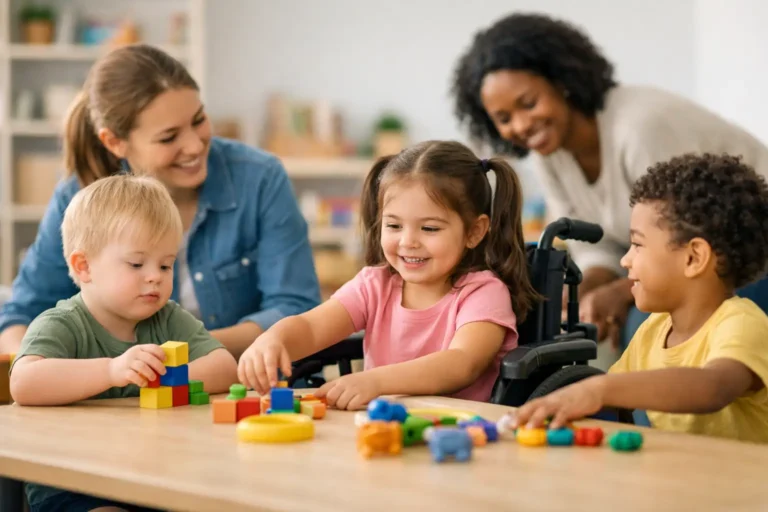
Some questions are hard, personal, or outside your expertise. It is okay to say, “That is a big question. I do not know the whole answer, but we can talk about what we know.” Honest uncertainty builds trust. For children with different communication styles, sensory needs, or developmental profiles, curiosity may show up through actions, gestures, repetition, or focused interests rather than lots of spoken questions. Responsive adults look for all of these signals.
You do not need extra hours in the day to nurture a curious learner. During errands, notice shapes on signs, compare prices or quantities, and wonder where food comes from. At bedtime, invite your child to share something they noticed, tried, or are still wondering about. On walks, pause long enough to examine a shadow, hear a bird, or watch ants carry crumbs.
The most powerful message is simple: questions are welcome here. At Growth Mindset Learning Lab, we believe children deserve the time, encouragement, and individualized support to explore at their own pace. Whether a child is caring for a baby doll, testing a ramp, or asking a question no adult expected, their curiosity is worth noticing.
The next time your child stops to inspect a snail, wonders why bread rises, or rebuilds the same tower after it falls, pause before moving them along. Their question may not need an immediate answer. Sometimes the greatest gift is your presence beside them, ready to say, “Let’s find out.”