Physical Address
381 Myrtle Avenue, Brooklyn, NY 11205
Physical Address
381 Myrtle Avenue, Brooklyn, NY 11205

Your child is happy while getting ready for preschool.
Then you reach the classroom door.
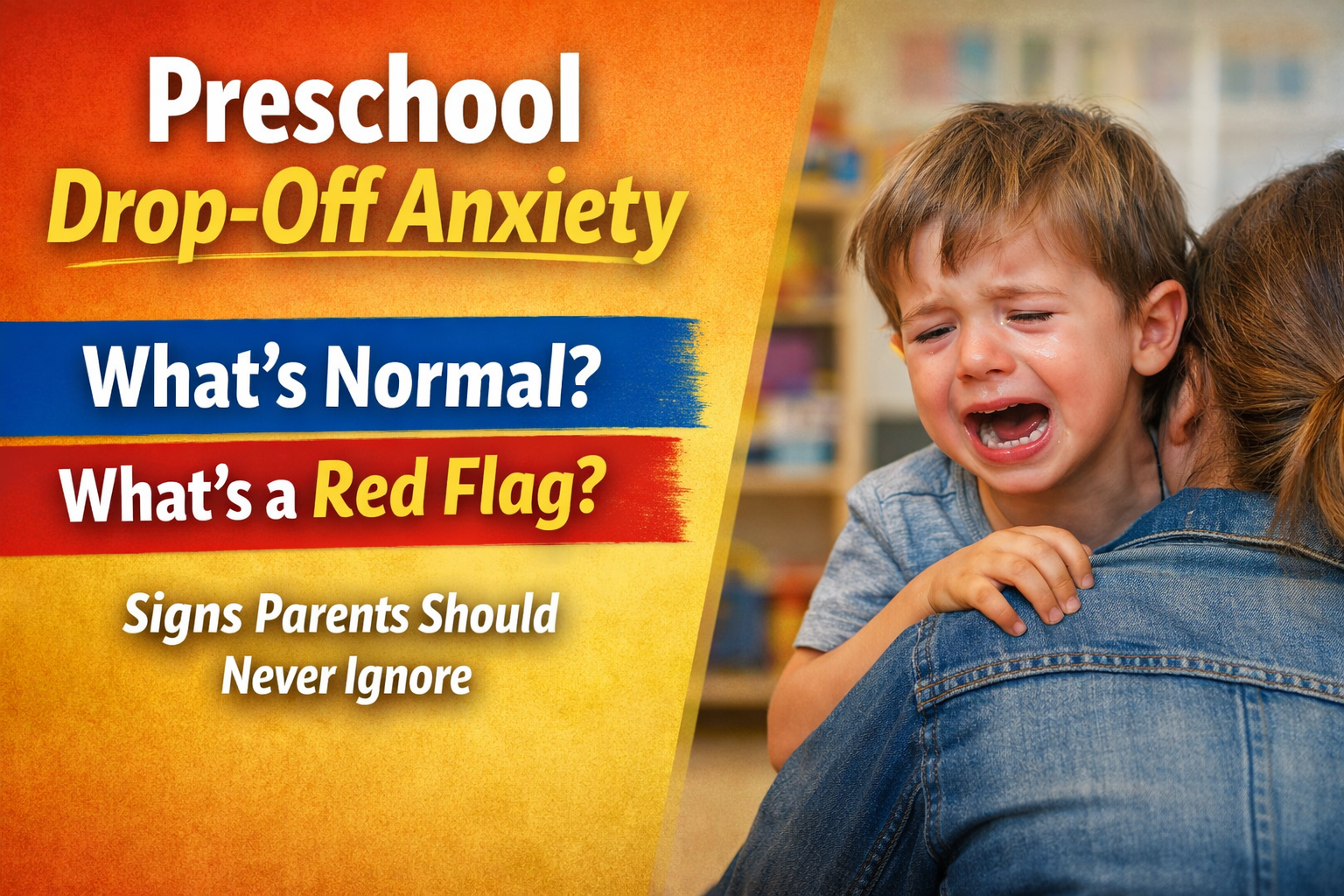
Suddenly, they grab your leg, start crying, ask you not to leave, or refuse to walk inside.
Preschool drop-off anxiety can be upsetting for both children and parents. It can also be confusing when teachers later tell you that your child settled, played, and participated normally after you left.
For many young children, saying goodbye is the hardest part of the preschool day.
Starting preschool involves separation from a familiar caregiver, entering a different environment, following new routines and trusting adults who may still feel unfamiliar. Some children adjust quickly. Others need more time and consistency.
Crying at drop-off does not automatically mean preschool is a bad fit or that something is wrong.
What matters is the wider pattern: what happens before drop-off, how your child responds after you leave, what teachers observe during the day, and whether the situation is gradually becoming easier.
This guide explains why preschool drop-off anxiety happens, what parents can do, what to avoid and when the behaviour deserves closer attention.
Preschool drop-off anxiety happens when a child finds separating from a parent or caregiver difficult.
Your child may cry, cling, refuse to enter the classroom, or repeatedly ask you to stay.
This can happen even when they enjoy preschool once the separation is over.
The most useful question is not simply:
“Does my child cry when I leave?”
It is:
“What happens after I leave?”
Ask the teacher whether your child gradually settles, joins activities, interacts with others, and has comfortable periods during the rest of the day.
A difficult goodbye and a difficult entire preschool day are not necessarily the same thing.
Preschool drop-off anxiety describes distress that happens when a child separates from a parent or familiar caregiver at the beginning of preschool.
It may look like:
For some children, the reaction starts before they even arrive.
They may begin resisting while getting dressed, during breakfast or on the journey to preschool.
For others, everything seems fine until the moment the parent says goodbye.
Separation anxiety can occur during toddlerhood and the preschool years, and children vary considerably in how strongly they respond to separation. The American Academy of Pediatrics recommends predictable, relatively brief goodbye routines and consistency when helping children through separation.
There is rarely one single cause.
Several things may contribute.
Your child may understand that you are leaving but still find the separation emotionally difficult.
They may wonder:
Will you come back?
Who will help me if I need something?
What happens while you are gone?
When children are still becoming familiar with preschool, these questions can make the goodbye feel much bigger.
A preschool classroom contains new people, routines, sounds, expectations, and activities.
Even children who are normally confident can need time to become comfortable in a new environment.
If your child has recently started, understanding why preschool transitions are hard for some children can help you see drop-off as one part of a much larger adjustment.
Young children often cope better when they know what happens next.
A changing morning routine, arriving at different times, or using a different drop-off process each day can make separation less predictable.
CDC parenting guidance explains that consistent routines help children know what to expect throughout the day.
Temperament matters.
Some children walk into a new classroom and immediately begin exploring.
Others prefer to stay close to a familiar adult and observe first.
A child who takes longer to feel comfortable is not necessarily less ready for preschool.
They may simply approach unfamiliar situations differently.
Preschool classrooms can involve:
Some children enjoy this immediately.
Others need time to become comfortable with the level of activity.
Sometimes the morning itself makes separation harder.
A child who woke late, skipped breakfast, slept poorly, or experienced a rushed journey may arrive already frustrated.
The goodbye then becomes one more difficult moment.
Look at the whole morning, not only what happens at the classroom door.
A child who previously entered preschool happily may suddenly begin resisting.
Possible changes include:
If your child was previously settled but now strongly resists attending, our guide explaining why a toddler suddenly hates preschool may help you investigate what changed.
Crying during separation can happen while a young child is adjusting to preschool.
However, there is no universal number of minutes that tells you whether crying is “normal.”
Instead, look at the pattern.
It may be less concerning when:
A different situation is a child who remains intensely distressed for much of the day, becomes increasingly fearful or develops significant changes in eating, sleeping or behaviour.
That is why communication with the teacher matters so much.
Parents only see the drop-off.
Teachers see what happens next.
Your child may cry while holding your hand and then begin playing shortly after you leave.
Or the distress may continue well into the day.
Those situations need to be understood differently.
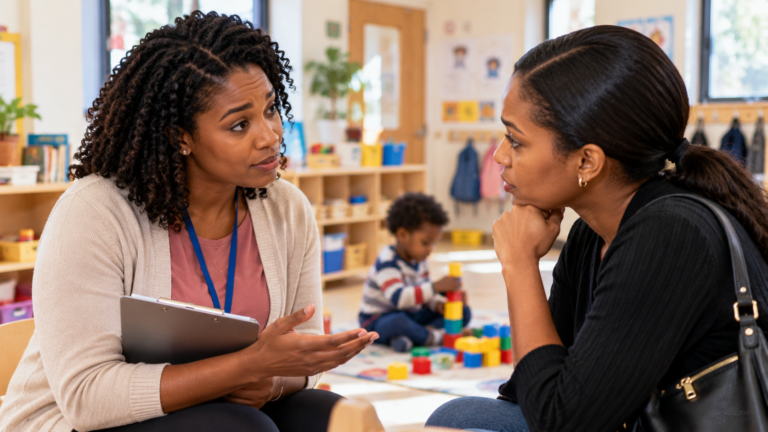
Ask the teacher:
“How long does it usually take my child to become involved in something?”
“What normally helps them settle?”
“Are they playing and participating later?”
“Do they seem comfortable with you?”
“Are they eating normally?”
“How are they handling transitions?”
“Does the anxiety continue during the day or mainly happen when I leave?”
The answers are much more useful than simply knowing that your child cried.
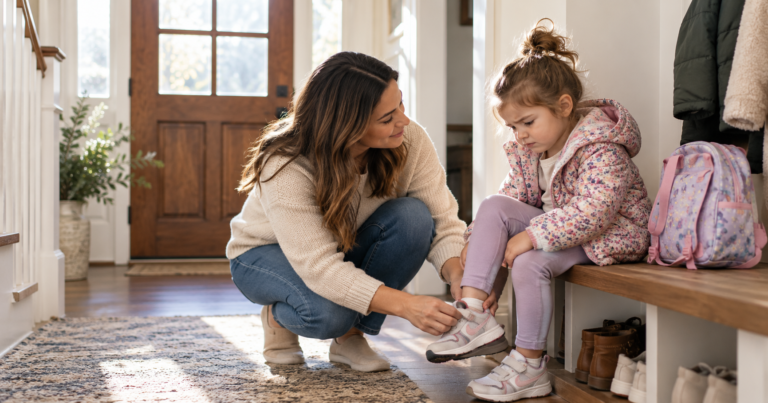
Drop-off becomes easier to manage when the morning itself is predictable.
Where possible, organise clothes, shoes, bags and anything your child needs before bedtime.
Reducing last-minute rushing can make the morning calmer.
Try to follow a similar basic order.
For example:
Wake up → breakfast → get dressed → brush teeth → shoes and bag → preschool
It does not need to run perfectly.
The goal is familiarity.
Use simple language your child understands.
For example:
“We’re going to preschool. We’ll put your bag away, I’ll give you a hug, you’ll stay with your teacher and I’ll come back after preschool.”
Avoid giving long explanations every morning.
Simple and predictable is usually easier to understand.
If your child is about to start preschool or is still very new to the environment, the steps in preparing a child for their first day of preschool can help make the classroom and routine feel less unfamiliar.
You do not need a complicated goodbye.
The goal is to create a short sequence your child can learn.
Give yourself enough time that you are not rushing through the door.
If possible, arrive around the expected drop-off time rather than making the routine dramatically different each day.
Encourage them to complete the first familiar task.
That might mean:
The first classroom action gives your child somewhere to direct their attention.
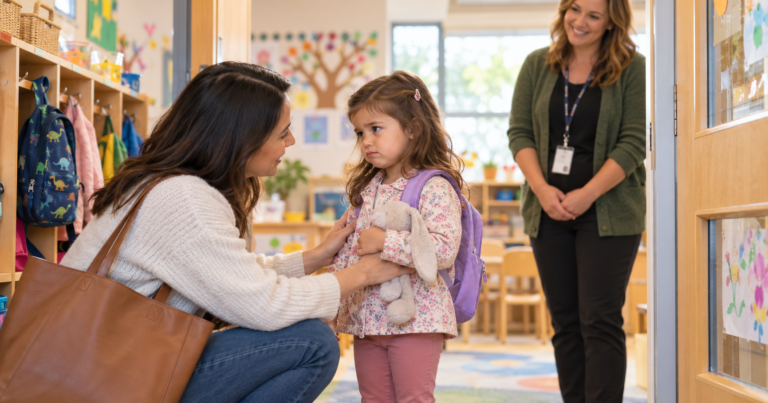
Pause.
Give your child a hug, kiss, or whatever short goodbye ritual your family uses.
Then say your goodbye clearly.
For example:
“I love you. You’re staying with your teacher now. I’ll be back after preschool.”
Avoid saying goodbye and then remaining for several more minutes.
The American Academy of Pediatrics recommends short, consistent goodbye rituals and advises parents to follow through once they have said they are leaving.
Your child’s teacher may use a favourite toy, activity, classroom job or another distraction to help them move into the school day.
Allowing the teacher to take over also helps your child build a relationship with another trusted adult.
This section is particularly important because small changes in how adults handle separation can make the routine more predictable.
It may seem easier to disappear while your child is distracted.
But your child then has no clear goodbye.
Say goodbye and let them know you are leaving.
Your child may ask:
“One more hug.”
“Stay for one minute.”
“Don’t go yet.”
You can acknowledge their feelings without repeatedly restarting the goodbye.
For example:
“I know you want me to stay. It’s time for preschool now. I’ll come back.”
Returning after you have said goodbye can restart the separation.
If there is no genuine reason to return, follow through with the routine you have established.
Avoid:
“Look, nobody else is crying.”
“Why can’t you go inside like your friend?”
Children respond differently to separation.
Comparison may add embarrassment without helping them cope.
Avoid telling your child that they are being silly, naughty, or “too big” to cry.
They can be upset while still being expected to enter preschool.
You can say:
“I know this is hard. Your teacher is here with you. I’ll come back.”
Avoid saying:
“I’ll be right outside.”
if you are actually leaving.
Use a return point your child understands, such as:
“I’ll come back after lunch.”
or:
“I’ll see you after preschool.”
Keeping your promise helps make the routine predictable.
A sudden change deserves curiosity rather than immediate conclusions.
Ask what changed.
Your child may be responding to:
Speak with the teacher and compare what both of you are noticing.
One difficult morning does not necessarily mean there is a bigger problem.
But a sustained change from your child’s normal behaviour is worth understanding.
Not necessarily.
A child can dislike separating from a parent and still enjoy preschool.
Look beyond the classroom door.
Ask:
Does my child participate after I leave?
Do they interact with their teacher?
Do they play?
Do they talk about activities at home?
Do they mention friends?
Are there things they look forward to?
If the answer to many of these questions is yes, the separation itself may be more difficult than preschool as a whole.
Some parents also notice the opposite pattern later in the day: teachers describe a cooperative child, but behaviour becomes much harder at home. Our guide explaining why children behave better at preschool than at home covers why the two environments can bring out different behaviour.
Drop-off does not happen in isolation from the rest of your child’s routine.
A child who is regularly overtired may find the following morning more difficult.
Pay attention to:
If your child’s mood changes significantly after school, understanding why toddlers become exhausted and cranky after preschool may help you identify whether tiredness is contributing to the wider pattern.
Parents do not need to manage the transition alone.
Ask whether the teacher can create a predictable handover.
That could include:
A predictable bridge between parent and teacher can make the change from home to classroom clearer.
You may also find these transition ideas for preschoolers useful when looking for simple routines that help children move from one activity or environment to another.
There is no single timetable.
Some children become comfortable relatively quickly.
Others need longer.
The adjustment may also temporarily become harder again after:
Instead of counting a specific number of days or weeks, look for direction.
Is your child beginning to recover more easily?
Are some mornings easier?
Are they building a relationship with the teacher?
Do they participate after you leave?
Are difficult drop-offs becoming less intense?
Gradual progress matters.
Drop-off tears alone do not automatically indicate a serious problem.
However, it is worth speaking with the teacher and your child’s healthcare professional when appropriate if:
The American Academy of Pediatrics advises parents to discuss ongoing concerns when a child is having persistent difficulty adapting to separation.
It can happen when a child is struggling with separation. What matters is not only how intense the goodbye looks but also what happens after you leave. Ask the teacher whether your child gradually settles and participates during the day.
For some children, separation is the hardest part. Once the parent has left and the child becomes involved in the classroom routine, they may settle and enjoy the rest of the day.
Long goodbyes can sometimes make the transition longer. A warm, predictable and relatively brief goodbye gives your child a clear routine. Work with the teacher on a handover process you can repeat.
It is usually better to say goodbye clearly. Your child learns that you leave and that you return rather than discovering unexpectedly that you have disappeared.
Not necessarily. Starting preschool requires children to adjust to separation, new routines and unfamiliar adults. Difficulty saying goodbye does not by itself prove that a child is not ready.
Consider what has recently changed. A new teacher, classroom change, illness, holiday, sleep disruption or changes at home can temporarily make separation harder.
Avoid sneaking away, repeatedly extending goodbyes, shaming your child for crying, comparing them with other children and making promises about your return that you cannot keep.
Keep the morning predictable, use the same short goodbye routine, explain when you will return in language your child understands and allow the teacher to take over once you leave.
Not necessarily. Look at the entire day. A child who cries during separation but later plays, participates and interacts comfortably presents a different picture from a child who remains distressed throughout the day.
Pay closer attention when distress is intense and persistent, becomes worse, continues through much of the day or is accompanied by significant changes in sleep, eating, behaviour or your child’s general wellbeing.
A difficult preschool goodbye can be emotional for both parent and child.
But the tears you see at the classroom door do not tell you everything about your child’s preschool experience.
Focus on what happens next.
Work with the teacher, keep the morning and goodbye routine predictable and watch for gradual progress.
Your child does not need to stop feeling sad before you can calmly follow through with the separation.
You can acknowledge:
“I know you want me to stay.”
while still saying:
“It’s time for preschool. Your teacher is here. I’ll come back.”
If the anxiety becomes unusually intense, lasts throughout the day, or is accompanied by other significant changes, seek additional guidance.
American Academy of Pediatrics, HealthyChildren.org: How to Ease Your Child’s Separation Anxiety
American Academy of Pediatrics, HealthyChildren.org: Making Child Care Drop-Off Easier
Centers for Disease Control and Prevention: Tips for Building Structure
Centers for Disease Control and Prevention: Tips for Creating Structure and Rules