Physical Address
304 North Cardinal St.
Dorchester Center, MA 02124
Physical Address
304 North Cardinal St.
Dorchester Center, MA 02124

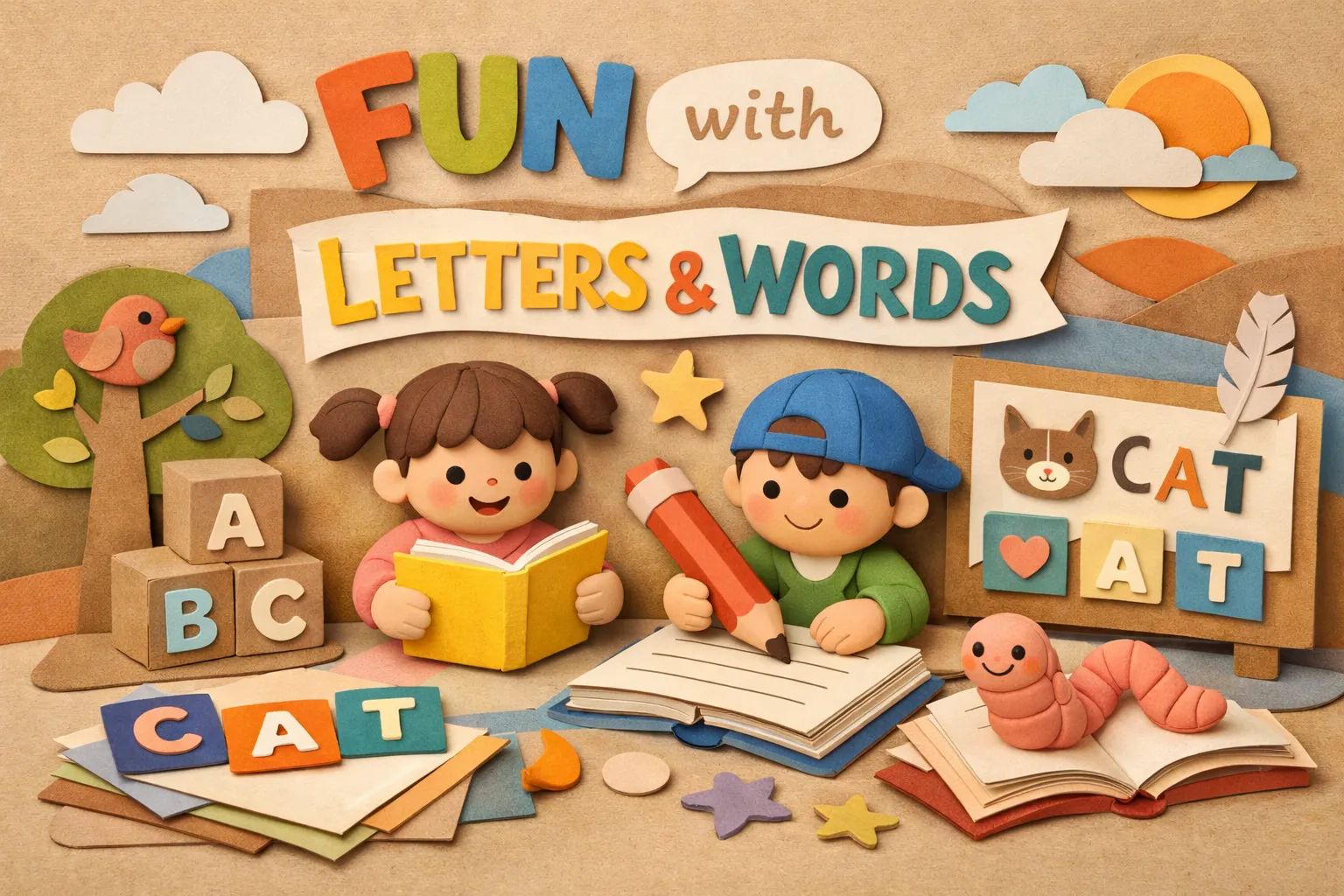
Short, playful literacy activities for preschoolers can shift a child’s reading path faster than you might expect. These 10 easy-to-run ideas target the Big 5 early literacy skills and produce noticeable gains without long prep. They work during snack time, literacy centers, short small-group sessions, or quick one-on-one check-ins, so busy caregivers and teachers can use them daily.
Start with multisensory alphabet play to build letter-shape recognition and fine-motor control quickly. Each activity is tactile and low-prep, ready for alphabet stations and literacy centers, and includes quick observation prompts you can use during play. Later sections add phonemic awareness, sound-to-letter mapping, name and print routines, scheduling tips, and simple tracking tools you can implement right away.
Start with low-prep multisensory activities to make letter learning more concrete. Tactile play gives children sensory input and repeated practice in short sessions, improving both letter-shape recognition and fine-motor skills. These activities support the alphabetic principle by asking children to match a letter’s shape with its name and sound, and they fit well in centers or small-group time.
Gather play dough, letter cookie cutters or printed letter mats, and optional rolling pins. Plan 10–15 minutes for one round: model how to form a letter, then have the child shape it, name it, and say its sound. Offer tracing mats for visual support and encourage advanced learners to match upper- and lower-case pairs; as an extension, spell simple CVC words with the formed letters or send letter mats home.
Fill a tray with rice, colored sand, or pom-poms and hide foam or magnetic letters for a 5–12 minute digging activity. Beginners work with 3–5 target letters while ready learners add letter-picture matching or timed naming rounds to build retrieval speed. Use alphabet mats and picture cards from printable bundles to streamline cleanup and transitions.
While children play, quickly note whether they name the letter, produce the target sound, and form the shape independently; jot a tally or a sticky-note anecdote for grouping. These multisensory stations double as short assessments, giving immediate data to plan the next small-group focus. Use the notes to decide which children need extra practice and which are ready to move on.
Turn transitions into practice with portable phonemic awareness games that need almost no prep. Use them during lining up, circle time, or quick one-on-one check-ins to target rhyming, blending, segmenting, and syllable awareness.
Keep a small basket of toys or picture cards that rhyme and use clean-up or lining up as practice time. Present six items, model a rhyme pair, then have the child sort the remaining items into rhyme groups and explain why they rhyme. Differentiate by using fewer items for newcomers and asking advanced children to produce their own rhyming words, then extend into a rhyme chain or class book.
Turn syllable counting into movement so segmentation is tangible for active learners. Use picture word cards and open space; model stomps for each syllable (for example, but-ter-fly = three stomps) and have children try pictured words. Differentiate by tapping once per syllable for quieter groups or using longer words for a challenge; try a listening walk where kids find items and count syllables.
Both games require little prep and reinforce phonological awareness during everyday moments. Pair them with shared rhymes or storytime to deepen the link between sound and meaning. For research-based guidance on phonemic skills in preschool and pre-K, see phonemic awareness in preschool and pre-K.
Make phonemes visible by pairing sounds with letter shapes to help children begin decoding. When children regularly connect spoken sounds to written letters, they move from phonological play to early reading skills. The next activities are quick, hands-on ways to build that link.
I Spy blending trains children to hear segmented phonemes and blend them into a word while checking with a picture. Say separated sounds slowly (for example, “/b/ /ă/ /t/”), have the child blend and say the word (“bat”), then reveal the picture to confirm. Start with two-phoneme blends and move to three-phoneme CVCs, and invite children to take turns giving segmented sounds to build listening and speaking skills.
Use printable Elkonin box mats, counters, and letter tiles to make segmenting tactile and visible; plan 8–12 minutes per round. Say a word slowly (for example, “dog”), have the child place a counter into each box for /d/ /o/ /g/, then match letter tiles under each box or write the letters. Provide picture cues for beginners and ask advanced learners to write letters independently or invent words for peers to segment.
A few minutes of blending and Elkonin work each day builds phonemic awareness, decoding speed, and confidence. For additional activity ideas you can borrow or adapt, review this practical list of phonemic awareness activities to help your child learn to read.
Make print meaningful by centering routines on children’s own names and classroom labels. Short, predictable activities support print concepts, letter order, and oral language while fitting naturally into daily rhythms. The activities below are quick to set up and repeat.
Invite children to string the letters of their own name to reinforce letter order and fine-motor skills in a 10–15 minute activity. Provide letter beads or tiles, string or pipe cleaners, and a simple name card for reference. Have the child thread letters in order while saying each letter and its sound, and differentiate by highlighting tricky letters or asking advanced children to spell family names as an extension.
Turn letter practice into a community display with a large paper tree and letter leaves; plan 5–10 minutes per turn. Call a letter, have a child find the matching leaf, add it to the tree, and say the letter name and sound together. Add picture cues for challenging sounds and invite older children to attach words that begin with the letter to build vocabulary.
Give children clipboards or baskets and call out an initial sound; have them find classroom or outdoor items that start with that sound within a time limit (about 5–10 minutes). Beginners search for items from a short list of target letters while advanced children hunt for multiple items per sound or write picture labels. Use this activity to assess initial-sound identification and encourage talk about objects and their beginning sounds.
These routines connect directly to print concepts and support letter recognition, sequencing, and emergent comprehension. For practical early-literacy routines and family-facing practices, see the five early literacy practices suggested by CLEL. Use them as short, repeatable pre-K literacy activities; rotate the focus, change tree themes, and record quick observations to track progress. Next, see how to schedule practice, differentiate, and scale these activities.
Build a predictable routine by scheduling short, focused sessions that match children’s attention and energy. Try a morning warm-up when children are fresh and a calm center session of 8–20 minutes after active play, with 5–10 minute pockets during transitions. Rotate activities, such as letter fishing and initial-sound scavenger hunts, to balance alphabet knowledge and phonemic awareness practice. Keep sessions consistent so progress is easier to spot.
Keep assessment simple and repeatable so progress is visible without formal testing. Track one or two measurable behaviors—speed of letter naming, accuracy matching sounds, or correct initial sounds during a scavenger hunt—and use timed rounds or a short checklist for consistency. Differentiate by narrowing the letter set for beginners, adding fluency rounds for ready learners, or moving an activity into small-group coaching. Use the data to plan the next week’s focus.
Early Childhood Development & Preschool Learning Archives, Mindset Moment provides printable lesson packs, scripted prompts, and observation templates that reduce prep and make progress easier to record. Facilitation training shows how to scale an activity from one child to a classroom-ready center and turns play into notes you can share with families or care teams. For extra activity ideas you can run at home, check the 7 Best Games for Preschoolers at Home post. Start with a two-activity week using the printable pack and sign up for a workshop if you want guided coaching or custom adaptations for your group.
When you’re deciding how much time to devote to short literacy pockets and how to pace instruction, practical guidance on developing early literacy skills in preschool can help you prioritize activities that yield the biggest gains.
These literacy activities for preschoolers offer practical ways to build early reading skills without extra stress.
Start small and repeat. Pick one activity from the list, set a 10-minute timer, and try it once today; note one specific win and run the same activity for two more days to watch for progress. Small, consistent moments add up and create clear signs of readiness you can share with teachers or caregivers — see the preschool readiness Archives, Mindset Moment for ideas on documenting milestones and communicating them effectively.