Physical Address
304 North Cardinal St.
Dorchester Center, MA 02124
Physical Address
304 North Cardinal St.
Dorchester Center, MA 02124

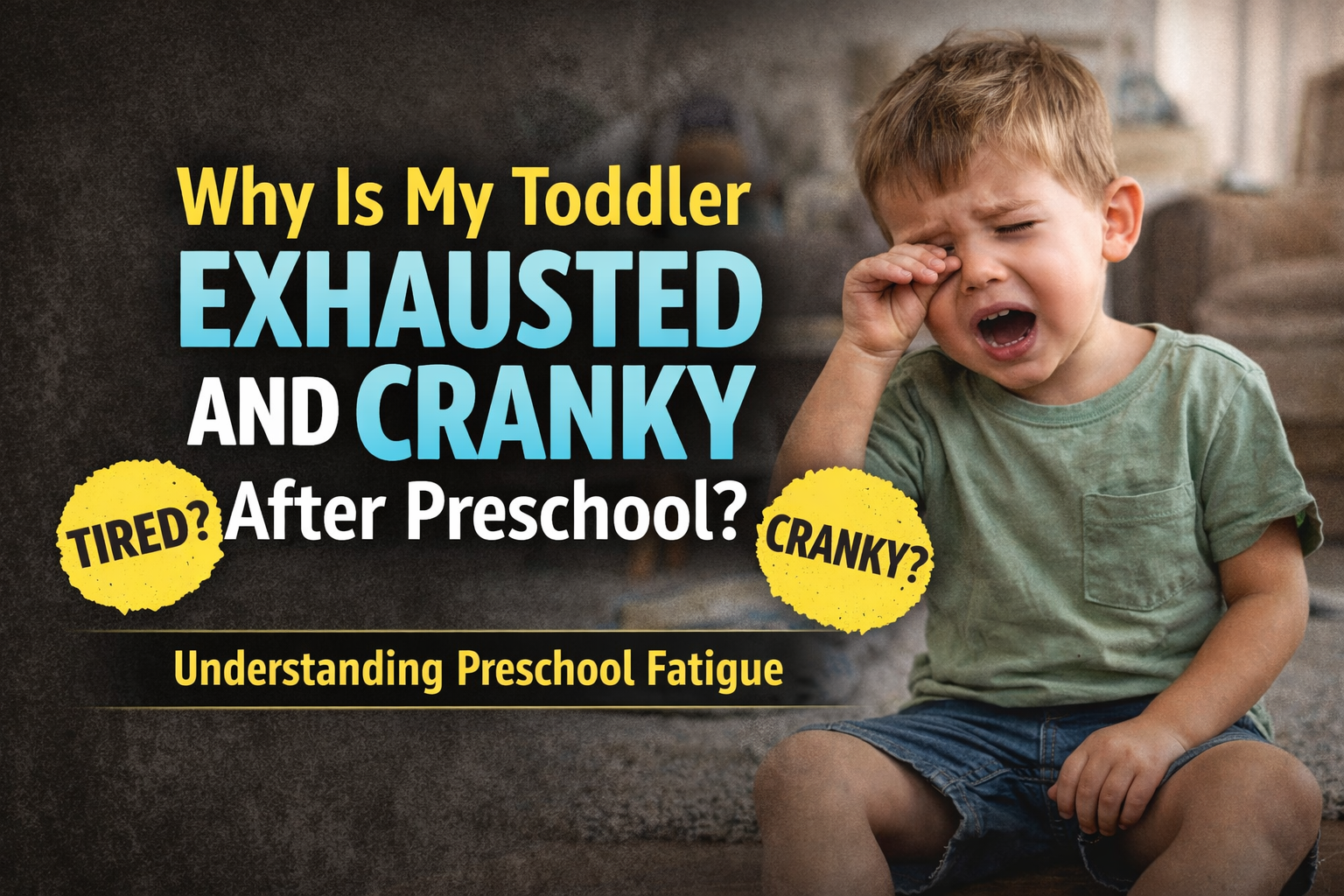
If your toddler seems unusually tired, cranky, or emotional after preschool, it is usually not because something is wrong. Preschool requires enormous emotional, social, and cognitive effort. Even if your child did not nap, they were navigating peer interactions, transitions, instructions, and stimulation all day. By the time they come home, their nervous system is fatigued.
Many parents describe the same pattern:
“My toddler is exhausted after daycare.”
“My child is so tired after school.”
“Why is my toddler cranky after preschool?”
In most cases, what you are seeing is preschool fatigue. And it is very common.
Let’s look more closely at what is happening beneath the surface.
From the outside, preschool looks playful and light. But developmentally, it is intense.
In preschool environments, children are constantly processing.
They are not just playing. They are working very hard.
Your toddler is watching peers, reading facial expressions, learning turn-taking, negotiating toys, and figuring out group dynamics.
That level of social awareness is mentally demanding for a developing brain.
Listening in a group setting requires focused attention and impulse control. Even when instructions seem simple, toddlers must filter noise, interpret language, and respond appropriately.
Listening all day is tiring.
Preschool requires toddlers to sit when asked, clean up when prompted, line up, and wait. This constant self-regulation drains emotional reserves.
Holding it together all day uses energy.
Preschool schedules involve multiple transitions. Moving from play to circle time, circle time to snack, snack to outdoor play, and outdoor play to rest requires flexibility.
Cognitive flexibility is exhausting for toddlers.
Read Also: Why Does My Toddler Suddenly Hate Preschool? What’s Really Happening
Classrooms are busy environments.
There are voices, movement, music, bright colors, and close physical proximity. Even positive stimulation adds up.
For some children, especially those who are sensitive to sensory input, overstimulation builds throughout the day.
When you ask, “Why is my toddler so tired after preschool?” the answer often lies in the sheer amount of regulation happening hour after hour.
Many parents expect tiredness to look like sleepiness.
But emotional exhaustion often looks very different.
Emotional fatigue can appear as:
Whining
Clinginess
Aggression
Sudden crying
Defiance
Regression behaviors
A toddler exhausted after daycare may not look sleepy. They may look overwhelmed.
This distinction is important.
Physical fatigue results from movement and lack of sleep.
Emotional fatigue results from sustained self-control and social effort.
When parents say their child tired after school becomes “a completely different person,” they are often describing emotional depletion.
Understanding this difference helps reduce misinterpretation.
It is not bad behavior. It is nervous system fatigue.
This also connects closely to what we discussed in Why Does My Child Behave Better at Preschool Than at Home?, where emotional decompression explains why children often unravel in safe environments.
Fatigue and behavior are deeply connected.
Yes. In most cases, preschool fatigue is completely normal.
Common signs include:
Crankiness after pickup
Quiet withdrawal
Increased clinginess
Early bedtime
After-school meltdowns
Temporary regression
This is especially common:
During the first several weeks of starting preschool
After schedule changes
Following developmental leaps
During growth spurts
Adjustment periods can last several weeks at the beginning of preschool. Some children take longer to build stamina.
If your toddler is exhausted after daycare but improves on weekends, that is a strong sign the fatigue is situational.
Your child is adapting to a new developmental demand.
Sometimes preschool fatigue overlaps with overstimulation.
An overstimulated toddler after daycare may display:
Irritability
Hyperactivity followed by a crash
Sensitivity to noise
Emotional outbursts
Preschool environments often include loud classrooms, bright lighting, busy schedules, and constant peer interaction.
For certain children, especially those sensitive to sensory input, this stimulation compounds fatigue.
Not every tired child is sleepy.
Some are neurologically saturated.
If you are also noticing intense emotional release after school, you may want to read Why Does My Toddler Cry After Preschool? and our After-School Meltdowns article to understand the decompression pattern more fully.
While preschool fatigue is common, there are times to investigate further.
Consider checking in with your child’s teacher or pediatrician if:
Extreme exhaustion occurs daily without improvement
Your child refuses preschool consistently
Sleep becomes severely disrupted
Appetite changes significantly
Behavioral shifts persist beyond six to eight weeks
Balanced awareness is important.
Most children adjust over time as their emotional stamina increases.
But persistent or escalating symptoms deserve thoughtful conversation.
This is where your response makes a significant difference.
For twenty to thirty minutes after pickup, reduce demands.
Avoid rapid questioning.
Avoid immediate correction.
Keep stimulation low.
Offer a snack and quiet play.
Think recovery before productivity.
Instead of asking for a full recap of the day, begin with presence.
A hug.
Sitting together.
Quiet proximity.
Connection helps reset the nervous system.
Consistency reduces decision fatigue.
Dinner.
Bath.
Books.
Bedtime.
Predictability supports regulation.
If your toddler is tired after preschool, consider shifting bedtime twenty to thirty minutes earlier.
Preschool fatigue often accumulates throughout the week.
Resist scheduling extracurricular activities immediately after school.
Your toddler has already worked hard.
Home should feel restorative.
Temporary regression is common during adjustment.
You can learn more about this in Toddler Regression After Starting Daycare.
Regression often accompanies fatigue and developmental growth.
Clear communication builds clarity.
You might ask:
“How does my child seem by the end of the day?”
“Are naps consistent?”
“Do you notice signs of fatigue in the afternoon?”
“How are transitions going?”
Teachers can offer perspective that helps you understand whether fatigue is typical or excessive.
Small schedule adjustments sometimes make a meaningful difference.
Preschool is one of the first sustained experiences outside the home.
It stretches toddlers socially, emotionally, and cognitively.
When your child comes home exhausted and cranky, it does not mean preschool is harmful.
It often means your child is growing.
Fatigue can be a sign of developmental expansion.
Over time, most children build stamina.
As regulation improves, extreme tiredness and emotional volatility usually decrease.
If you are asking, “Why is my toddler so tired after preschool?” the most reassuring truth is this:
Preschool is demanding work for a developing brain.
And tired often means growing.
Yes. Preschool requires sustained social and emotional effort. Many toddlers show fatigue during adjustment periods.
Most children adjust within several weeks to a few months. Mild tiredness may continue during developmental transitions.
Not necessarily. Some fatigue is expected. If exhaustion is extreme or persistent, discuss concerns with the teacher.
Late naps can interfere with nighttime sleep. Instead, try a quiet decompression period and earlier bedtime.
Most toddlers need eleven to fourteen hours of total sleep in a twenty-four-hour period. Inadequate nighttime sleep can intensify preschool fatigue.