Physical Address
304 North Cardinal St.
Dorchester Center, MA 02124
Physical Address
304 North Cardinal St.
Dorchester Center, MA 02124

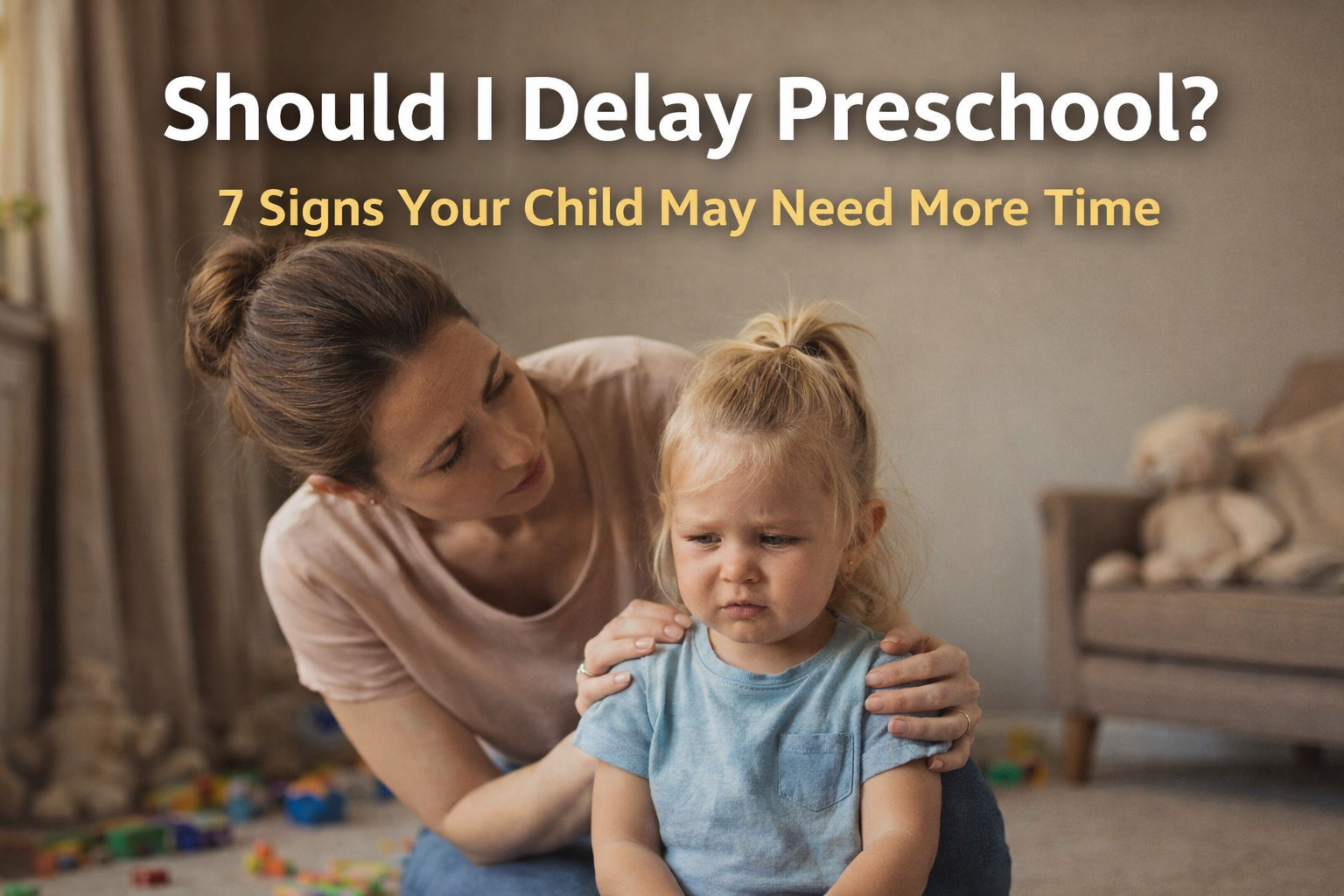
Every year, thousands of parents quietly ask the same question:
Should I wait another year before sending my child to preschool?
Some feel pressure because other children are starting.
Some worry about social development.
Some fear falling behind.
But here’s the truth most people won’t say out loud:
Preschool readiness is not about age alone.
It is about emotional regulation, separation capacity, and developmental pace.
If you’re unsure whether your child is ready, this guide will help you look beyond comparison and into clarity.
You may consider delaying preschool if your child struggles significantly with separation, emotional regulation, peer interaction, or basic daily routines despite consistent support. Preschool readiness is not based on age alone. Emotional maturity matters more than comparison with other children.
Many parents ask whether they should delay preschool because they notice:
These concerns do not automatically mean your child is not ready. But they do deserve thoughtful evaluation.
Crying at drop-off is normal.
However, you may consider delaying preschool if your child:
Gradual improvement is a healthy sign. No improvement over time may signal emotional unreadiness.
Preschool requires basic recovery skills.
If your child:
They may benefit from additional emotional development before entering a structured classroom.
Shyness is normal.
Avoidance looks different.
If your child consistently:
It may indicate they need more gradual exposure before preschool.
Preschool does not require perfection.
But children benefit from the ability to:
If independence attempts trigger extreme resistance, more time may reduce stress.
Timing matters.
If your child is also adjusting to:
Adding preschool may overwhelm their emotional capacity.
If speech delays, sensory sensitivities, or other developmental differences are under evaluation, delaying preschool may allow targeted support first.
This is not holding your child back. It is supporting them strategically.
Parents often dismiss instinct because of comparison.
If your concern persists across weeks, not just difficult days, explore it calmly rather than ignore it.
Patterns matter more than isolated incidents.
You likely do not need to delay preschool if:
Discomfort is part of growth. Persistent distress is different.
Possible benefits:
Possible considerations:
There is no universal timeline. There is alignment with your child’s readiness.
Ask yourself:
Preschool readiness is developmental, not competitive.
Preschool is not a race.
Children do not fall behind at age three.
Emotional stability predicts long-term success more than early enrollment.
If waiting builds confidence, it is not delay. It is preparation.
Many three-year-olds thrive in preschool. Readiness depends more on emotional development than age alone.
In most cases, no. Emotional maturity often supports stronger long-term outcomes.
Look for patterns over several weeks rather than reacting to a single difficult day.