Physical Address
304 North Cardinal St.
Dorchester Center, MA 02124
Physical Address
304 North Cardinal St.
Dorchester Center, MA 02124

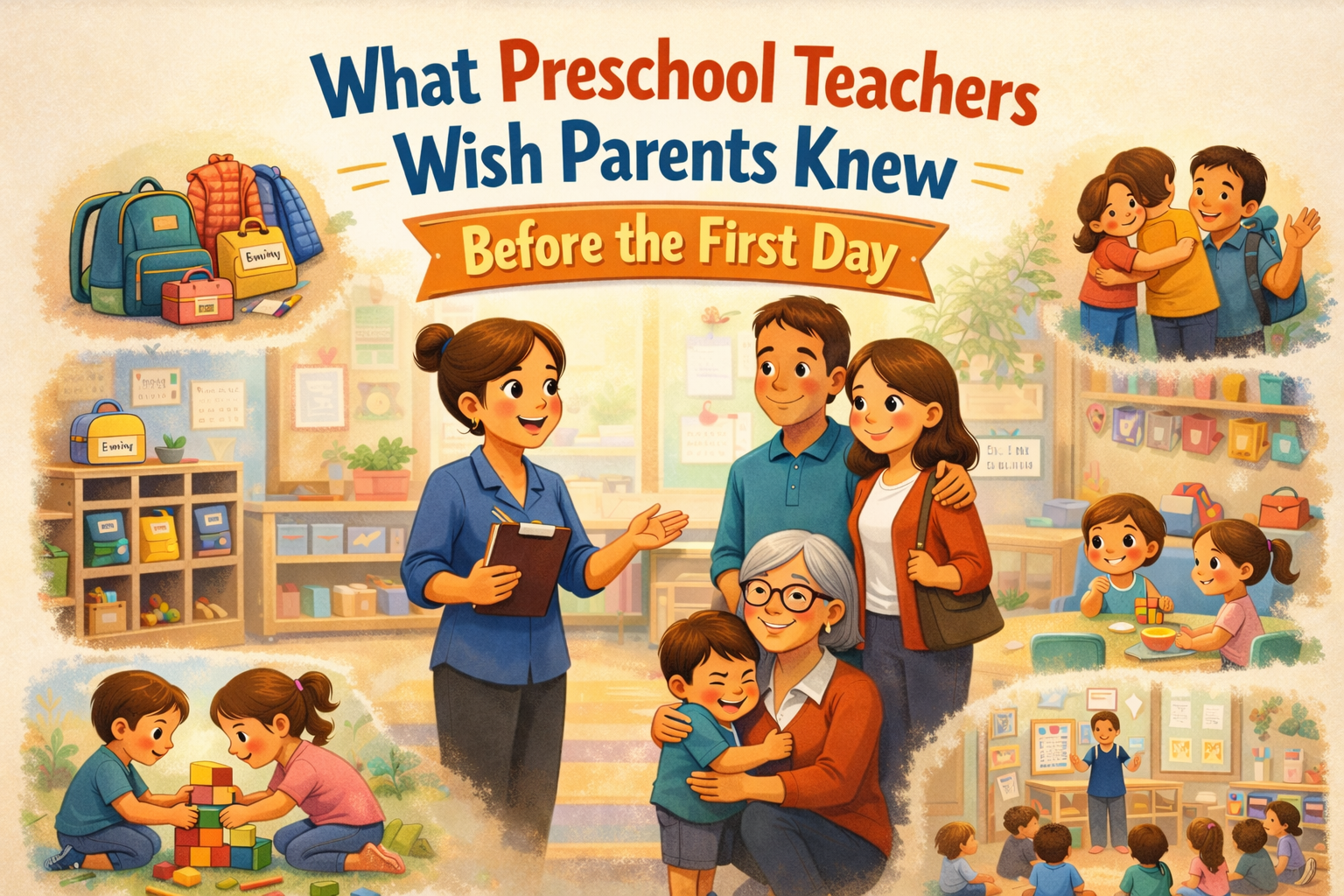
Every year, preschool teachers watch the same moment unfold.
A child walks into the classroom holding a backpack that is almost bigger than they are. A parent kneels down, gives a reassuring smile, and whispers, “You’re going to be fine.”
Sometimes the child walks in confidently.
Sometimes there are tears.
Sometimes the tears come later.
What most parents don’t realize is this: preschool teachers are not judging your child’s behavior. They are observing something deeper.
They are watching how your child handles separation, uncertainty, and emotional regulation.
And there are things they wish parents understood before that first day even arrives.
Many parents worry about letters, numbers, and colors.
Preschool teachers worry about something else entirely.
Can your child:
A child who knows the alphabet but cannot self-soothe will struggle more than a child who feels emotionally secure.
Preschool is not a test of intelligence.
It is a test of emotional flexibility.
Parents often try to prepare children by talking a lot.
“We talked about preschool all summer.”
“I explained everything to them.”
“I told them it would be fun.”
Preschool teachers see this often.
What actually helps children feel safe is predictability, not reassurance.
Children regulate better when:
Long explanations can overwhelm young children. Simple, consistent routines help far more.
Read Also: Why Toddlers Regress After Starting Daycare: What to Expect and How to Respond
Preschool teachers expect tears.
They expect hesitation.
They expect big emotions.
What concerns them is not a child who cries.
It is a child who feels rushed, dismissed, or shamed for crying.
When parents say things like:
Children learn that their emotions are inconvenient.
Teachers wish parents knew this:
Crying at drop-off is often a sign of secure attachment, not weakness.
Children cry because they trust that someone will respond.
Many parents worry their child is “too dependent.”
Preschool teachers look for something else.
They look for children who feel safe enough to try.
A child does not need to:
They need to feel emotionally supported while learning these skills.
True independence grows from connection, not pressure.
Parents often ask teachers:
“What will they be learning?”
“What activities do you do?”
Teachers pay close attention to transitions.
How a child moves from:
These moments reveal emotional regulation skills more than any worksheet.
At home, practicing small transitions helps enormously:
Preschool teachers do not see behavior as defiance.
They see it as communication.
A child who:
Is usually saying, “This is hard for me.”
Teachers wish parents understood that punishment does not teach emotional regulation. Co-regulation does.
When parents and teachers work together, children settle faster.
Many parents panic in week one.
“My child is crying every day.”
“They say they don’t like school.”
“Did I make a mistake?”
Preschool teachers know that adjustment is not linear.
Week one is rarely the best indicator of long-term success.
What matters more is:
Most children settle once emotional safety is established.
Preschool teachers consistently recommend the same foundations:
The goal is not a tear-free drop-off.
The goal is a child who learns that feelings pass and safety remains.
Preschool is not about preparing children to perform.
It is about preparing them to feel safe in a world beyond home.
When parents focus less on readiness checklists and more on emotional security, children thrive.
Preschool teachers see it every day.
Yes. Crying is common and expected during early transitions.
Emotional regulation, separation tolerance, and comfort with routines.
Most children adjust within a few weeks, though each child is different.