Physical Address
304 North Cardinal St.
Dorchester Center, MA 02124
Physical Address
304 North Cardinal St.
Dorchester Center, MA 02124

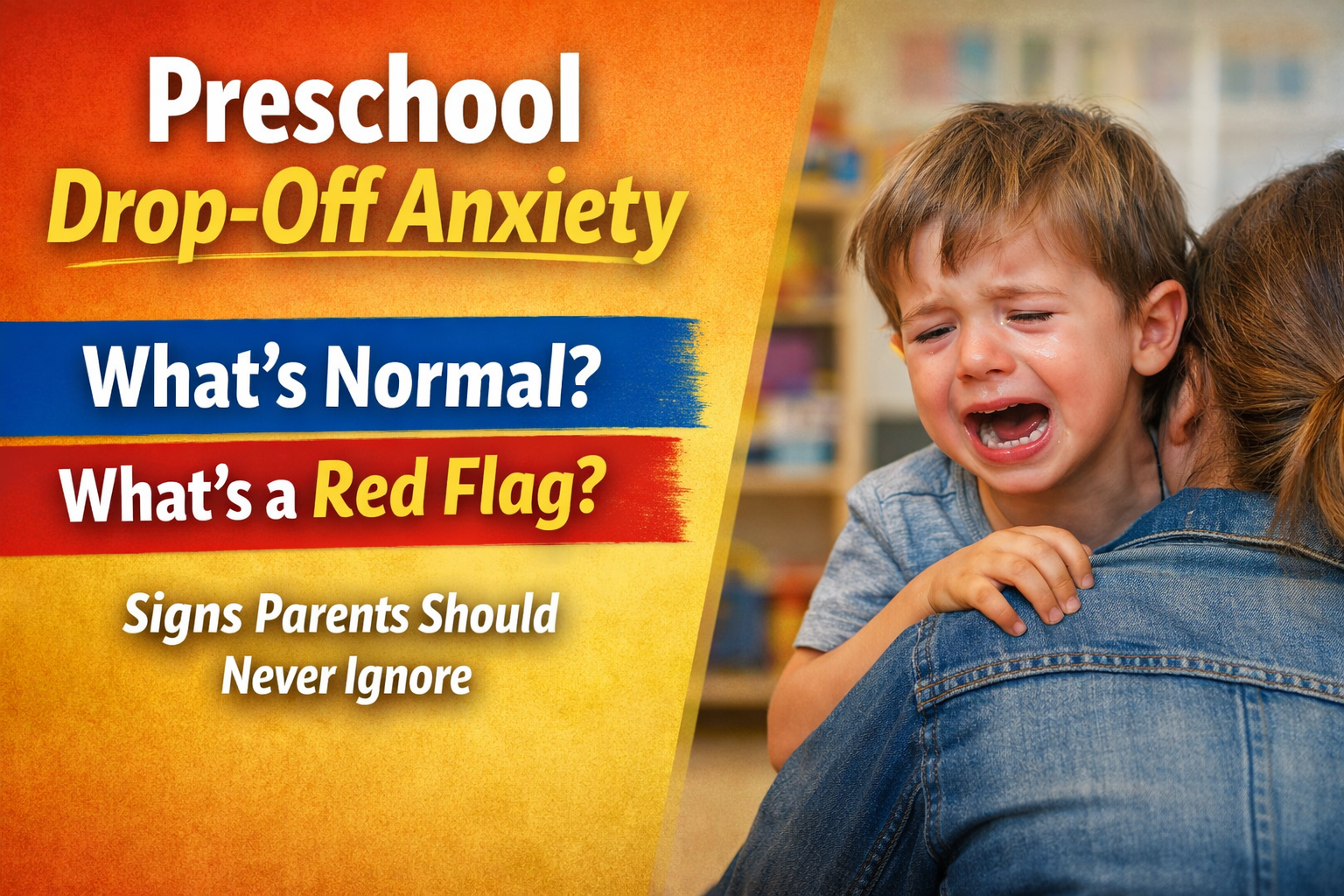
If your toddler cries, clings, or screams at preschool drop-off, it does not automatically mean something is wrong. Preschool drop-off anxiety is extremely common, especially between ages 2 and 4. Many children protest separation even when they are safe, supported, and eventually settle into their day.
The key question is not whether your child cries.
The key question is what happens after you leave.
Understanding that difference changes everything.
Preschool drop-off anxiety is a form of separation anxiety that appears as children develop deeper awareness of attachment and time.
Between ages 2 and 4, toddlers begin to understand:
You leave.
Time passes.
You are not physically present.
This awareness strengthens attachment bonds but can temporarily increase distress during separation.
So when your toddler cries at drop-off, it is often not rejection of school.
It is protest of separation.
That distinction matters.
Preschool drop-off crying is typically normal if:
Many toddlers cry at preschool drop-off but are playing within minutes.
Parents rarely see that part.
This is why asking the teacher, “How long does the crying last after I leave?” is critical.
Brief distress is adjustment.
Persistent distress requires further evaluation.
While preschool drop-off anxiety is common, certain patterns deserve attention.
Consider exploring further if:
Most separation anxiety phases resolve within 2 to 6 weeks when handled consistently.
If distress intensifies or persists beyond that window, it is appropriate to discuss concerns with the teacher and possibly your pediatrician.
Parents often say, “They were fine before. Now they scream.”
Sudden preschool drop-off anxiety can occur because of:
You can read more about sudden preschool refusal in this article:
https://mindsetmoment.growthmindsetlearninglab.com/toddler-suddenly-hates-preschool/
Often, what looks like regression is actually emotional expansion.
As awareness grows, separation feels bigger.
Certain responses can unintentionally increase anxiety:
These behaviors create uncertainty.
Uncertainty increases anxiety.
Children borrow emotional cues from adults. If you appear unsure, their nervous system escalates.
Create a simple ritual:
Hug.
One sentence.
Leave calmly.
Example:
“I love you. I’ll be back after snack time.”
Consistency builds security.
Read Also: Why Does My Child Behave Better at Preschool Than at Home?
Even if you feel anxious, keep your tone steady and your movements confident.
Children sense hesitation.
Calm adults build calm children.
If your toddler is also exhausted or crying after preschool, emotional fatigue may be contributing to drop-off anxiety.
You can read more about preschool fatigue here:
https://mindsetmoment.growthmindsetlearninglab.com/toddler-tired-after-preschool/
Regulation at home strengthens resilience the next morning.
Give limited choices before separation:
“Carry your backpack or wear it?”
“Walk or hop to the door?”
Small control reduces large protest.
For most toddlers:
Consistency is key.
Extended absences or irregular attendance can reset adjustment periods.
With calm and predictable responses, most children gradually stabilize.
Preschool drop-off anxiety is not a sign that you failed.
It is often a sign of strong attachment combined with developmental growth.
The goal is not to eliminate tears immediately.
The goal is to build resilience safely.
When adults respond with confidence and consistency, most children adjust and often emerge more secure and capable.
Yes. Many toddlers protest separation. The important factor is whether they settle shortly after you leave.
Brief crying that stops within 10 to 20 minutes is common. Distress lasting most of the day should be discussed with teachers.
Prolonged goodbyes often increase anxiety. Short, predictable routines are more effective.
Not necessarily. Most cases are developmental. Persistent distress over several weeks may warrant evaluation.
Force increases stress. Calm consistency and predictable routines build tolerance and emotional strength.