Physical Address
304 North Cardinal St.
Dorchester Center, MA 02124
Physical Address
304 North Cardinal St.
Dorchester Center, MA 02124

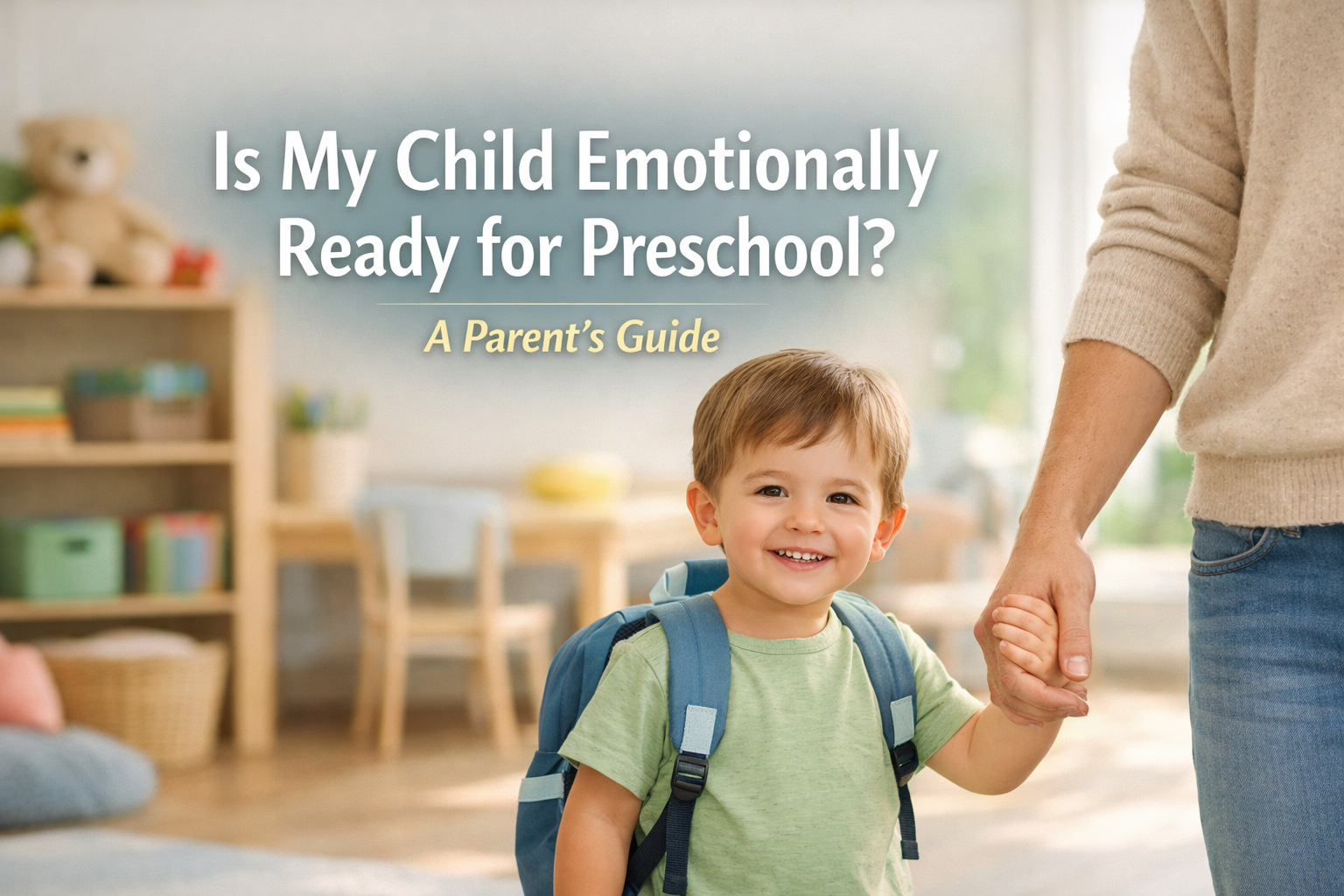
If you are wondering whether your child is emotionally ready for preschool, you are probably asking one of these questions:
Most preschool readiness advice does not answer these questions clearly. It focuses on skills that are easy to measure and avoids the emotional ones that matter most.
Emotional readiness is not about eliminating big feelings. It is about how a child handles them when the environment changes.
When parents ask if a child is emotionally ready for preschool, they are rarely asking about emotions in theory.
They want to know:
These are practical concerns. Emotional readiness needs practical answers.
Emotionally ready children are not always calm. They are not unusually mature. They are not independent in the adult sense.
Emotional readiness looks like:
This is about emotional recovery, not emotional control.
A child who can cry, be supported, and try again is often more ready than a child who never shows distress but shuts down under pressure.
Preschool places emotional demands on children that home environments do not.
In preschool, children must:
These demands stretch emotional systems that are still developing.
This is why a child can appear confident, verbal, and curious and still struggle emotionally in the classroom.
It is not a mismatch in intelligence. It is a mismatch in emotional load.
Many parents worry that their child “cannot regulate emotions yet.”
Here is the part that often goes unsaid:
Young children are not supposed to regulate emotions independently.
Emotional regulation develops through repeated experiences of being supported, not through practicing calm behavior.
In preschool, children rely on:
This is why emotional readiness depends as much on environment as it does on the child.
A common parent concern is delayed difficulty.
A child starts preschool seemingly fine, then begins to resist drop-offs, withdraw, or become more emotional at home.
This usually means:
This is not regression. It is an adjustment.
Understanding this prevents parents from overreacting or assuming something is wrong.
You do not need to “train” emotional readiness.
You support it by:
These experiences build emotional resilience naturally.
Instead of asking:
“Can my child handle preschool?”
Ask:
“What happens after my child gets upset?”
If the answer includes recovery, reconnection, and continued engagement, emotional readiness is already developing.
What worries you most about your child’s emotional adjustment to preschool?
And what do you wish someone had explained to you sooner?
Share your thoughts in the comments. These conversations help parents replace fear with understanding.