Physical Address
381 Myrtle Avenue, Brooklyn, NY 11205
Physical Address
381 Myrtle Avenue, Brooklyn, NY 11205

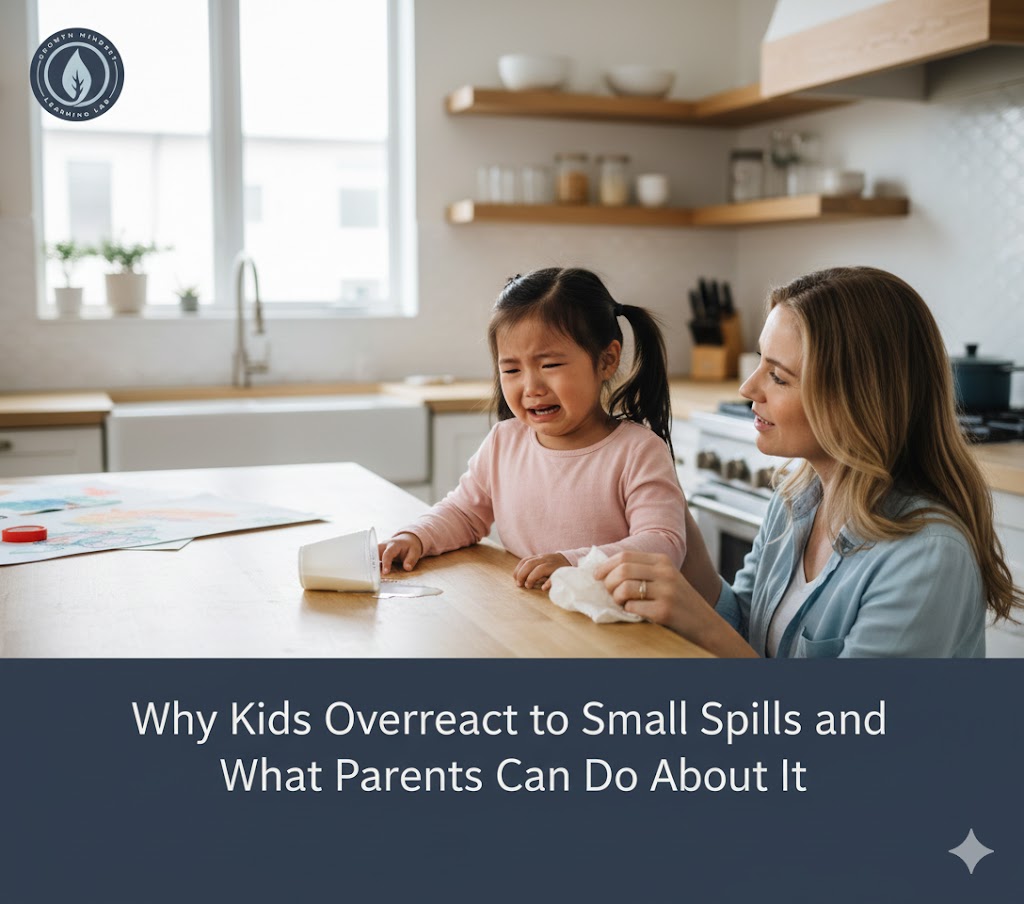
Your child spills a little water and suddenly starts crying, panicking, or becoming extremely upset. To an adult, it may seem like a very small problem, so the size of the reaction can be confusing.
Young children can react strongly to small spills for several reasons. They may feel frustrated by making a mistake, dislike the feeling of wet or sticky clothing, worry that they are in trouble, or struggle to manage a sudden disappointment.
Toddlers and preschoolers are still developing emotional control, so an unexpected mistake can sometimes feel much bigger to them than it does to an adult.
In this guide, we’ll explain why small spills can lead to big emotions, how parents can respond in the moment, and when repeated reactions may warrant closer attention.
Read Also: Potty Training Tantrums in Toddlers: Why It Happens and How First-Time Parents Can Respond Calmly
Why does my child overreact to small spills?
A strong reaction to a small spill can happen because young children are still learning how to manage frustration, mistakes and unexpected changes.
Your child may also dislike wet clothes or sticky textures, worry about getting into trouble, feel embarrassed by making a mistake or simply be tired or overwhelmed when the spill happens.
One strong reaction does not automatically mean something is wrong. Instead, look at how often it happens, what seems to trigger it and how quickly your child recovers.
Toddlers and preschoolers can experience strong feelings before they have developed the ability to manage those feelings calmly.
A spill may involve surprise, frustration, and disappointment all at once.
While an adult can quickly think, “I’ll get a towel,” a young child may react emotionally before they are able to think about what to do next.
Strong emotions and sudden tantrums can be a normal part of toddler development as children learn greater control over their feelings and impulses.
Some children become upset because they immediately worry about how an adult will respond.
They may look at your face, apologise repeatedly, or start crying before you have even reacted.
A calm response can help show them that an accidental spill is a problem that can be fixed rather than an emergency.
Sometimes the reaction is less about the mistake and more about how the spill feels.
Wet sleeves, cold water, sticky hands, or soaked clothes can be uncomfortable for some children.
If your child reacts strongly, notice whether the distress becomes much worse when liquid touches their clothes or skin.
Children at this age want to feel capable. When something goes wrong, the reaction often reflects that young children are learning many new skills, including pouring drinks, carrying cups, and feeding themselves.
When something goes wrong, frustration can appear very quickly.
The spill may feel like evidence to them that they could not complete something they were trying hard to do.
Sometimes the spill is simply the final frustration in an already difficult moment.
A tired, hungry, or overstimulated child may have much less patience for a mistake than they would earlier in the day.
If the biggest reactions tend to happen before meals, after daycare, or near bedtime, the spill may only be the final trigger.
The American Academy of Pediatrics specifically advises parents to anticipate common tantrum triggers such as tiredness and hunger.
Children learn from repeated experiences.
If spills normally lead to adults rushing, shouting, or becoming visibly frustrated, a child may begin to expect that response whenever something spills.
Likewise, repeated calm responses can help make the situation feel more predictable over time.
Sometimes a child accidentally spills a small amount and then deliberately pours out the rest. To an adult, this can look confusing or intentional.
Young children are naturally curious about cause and effect. Once a spill has already happened, they may become interested in watching what happens when more liquid is poured, how it moves or how adults respond.
In other cases, a frustrated child may continue pouring because the situation already feels “ruined” to them.
Stay calm, stop the pouring where necessary and show your child what to do next:
“Some water spilled. Let’s keep the rest in the cup and clean this part together.”
If the behaviour happens repeatedly, give your child appropriate opportunities to practise pouring water during play or everyday routines so they can explore the skill in a setting where spills are easier to manage.
An occasional big reaction does not necessarily mean there is a problem.
Pay more attention to the overall pattern.
It may be worth discussing with your child’s healthcare professional if your child:
The important questions are how often it happens, how intense the reaction is, how long recovery takes, and whether it is affecting everyday life. Simply reacting to a spill but responding to greater emotional difficulty.
Instead of focusing only on the spill itself, try noticing what happens around it.
Ask yourself:
Keeping these patterns in mind can help you respond to what your child actually finds difficult rather than assuming every reaction has the same cause.
When your child is already upset, keep your response short and calm.
Instead of:
“Why are you crying? It’s only water.”
Try:
“You spilled your drink. That’s okay. We can clean it up.”
If they are upset about being wet:
“You don’t like your shirt being wet. Let’s change it.”
If they think they are in trouble:
“It was an accident. You’re not in trouble. Let’s get a towel.”
If they are frustrated:
“You wanted to do it yourself. Let’s clean this and try again.”
The aim is not to convince your child that they should not feel upset. It is to show them that the problem is manageable.
Use calm, predictable language:
This reduces fear and builds emotional safety.
Your tone, facial expression, and body language matter more than your words.
Instead of:
Try:
Your calmness becomes their anchor.
Stop → Get a towel → Wipe it up → Change clothes if needed → Continue
Predictable routines can help young children know what happens next and make everyday situations easier to manage. CDC guidance also emphasises consistency and predictability in routines for toddlers and preschoolers.
Rather than expecting a distressed toddler to repeat a positive phrase immediately, model the idea yourself:
“That’s okay. We can fix it.”
As your child becomes calmer and more confident, they may begin using similar language themselves more developmentally natural.
Let your child practise pouring small amounts of water during play or everyday routines when there is no pressure to get it perfect.
If something spills, calmly show them what to do.
The goal is to build familiarity and confidence, not deliberately upset them.
When caregivers rush cleanup, children feel urgency, which increases stress. Slow, deliberate actions teach them that spills are manageable.
Validation does not reinforce fear. It helps them feel understood.
Validation calms the nervous system.
Focus on progress, not outcomes.
This builds confidence over time.
Let children see you accidentally spill something and respond calmly.
This is one of the strongest teaching tools available.
If reactions significantly interfere with daily life, a pediatrician or child development specialist can provide additional guidance.
Local, high-quality learning environments such as Growth Mindset Learning Lab in New York can also help children gradually build emotional regulation through structured play and positive reinforcement.
Some children immediately apologise over and over after making a small mistake.
If this happens, reassure them briefly:
“Thank you. It was an accident. Let’s clean it together.”
Then move forward rather than repeatedly discussing what went wrong.
Over time, this can help shift the focus from “I made a mistake” to “I know what to do when a mistake happens.”
Children rarely overcome fear-based reactions overnight. Improvement often looks like:
As emotional maturity increases, what once felt overwhelming becomes manageable.
Your guidance, tone, and consistency teach children that mistakes are not emergencies. They are simply moments of learning.
A child’s reaction to a small spill can look much bigger than the problem itself, but young children do not always experience mistakes the way adults do.
Frustration, tiredness, worry about getting into trouble, uncomfortable sensations and difficulty managing strong emotions can all play a part.
Try to stay calm, show your child that the problem can be fixed and teach a simple response they can gradually learn to use themselves.
Most importantly, look for patterns rather than judging one difficult moment.
If reactions are unusually intense, happen frequently or begin interfering with everyday activities, discuss your concerns with your child’s healthcare professional.
Why does my child cry when they spill something?
They may feel frustrated, surprised, worried about getting into trouble or uncomfortable because their clothes or skin became wet. Young children are also still learning how to manage strong emotions.
Why does my toddler panic over small mistakes?
Mistakes can feel very significant to young children, especially when they are tired, frustrated or still building confidence with a skill. Look at whether the same reaction happens across different situations or mainly around particular triggers.
Should I tell my child to stop crying over a spill?
It is usually more helpful to acknowledge what happened and show them what to do next. A simple response such as “It’s okay. We can clean it up” gives your child a solution without making the situation bigger.
How do I teach my child not to panic when they make a mess?
Stay calm yourself, use a predictable cleanup routine and give your child opportunities to practise everyday skills without expecting perfection.
When should I worry about my child’s reaction to small mistakes?
Consider seeking professional advice if reactions are unusually intense, happen frequently, are difficult to recover from or begin preventing your child from taking part in normal activities.