Physical Address
381 Myrtle Avenue, Brooklyn, NY 11205
Physical Address
381 Myrtle Avenue, Brooklyn, NY 11205


When potty training begins, many first-time parents imagine progress, milestones, and small wins. The truth is that for many toddlers, potty learning introduces a new world of emotions, control, and fear. What follows is something parents rarely expect and hardly see talked about online: potty refusal tantrums.
This article explores why toddlers flip instantly from happy to meltdown during potty time, why it is more common than parents think, and how caregivers can respond in a calm, structured, and development-supportive way. This behavior is rarely addressed deeply on parenting blogs or platforms, yet it contributes to stress and burnout during early childhood.
This guide helps parents understand not just what is happening, but how to respond – practically, gently, and confidently.
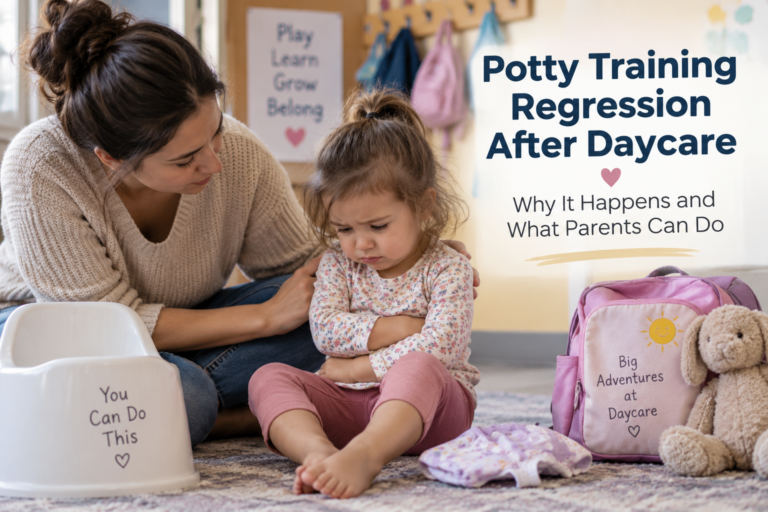
A potty refusal tantrum occurs when a toddler screams, cries, refuses to sit, stiffens their body, or collapses to the floor whenever potty time is introduced. In some cases the tantrum begins before the potty is even mentioned. This is not misbehavior. This is a developmental communication response.
Toddlers are experiencing something new and unfamiliar. They are adjusting from diapers to body awareness, timing, pressure, sensation, new rules, and expectations. Independence is growing, yet the world is still unpredictable. While you see progress, your child sees unknown territory.
Many parents expect resistance at bedtime or mealtime, but potty-training tantrums are seldom openly discussed, leaving caregivers feeling unprepared and frustrated.
Read Also: How to Build Confidence in Young Learners: Practical Strategies Parents Can Use Every Day
Potty refusal tantrums are rooted in developmental, emotional, and environmental triggers. The most common include:
Bladder sensation is unfamiliar. Toddlers may panic because they do not yet understand what is happening inside their body.
A toddler wants to choose when, where, and how to go. A parent instructing them may feel like a loss of freedom.
The toilet flushes loudly, feels cold, and seems large. To a toddler, it is unpredictable and intimidating.
Parents often celebrate training timelines, checklists, or success stories from others. Toddlers feel that pressure.
Readiness is physical plus emotional. A child may know how to sit but not how to self-regulate.
Understanding these core triggers reduces tension. When you decode the meltdown, you gain space to support growth rather than react emotionally.
Many first-time parents miss early cues until the meltdown arrives. These subtle signals suggest stress is building:
• Clenching legs when asked to sit
• Running away when the potty appears
• Crying when diaper is removed
• Sudden request for delay such as water, toys, hugs
• Sitting but refusing to relax long enough to release
Spotting these cues early gives you power. Instead of conflict, you can redirect with gentleness.
The goal is not to force compliance. The goal is to build confidence, comfort, and connection during potty learning. A toddler who feels safe learns faster than one who feels controlled.
Take one step back if resistance is high. Sometimes the best progress is to pause.
Allow the child to practice sitting fully clothed first. Use dolls to demonstrate. Read potty books together. Normalize before training.
Try phrases like
You may sit when you are ready
instead of
You must sit right now.
Choice strengthens confidence.
Predictability reduces emotional overwhelm. Start with sitting after waking, after meals, and before bath.
Some days no pee happens. The win is that the child sat peacefully. That is success worth acknowledging.
No disappointment. No disapproval. Toddlers absorb tone faster than words.
Warm seat, soft toilet reducer, feet support, gentle lighting. Comfort reduces fear more than praise alone.
While there is no universal timeline, most toddlers adjust within 2–6 weeks when caregivers respond with patience and routine. For late bloomers or emotionally sensitive children, training may stretch longer, which is still developmentally healthy.
A meltdown does not mean failure. It means your child is learning the world.
A break may be needed if:
• Tantrums worsen daily
• Child shows physical distress
• Night or nap regression appears
• Parent-child relationship feels tense
Sometimes a three-week reset restores confidence for everyone.
You are not behind. You are not failing. This phase is not a reflection of your parenting. The refusal is not defiance. It is discomfort mixed with emotional growth.
Every toddler who learns the potty also learns self-awareness. Every tantrum is a communication of a need that is still forming language. Your calm presence teaches confidence more than any sticker chart or timeline.
If you are looking for structured learning environments that support emotional development alongside academic growth, the Growth Mindset Learning Lab in New York is a caring space where toddlers learn independence through play-based readiness and gentle routines, including early potty-training strategies.
You and your child are learning together. And progress, even slow progress, is enough.